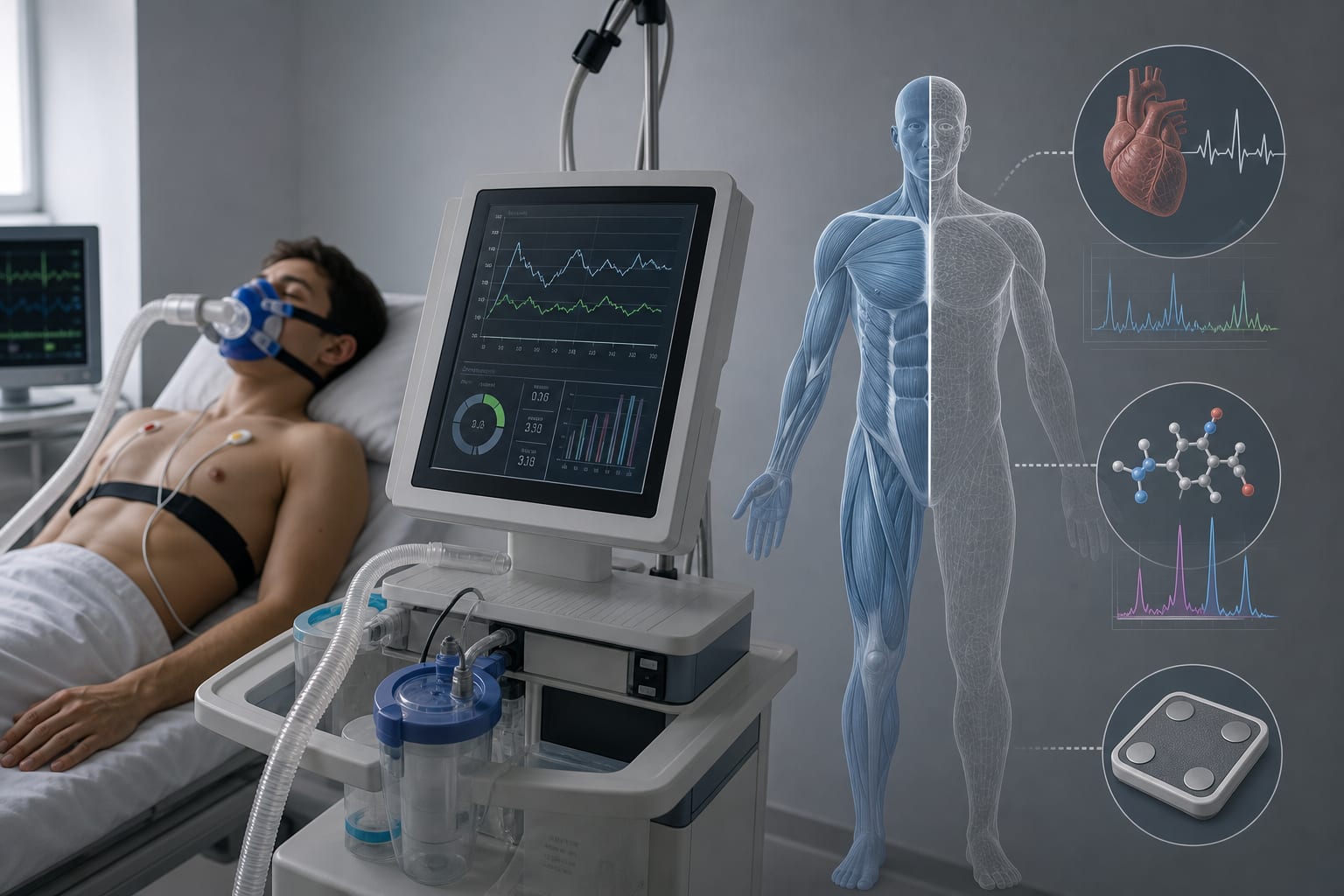
Clinical Report: Fasting Resting Energy Expenditure Influenced by Fat-Free Mass
Overview
This study investigates the determinants of resting energy expenditure (REE) in healthy young adults, finding that fat-free mass (FFM) is the primary predictor. Additionally, circulating epinephrine shows a positive association with REE.
Background
Resting energy expenditure (REE) is a critical component of total daily energy expenditure and plays a significant role in weight regulation and metabolic health. Understanding its determinants is essential, especially given the interindividual variability that cannot be explained by body composition alone. This study aims to clarify the contributions of body composition, catecholamines, and cardiac autonomic modulation to REE under fasting conditions.
Data Highlights
Variable
Association with REE
Fat-Free Mass (FFM)
Dominant determinant (R² = 0.90, p < 0.001)
Circulating Epinephrine
Positive association (p = 0.024)
Norepinephrine
No significant association
HRV-derived parameters
No significant association
Key Findings
Fat-free mass (FFM) is the primary determinant of resting energy expenditure (REE).
REE shows a positive association with circulating epinephrine levels.
No significant association was found between norepinephrine and REE.
Heart rate variability (HRV) parameters do not significantly correlate with REE under fasting conditions.
Age does not significantly influence REE, while sex contributes independently.
Clinical Implications
The findings indicate that fat-free mass is a key factor when assessing resting energy expenditure.
Conclusion
The study concludes that under fasting conditions, resting energy expenditure is primarily influenced by fat-free mass, with a secondary association to circulating epinephrine, while cardiac autonomic factors appear to have no significant impact.