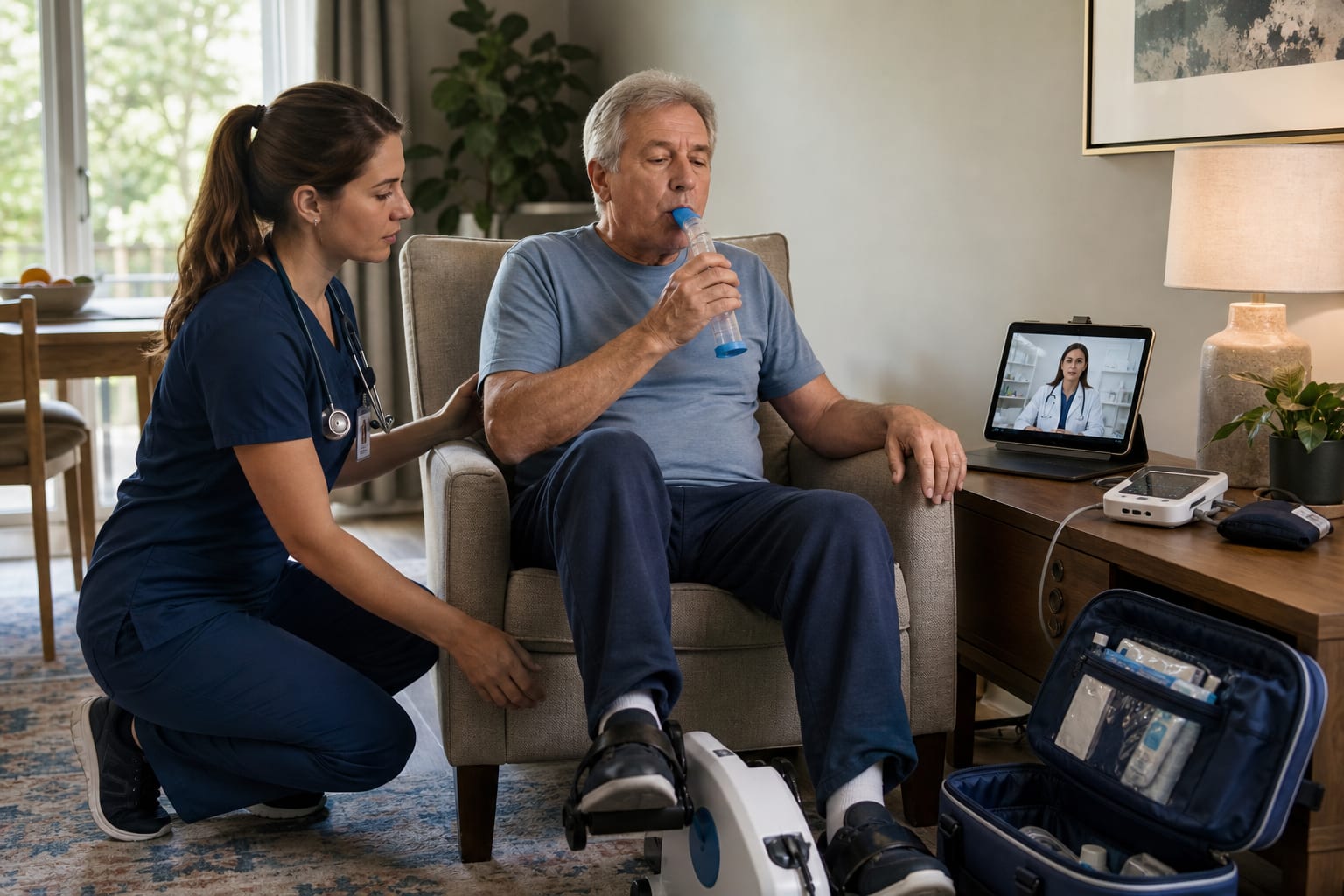
Integrating Home-Based Care and Physical Activity for Adults Hospitalized Due to Acute Illness
Background
The rising demand for hospital services, coupled with workforce constraints and declining bed capacity, necessitates alternative care models. Hospital-at-home (HaH) programs have shown potential in reducing complications associated with traditional hospitalization while improving patient-centered outcomes. However, there is a lack of randomized clinical trials assessing hybrid models that integrate telemedicine with home-based care.
Data Highlights
No numerical data provided in the source material.
Key Findings
The hybrid HaH model was developed specifically for patients at a Danish public hospital.
Physical activity was chosen as a primary outcome due to its correlation with clinical prognosis during hospitalization.
Only a few trials have evaluated physical activity as a primary endpoint in a hybrid HaH setting.
Participants were randomized to either hybrid HaH or traditional brick-and-mortar care.
Eligibility criteria included stable clinical conditions and the ability to participate in remote patient monitoring.
Clinical Implications
The study's findings may inform healthcare providers about the feasibility and effectiveness of hybrid HaH models in improving patient mobility and experience. Understanding the role of physical activity in acute care settings could guide future interventions.
Conclusion
The integration of home-based care and physical activity presents a promising alternative to traditional hospitalization, warranting further investigation in clinical trials.
by Maria Normand Larsen, Tatjana Sandreva Dreisig, Maja Kjær Rasmussen, Charlotte Demuth von Sydow, Thyge Lynghøj Nielsen, Maria Lund Christensen, Miljena Copois, Casper Roed, Theis Lange, Thea Kølsen Fischer
“High-dose intravenous vitamin C administered early after injury did not reduce organ dysfunction or [mortality] and should not be a treatment in severe burns.”