Glutathione peroxidase 2 expression in human tumors: a tissue microarray study on 18,555 tumors - Report - MDSpire

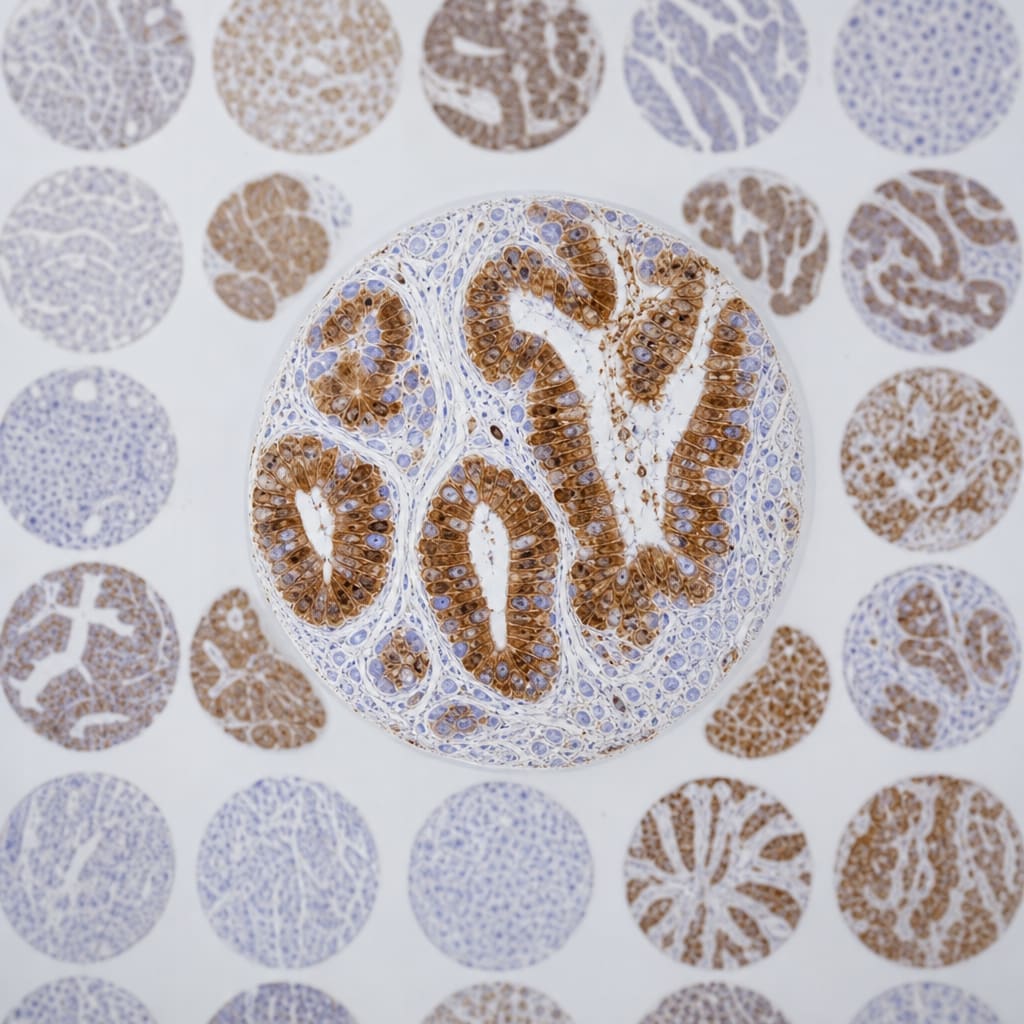
Glutathione peroxidase 2 expression in human tumors: a tissue microarray study on 18,555 tumors

  • By

  • Viktoria Chirico

  • Niklas Jahn

  • Seyma Büyücek

  • Nina Schraps

  • Maximilian Lennartz

  • Katharina Möller

  • Elena Bady

  • Lisa Hornsteiner

  • Henning Plage

  • Claudia Hube-Magg

  • Martina Kluth

  • Frank Jacobsen

  • Florian Viehweger

  • David Dum

  • Andrea Hinsch

  • Christoph Fraune

  • Christian Bernreuther

  • Patrick Lebok

  • Guido Sauter

  • Till S Clauditz

  • Till Krech

  • Andreas H Marx

  • Ronald Simon

  • Eike Burandt

  • Natalia Gorbokon

  • Sarah Minner

  • Stefan Steurer

  • May 4, 2026

  • 0 min

Share

Expression of Glutathione Peroxidase 2 in Human Tumors: An Analysis of 18,555 Samples

Overview

Revise to include specific examples of aggressive disease features linked to reduced GPX2 expression.

Background

Glutathione peroxidase 2 (GPX2) is crucial for detoxifying reactive oxygen species (ROS) and is predominantly expressed in the gastrointestinal tract. Understanding GPX2's role in cancer is essential, as its altered expression may influence tumor behavior and patient outcomes. Limited studies have previously explored GPX2's clinical significance across diverse cancer types.

Data Highlights

Verify and correct GPX2 positivity percentages, especially for non-invasive urothelial carcinomas.

Key Findings

Incorporate relevant statistics or p-values to substantiate claims about GPX2 staining.

Clinical Implications

The findings suggest that GPX2 expression could serve as a potential biomarker for tumor aggressiveness and patient prognosis in various cancers. Clinicians should consider the implications of GPX2 levels when evaluating tumor characteristics and treatment strategies.

Conclusion

GPX2 expression is prevalent in many tumors, particularly those derived from high GPX2-expressing normal tissues. Its reduced expression is associated with aggressive disease features, highlighting its potential role in cancer prognosis.

References

  1. Journal of Gastroenterology, 2013 -- Alterations in Enzyme Protein Synthesis Related to Glucose Metabolism in Hepatocellular Carcinoma
  2. Journal of Neuro-Oncology, 2010 -- Differential Expression of OLIG2 in Pediatric Astrocytic and Ependymal Tumors
  3. Exploratory Study on the Relationship Between Desmoglein-2 Levels and Prognosis in Colon Cancer Patients After Radical Surgery
  4. Journal of Gastrointestinal Surgery -- A Prospective Study Utilizing Proteomics to Discover Potential Biomarkers for Cholangiocarcinoma Diagnosis
  5. Annual Reviews -- The Role of GPX2 in Cancer
  6. Biomarkers in gastroesophageal cancer 2025: an updated consensus statement by the Spanish Society of Medical Oncology (SEOM) and the Spanish Society of Pathology (SEAP)
  7. Ferroptosis is a protective factor for the prognosis of cancer patients: a systematic review and meta-analysis | BMC Cancer
  8. https://www.annualreviews.org/doi/pdf/10.1146/annurev-pharmtox-010818-021856
  9. Biomarkers in gastroesophageal cancer 2025: an updated consensus statement by the Spanish Society of Medical Oncology (SEOM) and the Spanish Society of Pathology (SEAP) - PMC
  10. Ferroptosis is a protective factor for the prognosis of cancer patients: a systematic review and meta-analysis | BMC Cancer | Springer Nature Link

Original Source(s)

Related Content