Clinical Report: Link Between Compliance with the EAT-Lancet Diet and Cancer Rates
Overview
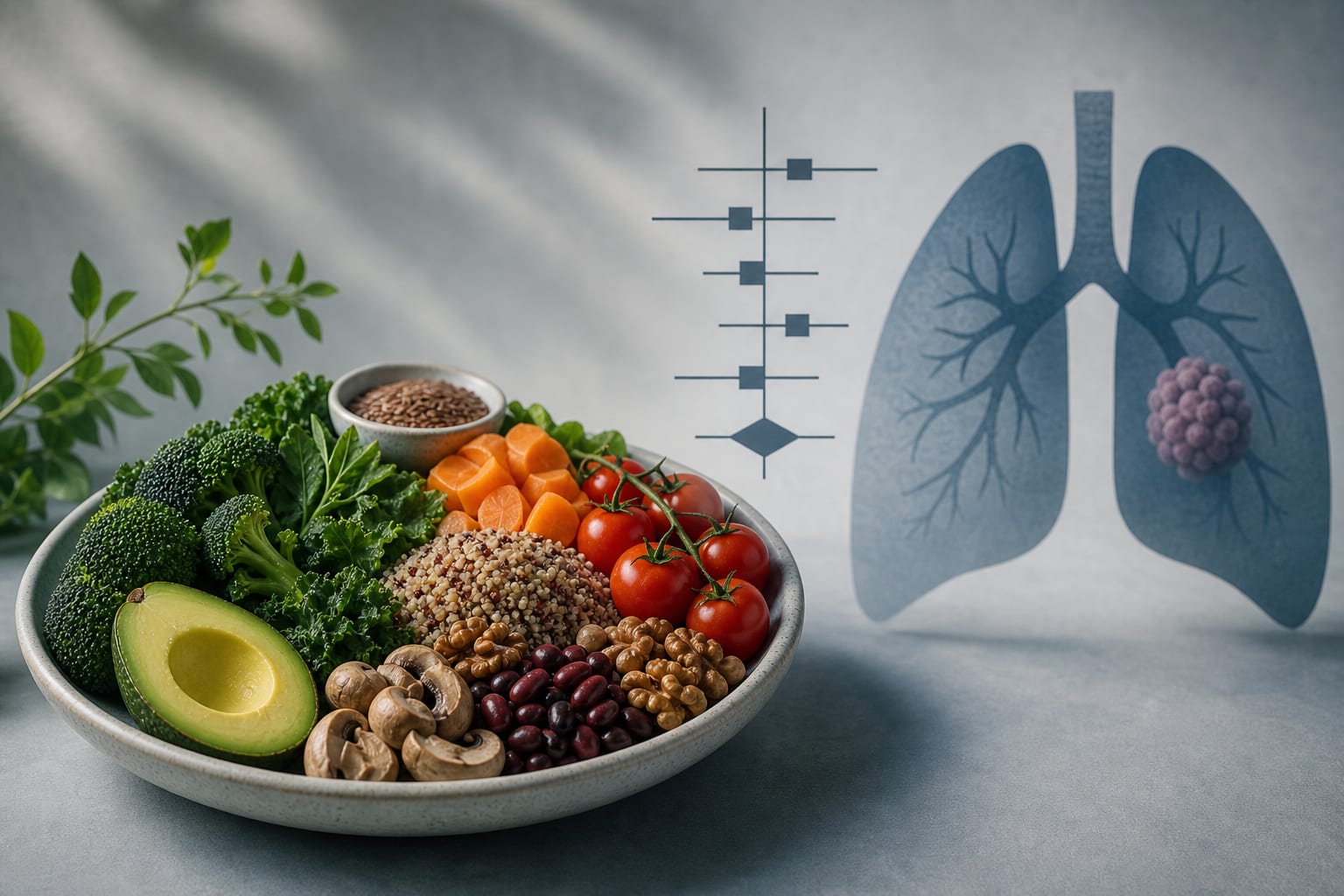
This meta-analysis examines the relationship between adherence to the EAT-Lancet diet and cancer incidence and mortality. Findings indicate that higher adherence scores are associated with lower overall cancer rates, particularly for lung cancer.
Background
Cancer remains a significant public health challenge, with millions of new cases and deaths reported annually. Diet is a modifiable risk factor that can influence cancer outcomes, contributing to 20-25% of the global cancer burden. The EAT-Lancet diet, which promotes sustainable eating patterns, has been linked to various health benefits, including potential reductions in cancer risk.
Data Highlights
Outcome
Hazard Ratio (HR)
95% Confidence Interval (CI)
P-value
Overall Cancer Incidence
0.90
0.84-0.95
<0.001
Overall Cancer Mortality
0.92
0.90-0.95
<0.001
Lung Cancer Incidence
0.93
0.90-0.95
<0.001
Lung Cancer Mortality
0.94
0.90-0.97
<0.001
Key Findings
Higher adherence to the EAT-Lancet diet is associated with lower overall cancer incidence (HR = 0.90).
Increased adherence correlates with reduced overall cancer mortality (HR = 0.92).
The strongest associations were found for lung cancer incidence (HR = 0.93) and mortality (HR = 0.94).
No significant associations were noted for breast, prostate, or colorectal cancer incidence.
Results highlight the importance of dietary patterns in cancer prevention strategies.
Clinical Implications
Healthcare professionals should consider dietary recommendations as part of cancer prevention strategies. Promoting adherence to the EAT-Lancet diet may contribute to lower cancer incidence and mortality, particularly for lung cancer. Further research is needed to clarify the impact on other cancer types.
Conclusion
The findings suggest that adherence to the EAT-Lancet diet may play a significant role in reducing cancer risk, especially for lung cancer. These results underscore the importance of dietary interventions in public health strategies aimed at cancer prevention.