Molecular mechanisms of coronary microembolization-induced MINOCA - Report - MDSpire

Molecular mechanisms of coronary microembolization-induced MINOCA

  • By

  • Jasper Iske

  • Henriette Thau

  • Joshua M. Mesfin

  • Christien M. Beez

  • Petra Wolint

  • Jonas Hildinger

  • Nicolas Musigk

  • Timo Z. Nazari-Shafti

  • Adam Penkalla

  • Volkmar Falk

  • Bettina Heidecker

  • Bertil Lindahl

  • Maximilian Y. Emmert

  • Nikola Cesarovic

  • July 4, 2026

  • 0 min

Share

Clinical Report: Pathophysiological Insights into MINOCA Resulting from Coronary Microembolization

Overview

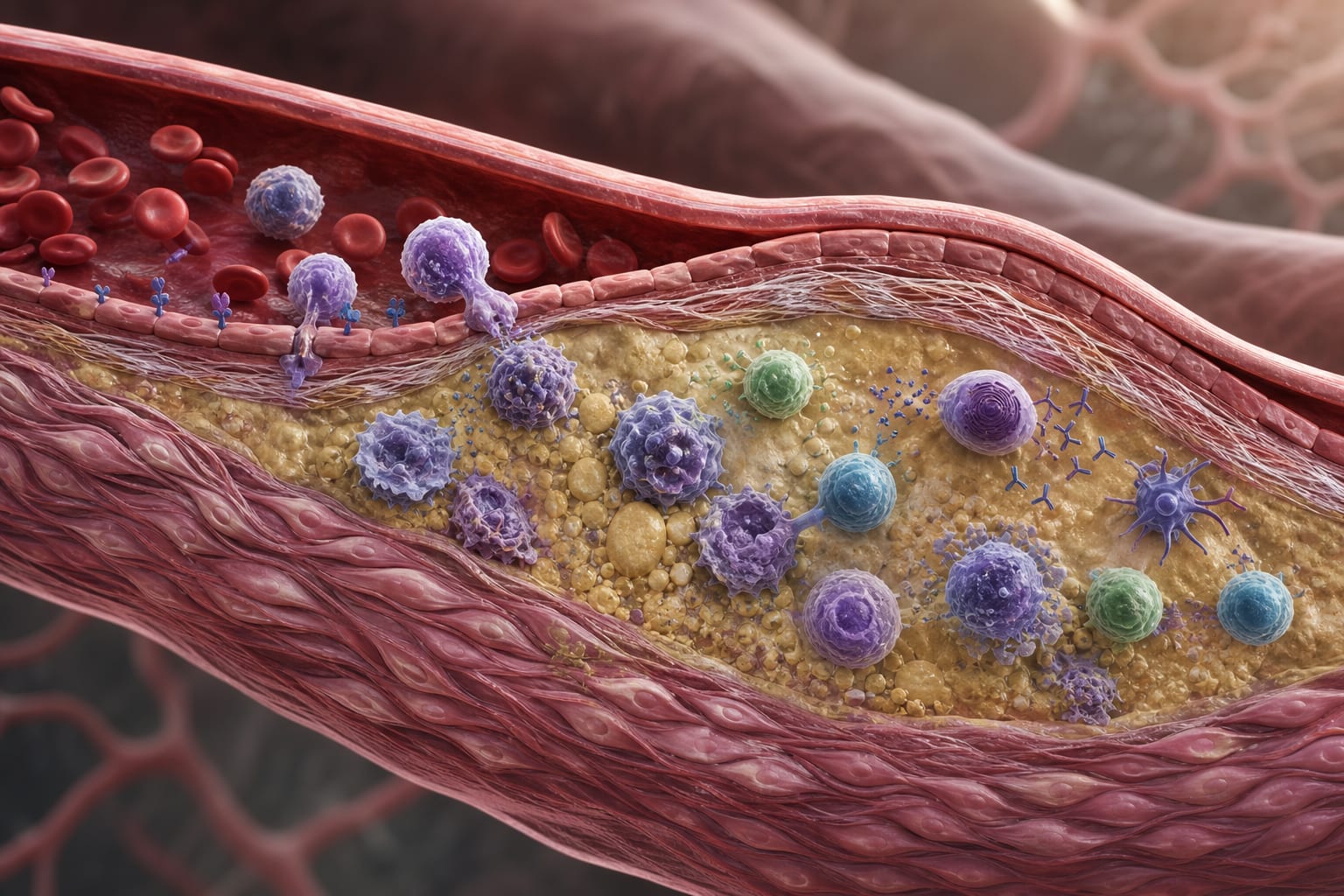
Myocardial infarction without obstructive coronary arteries (MINOCA) accounts for 6-8% of myocardial infarction cases. Coronary microembolization is identified as a significant pathological mechanism in MINOCA, particularly in patients with non-ST-segment-elevation myocardial infarction (NSTEMI).

Background

MINOCA is a clinically challenging diagnosis that often leads to mismanagement due to its atypical presentation and the absence of obstructive coronary artery disease.

Data Highlights

No numerical data available in the source material.

Key Findings

  • MINOCA accounts for 6-8% of all myocardial infarction cases.
  • Coronary microembolization (CME) is a major pathological mechanism in 40% of MINOCA cases.
  • Patients with MINOCA often present with non-specific ECG changes and are predominantly younger females.

Clinical Implications

Healthcare professionals should be aware of the unique presentation of MINOCA to ensure timely diagnosis and management. The identification of coronary microembolization as a key mechanism may guide future research into targeted therapies.

Conclusion

The pathophysiological insights into MINOCA highlight the need for improved diagnostic tools and therapeutic strategies to address this complex condition.

Related Resources & Content

  1. Clinical Research in Cardiology, 2023 -- Coronary Microvascular Dysfunction Characterizes All Variants of MINOCA
  2. European Journal of Preventive Cardiology, 2023 -- Familial risk of myocardial infarction with non-obstructive and obstructive coronary arteries: a nation-wide cohort study
  3. Basic Research in Cardiology, 2025 -- Translational Large Animal Study Utilizes Molecular Screening to Reveal Distinct Inflammatory Responses in MINOCA Cases
  4. 2025 ACC/AHA/ACEP/NAEMSP/SCAI Guideline for the Management of Patients With Acute Coronary Syndromes
  5. Critical Care — Coronary microvascular function in patients with sepsis and myocardial injury: an invasive coronary physiology study
  6. Myocardial infarction with nonobstructive coronary arteries: a narrative review
  7. 2025 ACC/AHA/ACEP/NAEMSP/SCAI Guideline for the Management of Patients With Acute Coronary Syndromes: A Report of the American College of Cardiology/American Heart Association Joint Committee on Clinical Practice Guidelines
  8. https://cris.unibo.it/bitstream/11585/1007478/5/Pathological%20Findings%20at%20Invasive%20Assessment%20in%20MINOCA%20a%20Systematic%20Review%20and%20a%20Meta-Analysis.pdf
  9. 26-A-13589-ACC NONOBSTRUCTIVE ANGIOGRAPHIC ABNORMALITIES GUIDE THE USE OF OPTICAL COHERENCE TOMOGRAPHY IN MYOCARDIAL INFARCTION WITH NON-OBSTRUCTIVE CORONARY ARTERIES (MINOCA) | JACC
  10. Myocardial infarction with non-obstructive coronary arteries: A multimodal imaging approach to diagnosis and etiology-targeted therapy - ScienceDirect
  11. Time to cardiovascular magnetic resonance imaging influences diagnostic yield in patients with suspected myocardial infarction with nonobstructive coronary arteries: a meta-analysis | medRxiv
  12. A fresh look at coronary microembolization | Nature Reviews Cardiology

Original Source(s)

Related Content