Clinical Report: Evaluation of Glymphatic Function in Middle Cerebral Artery Stenosis
Overview
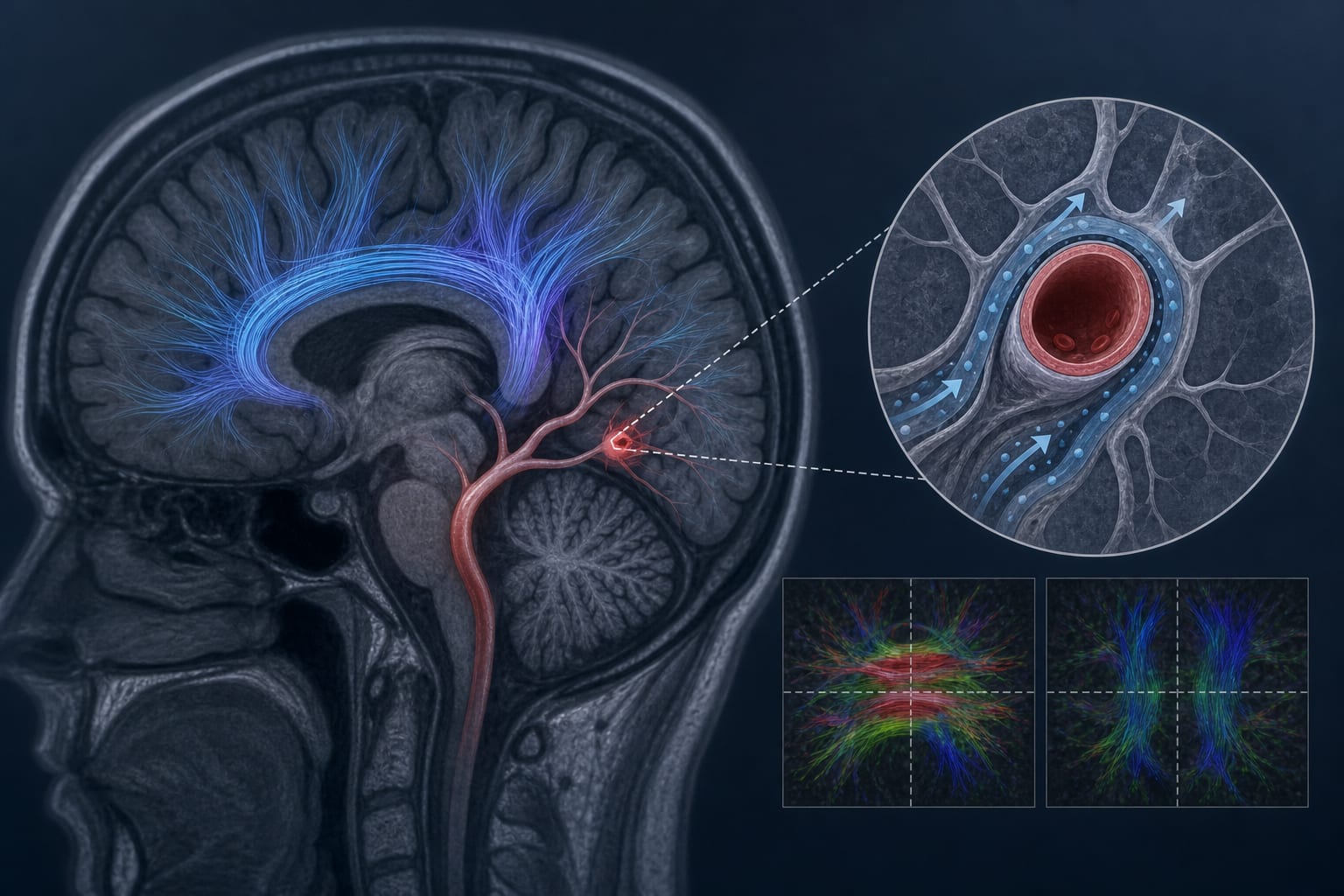
This study evaluated glymphatic function in patients with middle cerebral artery stenosis (MCA-S) using non-invasive DTI-ALPS and ro-ALPS techniques. Findings indicate significantly lower ALPS indices in MCA-S patients compared to healthy controls, with correlations to choroid plexus volume.
Background
Middle cerebral artery stenosis is a prevalent condition that can lead to significant cerebrovascular events. Understanding the glymphatic system's role in cerebrospinal fluid dynamics is crucial, as its impairment may contribute to cognitive decline and other neurological issues. Non-invasive imaging techniques like DTI-ALPS provide valuable insights into glymphatic function and its clinical implications.
Data Highlights
Index
MCA-S Group
Healthy Controls
p-value
DTI-ALPS
Lower
Higher
< 0.001
ro-ALPS
Lower
Higher
< 0.001
Key Findings
Both DTI-ALPS and ro-ALPS indices were significantly lower in MCA-S patients compared to healthy controls.
DTI-ALPS index negatively correlated with choroid plexus volume (r = −0.541, pFDR = 0.012).
ro-ALPS index also showed a negative correlation with choroid plexus volume (r = −0.568, pFDR < 0.001).
Impaired perivascular clearance was suggested by lower ALPS indices in MCA-S patients.
ALPS indices may serve as imaging biomarkers for monitoring disease progression in MCA-S.
Clinical Implications
The findings highlight the potential of DTI-ALPS and ro-ALPS as non-invasive tools for assessing glymphatic function in patients with MCA-S. Clinicians may consider these indices in evaluating cerebrovascular health and cognitive function.
Conclusion
This study provides evidence of impaired glymphatic function in MCA-S, emphasizing the relevance of non-invasive imaging techniques in understanding cerebrovascular dynamics.