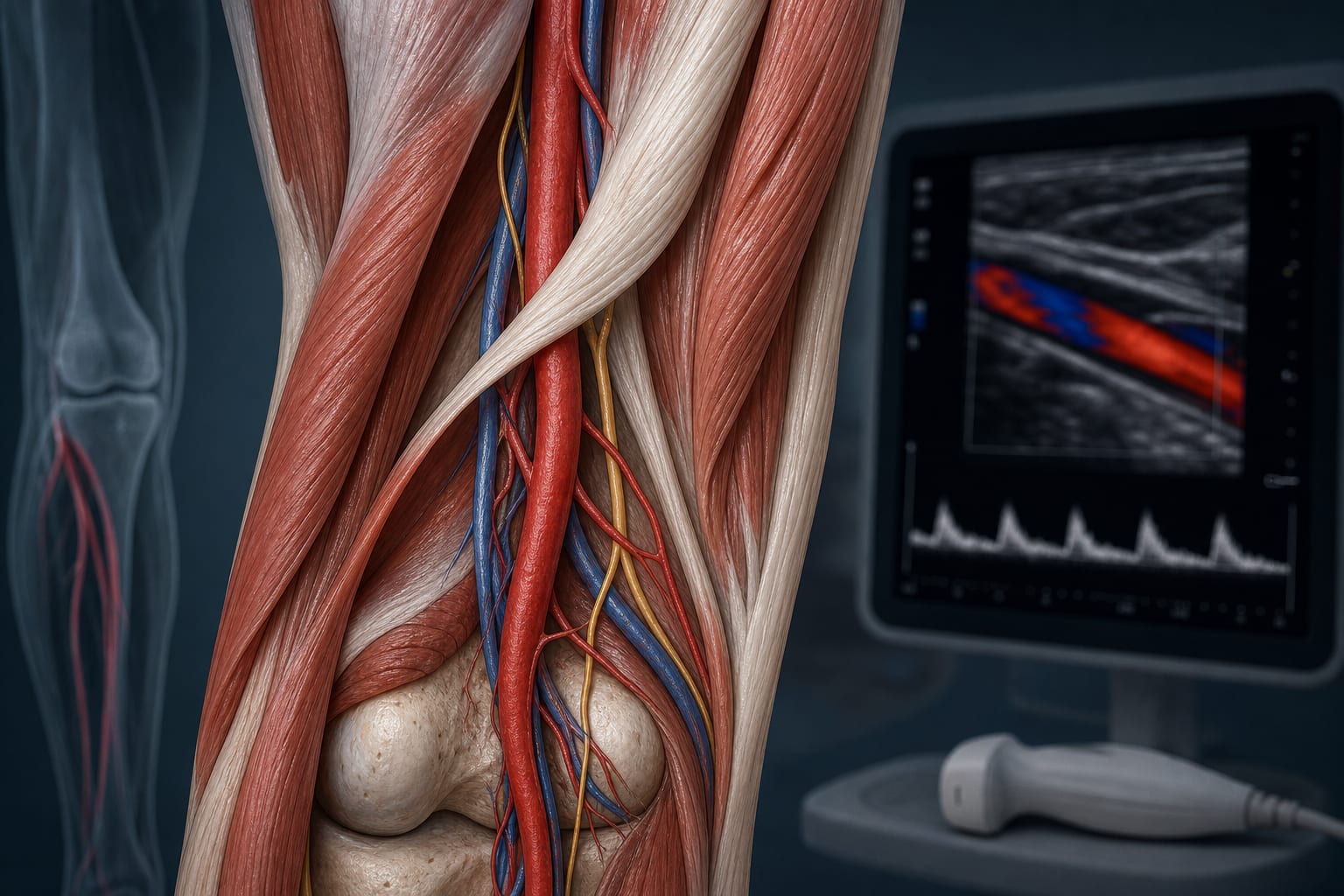
Clinical Report: Evaluating Current Results in Popliteal Artery Entrapment Syndrome
Overview
This report highlights the significance of surgical expertise in managing popliteal artery entrapment syndrome (PAES), emphasizing the importance of timely diagnosis and intervention. Long-term outcomes indicate high patency rates and the need for stratified reporting in clinical studies.
Background
Popliteal artery entrapment syndrome is a rare vascular condition that can lead to significant morbidity if not diagnosed and treated promptly. Current guidelines lack specific recommendations for PAES, making it crucial for clinicians to understand the nuances of its management. The condition primarily affects young, active individuals, underscoring the need for awareness and appropriate diagnostic strategies.
Data Highlights
Outcome
Result
Freedom from target lesion revascularization
92.4%
Mean follow-up duration
181 months
Key Findings
Timely recognition and surgical decompression are key determinants of durable outcomes in PAES.
Long-term patency rates are satisfactory, with differences noted between musculotendinous section and arterial reconstruction.
Current guidelines do not provide dedicated recommendations for PAES diagnosis and management.
Dynamic imaging, particularly duplex ultrasound with provocative maneuvers, is essential for diagnosis.
Standardized reporting of PAES subtypes and treatment outcomes is necessary for meaningful comparisons across studies.
Clinical Implications
Clinicians should prioritize early diagnosis and intervention in patients suspected of having PAES to prevent irreversible arterial damage. The use of dynamic imaging techniques is recommended to facilitate accurate diagnosis and guide treatment decisions.
Conclusion
The management of PAES requires a comprehensive understanding of its anatomical and functional variations. Continued emphasis on prompt diagnosis and tailored surgical approaches will enhance patient outcomes.