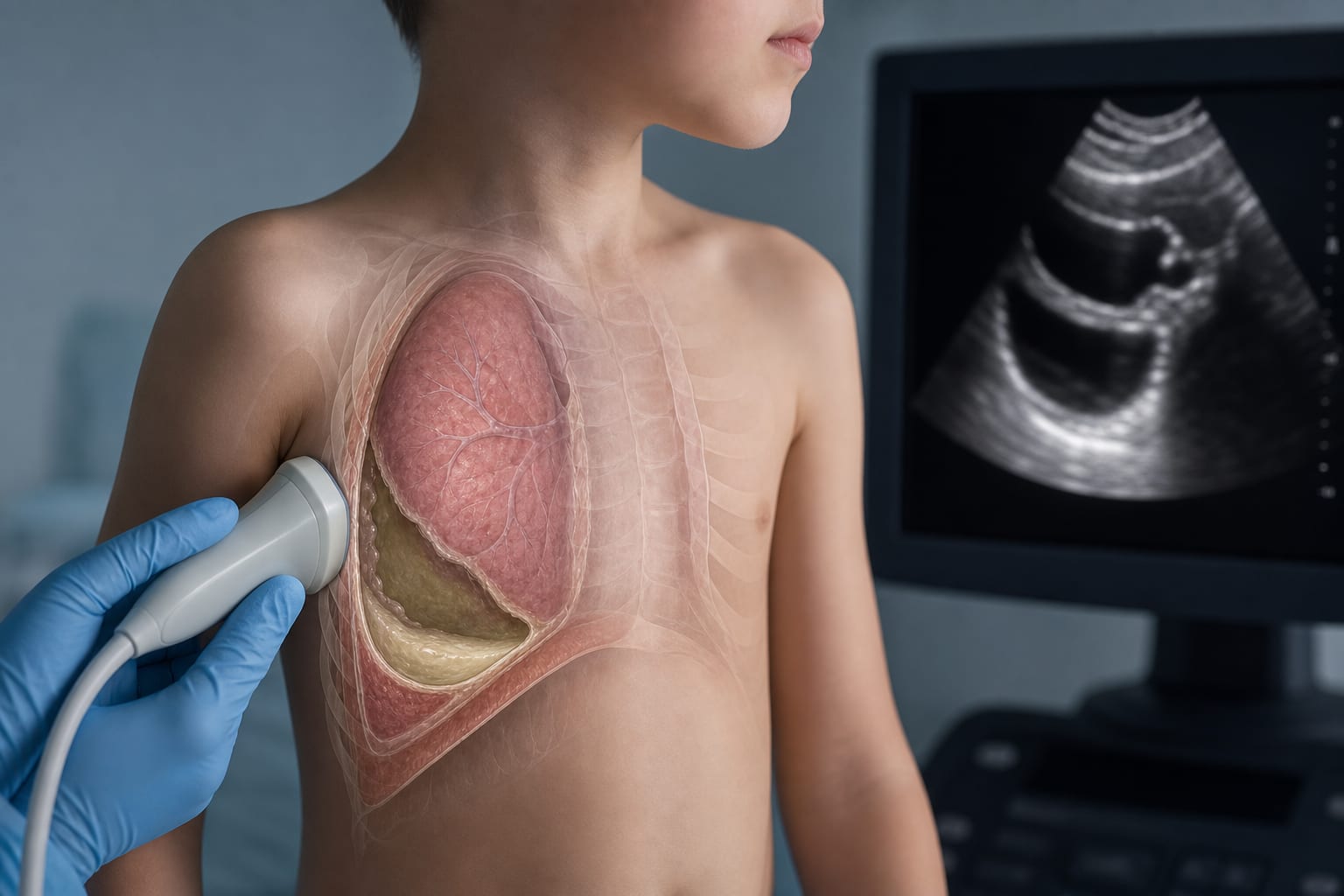
Pediatric pleural empyema - decision making beyond imaging - a retrospective cohort study
-
By
-
Alexandru-Ioan Ulmeanu
-
Andreia Ulmeanu
-
Elena-Roxana Matran
-
May 29, 2026
Management of Pediatric Pleural Empyema: Insights from a Retrospective Cohort Study
Overview
This study characterizes pediatric parapneumonic empyema by analyzing clinical, biochemical, and radiological parameters, revealing that treatment decisions are primarily driven by clinical presentation rather than imaging. The findings highlight the significant role of video-assisted thoracic surgery (VATS) in managing complicated cases.
Background
Pediatric pleural empyema, a serious complication of pneumonia, occurs in approximately 0.6% of cases and is associated with considerable morbidity. Understanding the management strategies and outcomes is crucial for improving patient care, especially as the incidence of empyema remains significant despite advances in vaccination and treatment protocols. This study provides insights into the clinical decision-making process for treating this condition in children.
Data Highlights
| Parameter | Value |
|---|---|
| Median age of patients | 4 years |
| Median time to initial intervention | 2 days |
| Duration of chest-tube drainage | 21.2 ± 11.5 days |
| Median hospital stay | 27 days |
| Drainage duration (VATS vs. chest-tube) | 9.5 vs. 19 days |
Key Findings
- 42.4% of patients underwent primary VATS after a median of 4.5 days.
- Initial chest-tube drainage was performed in 19 patients, with a mean drainage duration of 21.2 days.
- Dyspnea was a strong predictor for selecting VATS as the initial treatment (OR 18.0).
- Imaging findings on thoracic ultrasound did not significantly influence the choice of initial intervention.
- CT scans identified complications and were associated with prolonged hospitalization.
Clinical Implications
The study underscores the importance of clinical assessment in guiding treatment decisions for pediatric pleural empyema, with VATS being favored in complicated cases. Clinicians should consider the patient's clinical presentation over imaging results when determining the initial management approach.
Conclusion
This research highlights the need for standardized management algorithms that integrate clinical, laboratory, and imaging data for pediatric pleural empyema. The findings advocate for a symptom-driven approach to treatment.
Related Resources & Content
- Infection — A Two-Decade Clinical Overview of Paediatric Parapneumonic Effusion
- Langenbeck's Archives of Surgery — Minimally invasive management of chronic pleural empyema in non-expandable lung: a systematic review of tunneled pleural catheter use as a surgical alternative
- Prompt Induction of Bedside Pneumoperitoneum for Addressing Residual Pleural Space and Air Leaks Post-Pulmonary Resection
- 2026 Clinical Practice Guideline Update by the Infectious Diseases Society of America and the Pediatric Infectious Diseases Society on The Management of Community-Acquired Pneumonia in Infants and Children Older than 3 Months of Age
- Video-Assisted Thoracoscopic Surgery Versus Tube Thoracostomy with Fibrinolytics for Treatment of Empyema in Children: A Meta-Analysis of Randomized Controlled Studies
- European Radiology — Imaging Guidelines for Common Pediatric Lung Conditions: Recommendations from the European Society of Paediatric Radiology
- 2026 Clinical Practice Guideline Update by the Infectious Diseases Society of America and the Pediatric Infectious Diseases Society on The Management of Community-Acquired Pneumonia in Infants and Children Older than 3 Months of Age: The Use of Chest Ultrasound in Children with Parapneumonic Effusion | Clinical Infectious Diseases | Oxford Academic
- Video-Assisted Thoracoscopic Surgery Versus Tube Thoracostomy with Fibrinolytics for Treatment of Empyema in Children: A Meta-Analysis of Randomized Controlled Studies - PubMed
- Paediatric parapneumonic effusion – a twenty-year clinical narrative | Infection | Springer Nature Link
This content is an AI-generated, fully rewritten summary based on a published scholarly article. It does not reproduce the original text and is not a substitute for the original publication. Readers are encouraged to consult the source for full context, data, and methodology.