New human embryo editing advances require tough conversations on ethical boundaries - Report - MDSpire

New human embryo editing advances require tough conversations on ethical boundaries

  • By

  • Paul Knoepfler

  • June 24, 2026

  • 0 min

Share

Clinical Report: Recent Progress in Human Embryo Gene Editing Necessitates Serious Ethical Discussions

Overview

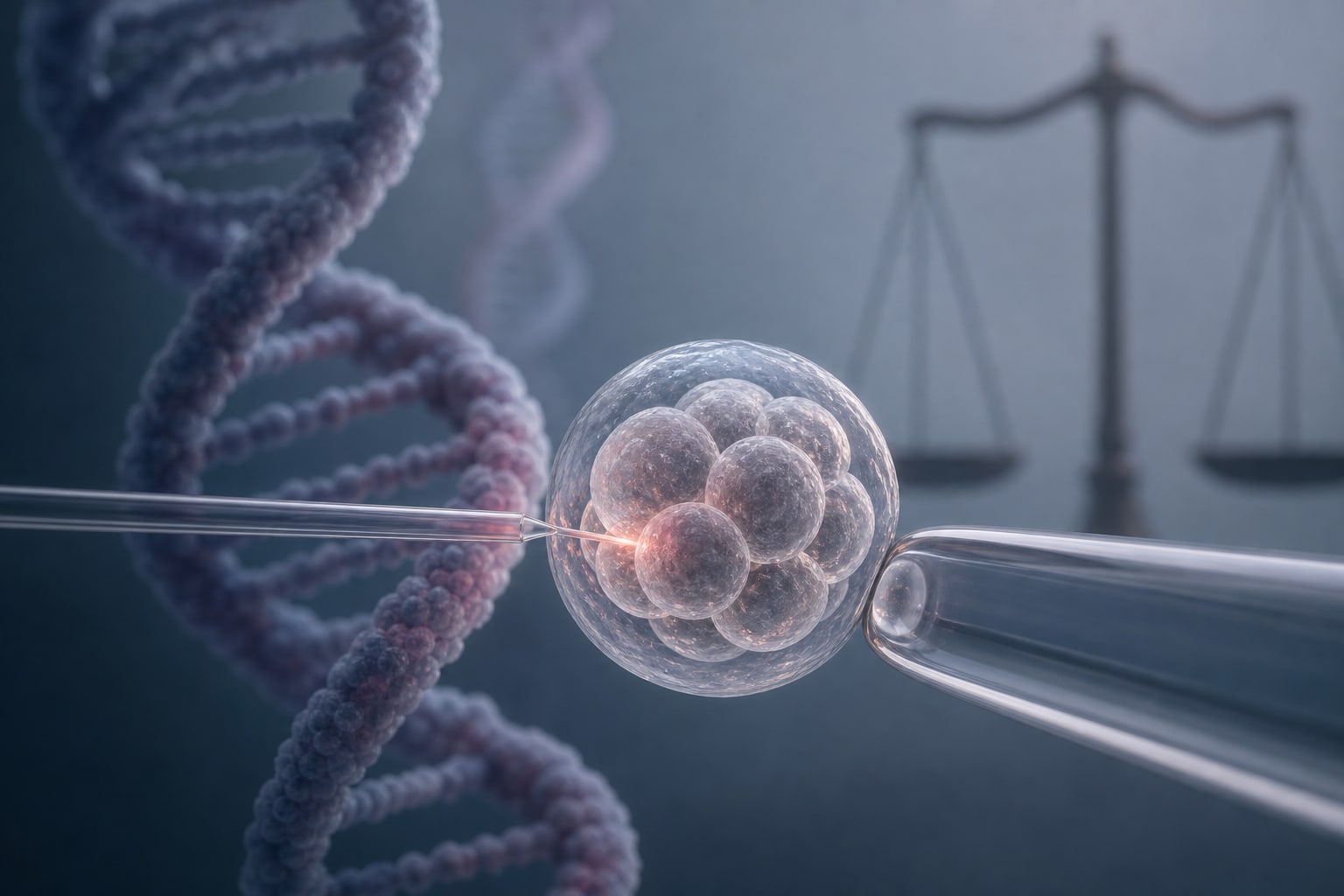
Recent advancements in human embryo gene editing, particularly through base editing techniques, have raised significant ethical concerns. The implications of editing genes for potential future health conditions rather than for immediate disease prevention remain contentious.

Background

The ability to edit the genomes of human embryos presents both opportunities and ethical dilemmas in reproductive medicine. As genetic editing technologies like CRISPR and base editing evolve, the potential for preventing genetic diseases must be weighed against the ethical implications of heritable gene modifications.

Data Highlights

No numerical data or trial data provided in the source material.

Key Findings

  • Base editing allows for more precise gene editing with less incidental genomic damage compared to traditional CRISPR methods.
  • Editing genes like PCSK9 and HBG1/HBG2 in embryos does not target existing mutations, raising ethical concerns about potential enhancement rather than disease prevention.
  • Current embryo screening methods are often sufficient for selecting against disease-causing mutations.
  • Destruction of embryos during the editing process presents significant ethical challenges.
  • Funding for embryo gene editing research is limited due to restrictions on federal funding for research involving the destruction of human embryos.

Clinical Implications

Healthcare professionals must remain informed about the ethical discussions surrounding embryo gene editing as new techniques emerge.

Conclusion

Advancements in embryo gene editing technology raise complex ethical discussions.

Related Resources & Content

  1. Frontiers in Endocrinology, 2026 -- Editorial: New advances in embryo development and embryo-endometrial interface
  2. Basic Research in Cardiology, 2020 -- Position Statement from DGK and DZHK on Genome Editing: Applications in Basic Science and Future Outlook
  3. the medicine maker, 2026 -- This Week’s CGT News: New FDA Genome Editing Guidance
  4. Guidelines for Stem Cell Research and Clinical Translation, International Society for Stem Cell Research -- Guidelines for Stem Cell Research and Clinical Translation
  5. Leading Gene and Cell Therapy Organizations Call for a 10-year Moratorium on Heritable Human Genome Editing - Alliance for Regenerative Medicine
  6. The ASCO Post — The Building Block of Life, Brick by Brick
  7. Precise genome editing of human embryos triggers praise and alarm
  8. Guidelines for Stem Cell Research and Clinical Translation — International Society for Stem Cell Research
  9. Leading Gene and Cell Therapy Organizations Call for a 10-year Moratorium on Heritable Human Genome Editing - Alliance for Regenerative Medicine

Original Source(s)

Related Content