Clinical Report: Nutrient Recycling by Macrophages: Evolutionary Perspectives
Background
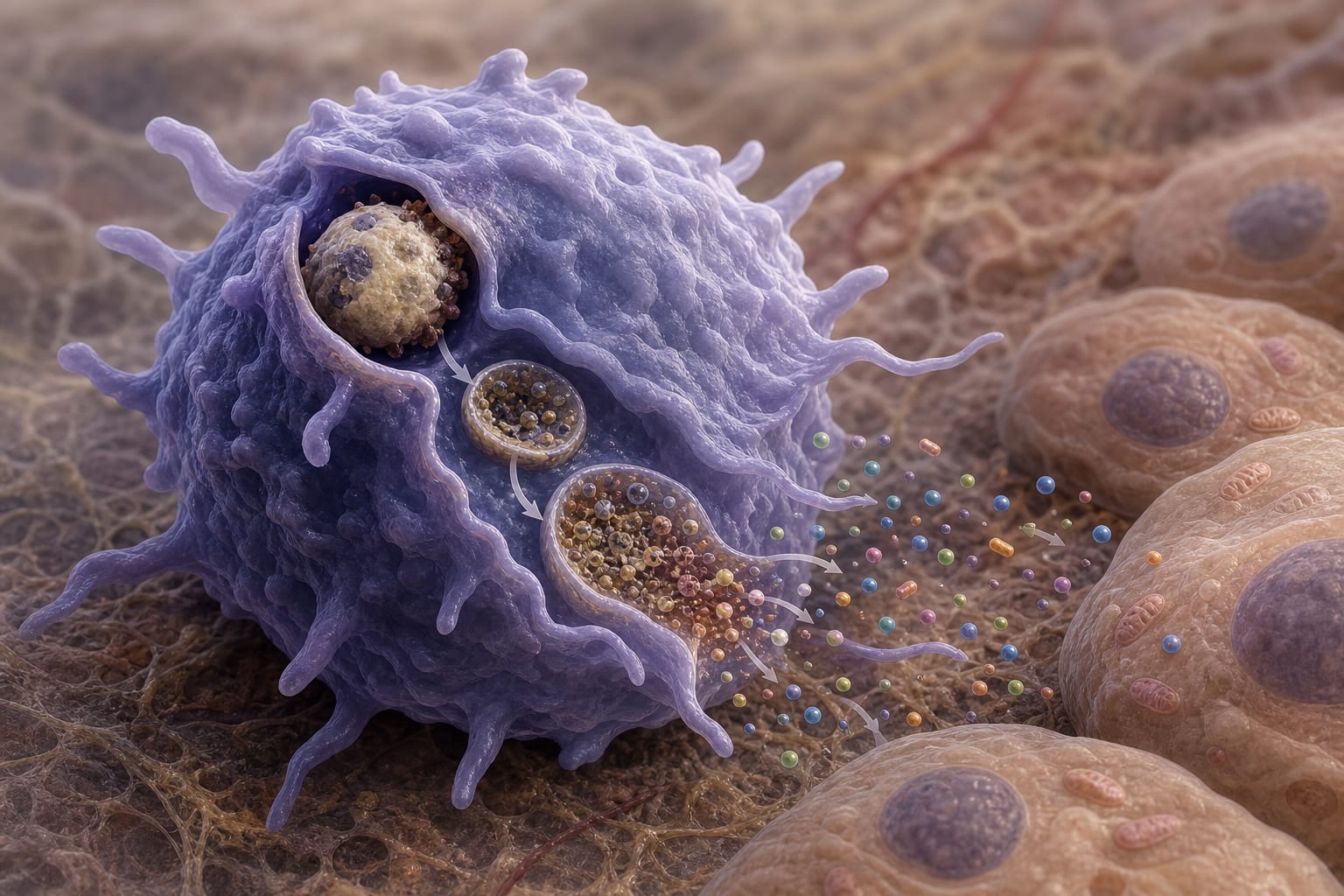
Macrophages are essential professional phagocytes responsible for the clearance of apoptotic and damaged cells, a process critical for tissue homeostasis. Understanding how macrophages recycle nutrients from engulfed materials is vital, as it sheds light on their metabolic roles.
Data Highlights
No numerical or trial data available in the source material.
Key Findings
Macrophages play a central role in the clearance of senescent and damaged cells, contributing to tissue quality control.
They act as metabolic hubs, recycling nutrients and supplying them to surrounding tissues.
The evolutionary origins of macrophage functions highlight their conservation across species, including mammals.
Cellular turnover involves significant metabolic flux, with approximately 3x10¹¹ cells turned over daily in a healthy human body.
Macrophages are crucial during both routine tissue maintenance and large-scale developmental remodeling.
Clinical Implications
The findings highlight the metabolic roles of macrophages.
Conclusion
Macrophages are vital for clearing cellular debris and play a significant role in nutrient recycling, which is essential for maintaining tissue homeostasis.