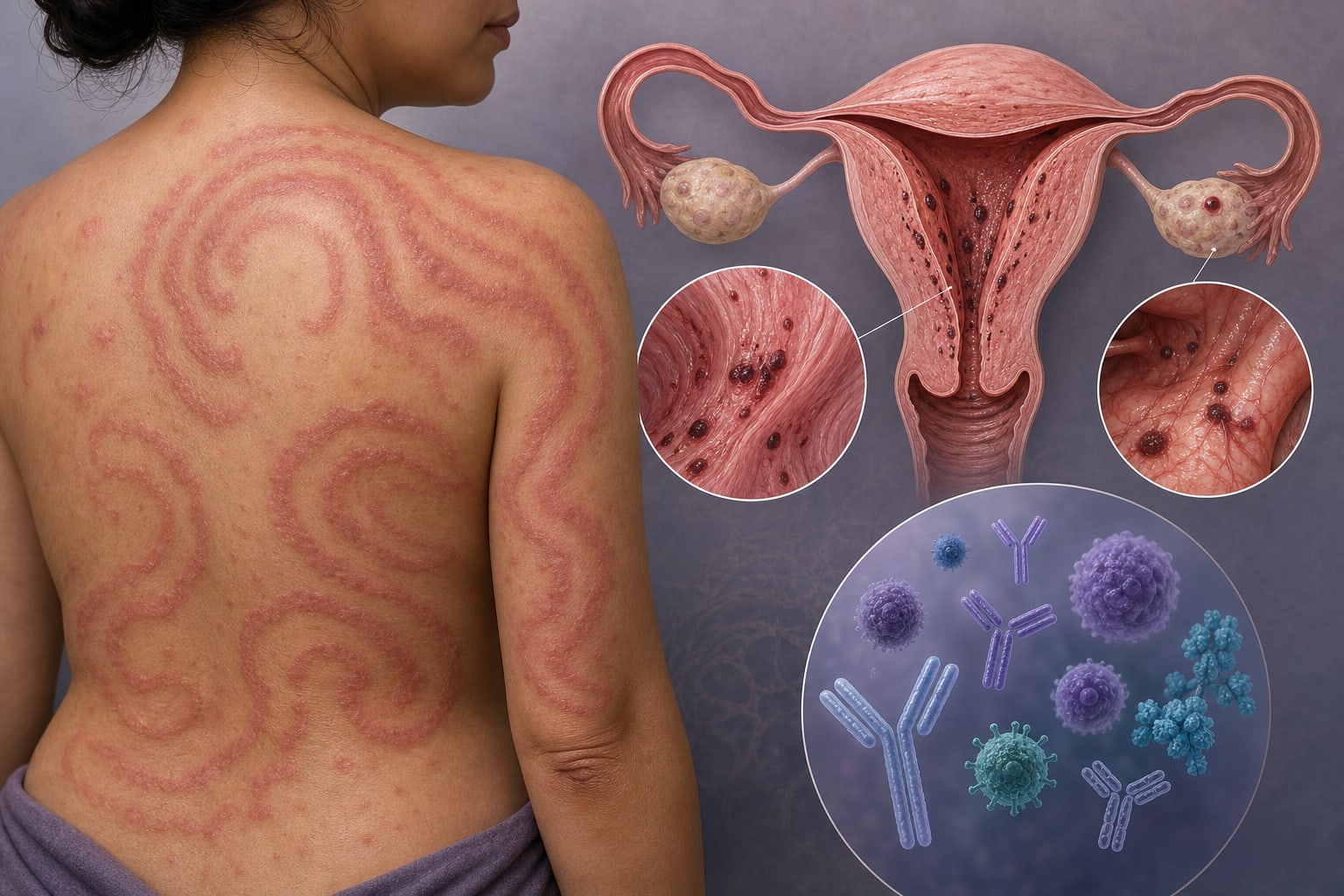
Exploring the Role of Gut-Reproductive Microbiota and Ferroptosis in the Molecular Pathogenesis of Endometriosis
-
By
-
Xianhua Han
-
Xin lei Guo
-
Junyu Qiu
-
May 22, 2026
Clinical Report: Exploring the Role of Gut-Reproductive Microbiota and Ferroptosis in Endometriosis
Overview
Revise to remove unsupported claims about the interplay between microbial ecology, iron metabolism, and cell death.
Background
Endometriosis is a prevalent chronic gynecological condition affecting 5 to 10 percent of women of childbearing age, characterized by ectopic endometrial tissue growth. Traditional explanations for its pathogenesis are insufficient to account for the disease's complexity and heterogeneity. Recent research suggests that microbiome imbalances and ferroptosis may play significant roles in EMS development and symptomatology.
Data Highlights
No numerical data or trial data provided in the source material.
Key Findings
- Endometriosis is characterized by pain, infertility, and a heterogeneous clinical presentation.
- Imbalances in gut and reproductive microbiomes are increasingly recognized as key factors in EMS pathogenesis.
- Microbial dysbiosis can influence iron metabolism and promote an inflammatory microenvironment in EMS lesions.
- Ferroptosis, an iron-dependent form of cell death, is implicated in the pathogenesis of EMS.
- Microbial metabolites, such as butyrate, may enhance susceptibility to ferroptosis in EMS cells.
- Potential therapeutic strategies include microbiome remodeling and pharmacological targeting of ferroptosis-related molecules.
Clinical Implications
Understanding the role of gut-reproductive microbiota and ferroptosis in EMS may inform future therapeutic strategies. Interventions targeting microbial balance and iron metabolism could provide new avenues for managing this complex condition.
Conclusion
The integration of microbiome and ferroptosis research offers a novel perspective on the pathogenesis of endometriosis, potentially guiding future clinical interventions.
Related Resources & Content
- Frontiers in Endocrinology, 2026 -- Multi-omics Mendelian randomization integrating metabolism, microbiome and immunity supports a putative gut-immune-pelvic pathway in deep infiltrating endometriosis
- Frontiers in Reproductive Health, 2026 -- Multi-omics Mendelian randomization identifies mitochondrial genes associated with immune microenvironment signatures in endometriosis
- Frontiers in Immunology, 2026 -- Ferroptosis: a promising therapeutic target for periodontitis
- ACOG Endometriosis Guidelines Target Diagnostic Delays | JAMA | JAMA Network
- Frontiers in Endocrinology — Negative impacts of ovarian endometrioma on preantral follicle development: implications for endometriosis-related infertility
- Relugolix’s impact on endometriosis-associated pain and quality of life: a meta-analysis of EHP-30 outcomes
- Association between endometriosis and gut microbiota: systematic review and meta-analysis
- ACOG Endometriosis Guidelines Target Diagnostic Delays | JAMA | JAMA Network
Based on findings from:
From gut-reproductive microbiota to ferroptosis: a comprehensive insight into the molecular-pathogenicity of endometriosis
Xianhua Han, Xin lei Guo, Junyu Qiu. Frontiers In Immunology, 2026.
https://www.frontiersin.org/journals/immunology/articles/10.3389/fimmu.2026.1762013/full
This content is an AI-generated, fully rewritten summary based on a published scholarly article. It does not reproduce the original text and is not a substitute for the original publication. Readers are encouraged to consult the source for full context, data, and methodology.