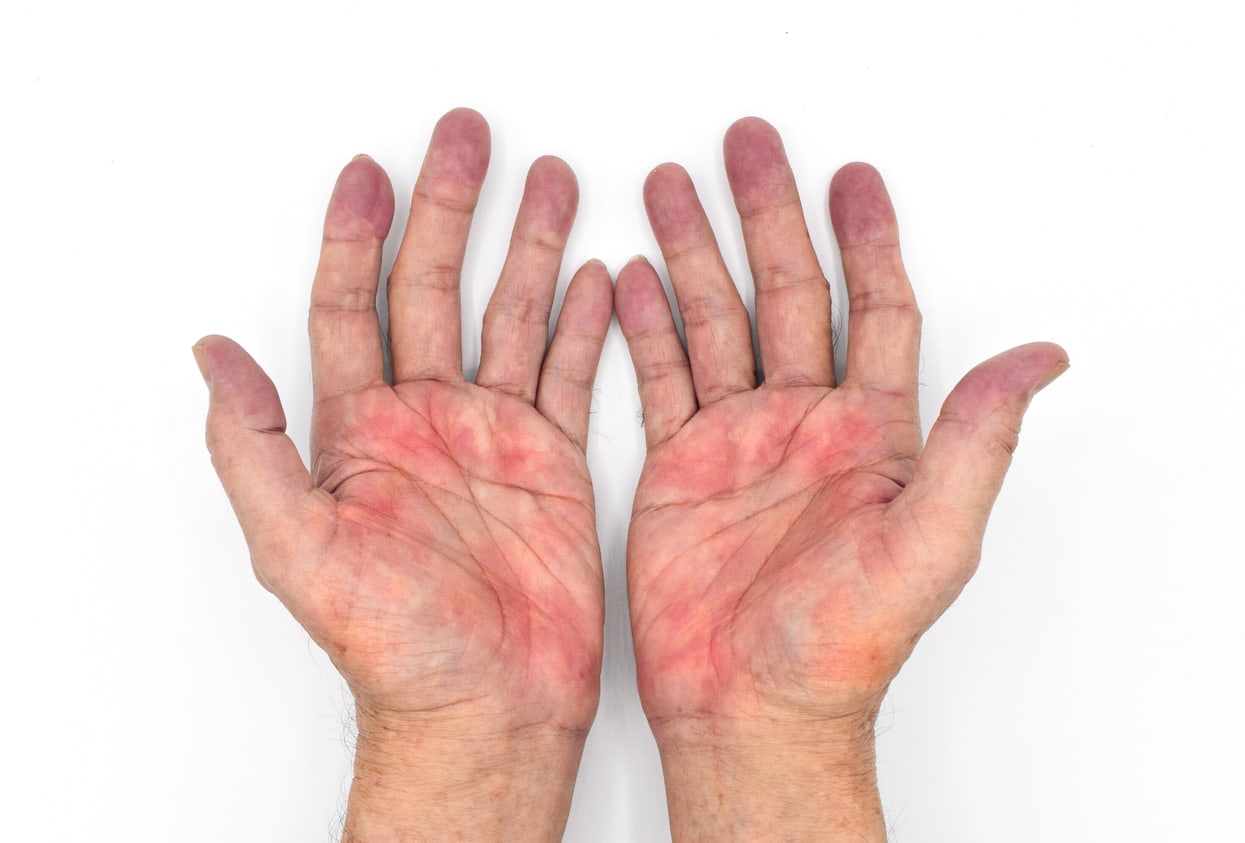
Clinical Report: What Prevents Chemo-Linked HFS?
Overview
Topical diclofenac and silymarin significantly reduce the risk of clinically significant hand-foot syndrome (HFS) in chemotherapy patients. This systematic review and network meta-analysis evaluated various pharmacologic strategies and highlighted the need for larger confirmatory trials.
Background
Hand-foot syndrome (HFS) is a common and dose-dependent toxicity associated with chemotherapy, particularly with agents like capecitabine. It can lead to significant discomfort and may necessitate dose reductions or treatment interruptions. Understanding effective preventive strategies is crucial for improving patient quality of life during cancer treatment.
Data Highlights
| Intervention | Effect on HFS |
|---|---|
| Topical Silymarin | Reduced grade 2 or higher HFS |
| Diclofenac Gel | Reduced grade 2 or higher HFS |
| Pyridoxine (400 mg) | Reduced grade 2 or higher HFS |
| Celecoxib | Reduced grade 2 or higher HFS |
| Mapisal Cream | Increased risk of HFS |
Key Findings
- Topical diclofenac and silymarin significantly reduced grade 2 or higher HFS compared to placebo.
- Four interventions showed statistically significant benefits: topical silymarin, diclofenac gel, pyridoxine (400 mg), and celecoxib.
- Diclofenac was supported by a larger phase 3 trial, indicating stronger evidence for its efficacy.
- HFS grading systems varied across trials, which may affect the generalizability of findings.
- Most trials included patients treated with capecitabine, limiting the applicability to other chemotherapeutic agents.
Clinical Implications
Clinicians should consider prescribing topical diclofenac or silymarin for patients at risk of developing HFS during chemotherapy. Awareness of the potential for dose reductions or treatment interruptions due to HFS is essential for managing patient care effectively.
Conclusion
The findings underscore the importance of preventive strategies for HFS in chemotherapy patients, with diclofenac showing the most consistent evidence. Further research is needed to validate the efficacy of silymarin and other interventions.
References
- JAMA Dermatology, 2026 -- Preventing Hand-Foot Syndrome in Patients With Cancer: A Systematic Review and Network Meta-Analysis
- eviQ, Hand foot syndrome
- Blood Cancer Journal, 2023 -- Modifying chemotherapy response by targeted inhibition of eukaryotic initiation factor 4A
- Open Forum Infectious Diseases, 2023 -- Can T Cell Therapy Targeting Hepatitis E Virus (HEV) Fulfill the Needs of Patients with Refractory Chronic HEV Infection?
- Blood Cancer Journal, 2023 -- Concurrent Presence of Clonally Related Follicular Lymphoma and Histiocytic Sarcoma
- Bone Marrow Transplantation — Reduced Occurrence of Hepatic Sinusoidal Obstruction Syndrome/Veno-Occlusive Disease in Adults Receiving Allogenic Stem Cell Transplantation with Prophylactic Ursodiol and Low-Dose Heparin
- Hand foot syndrome | eviQ
- Preventing Hand-Foot Syndrome in Patients With Cancer: A Systematic Review and Network Meta-Analysis | Oncology | JAMA Dermatology | JAMA Network
- A phase II study evaluating the preventive effect of topical hydrocortisone for capecitabine-induced hand-foot syndrome in patients with colorectal cancer receiving adjuvant chemotherapy with capecitabine plus oxaliplatin (T-CRACC study) | International Journal of Clinical Oncology | Springer Nature Link
This content is an AI-generated, fully rewritten summary based on a published scholarly article. It does not reproduce the original text and is not a substitute for the original publication. Readers are encouraged to consult the source for full context, data, and methodology.