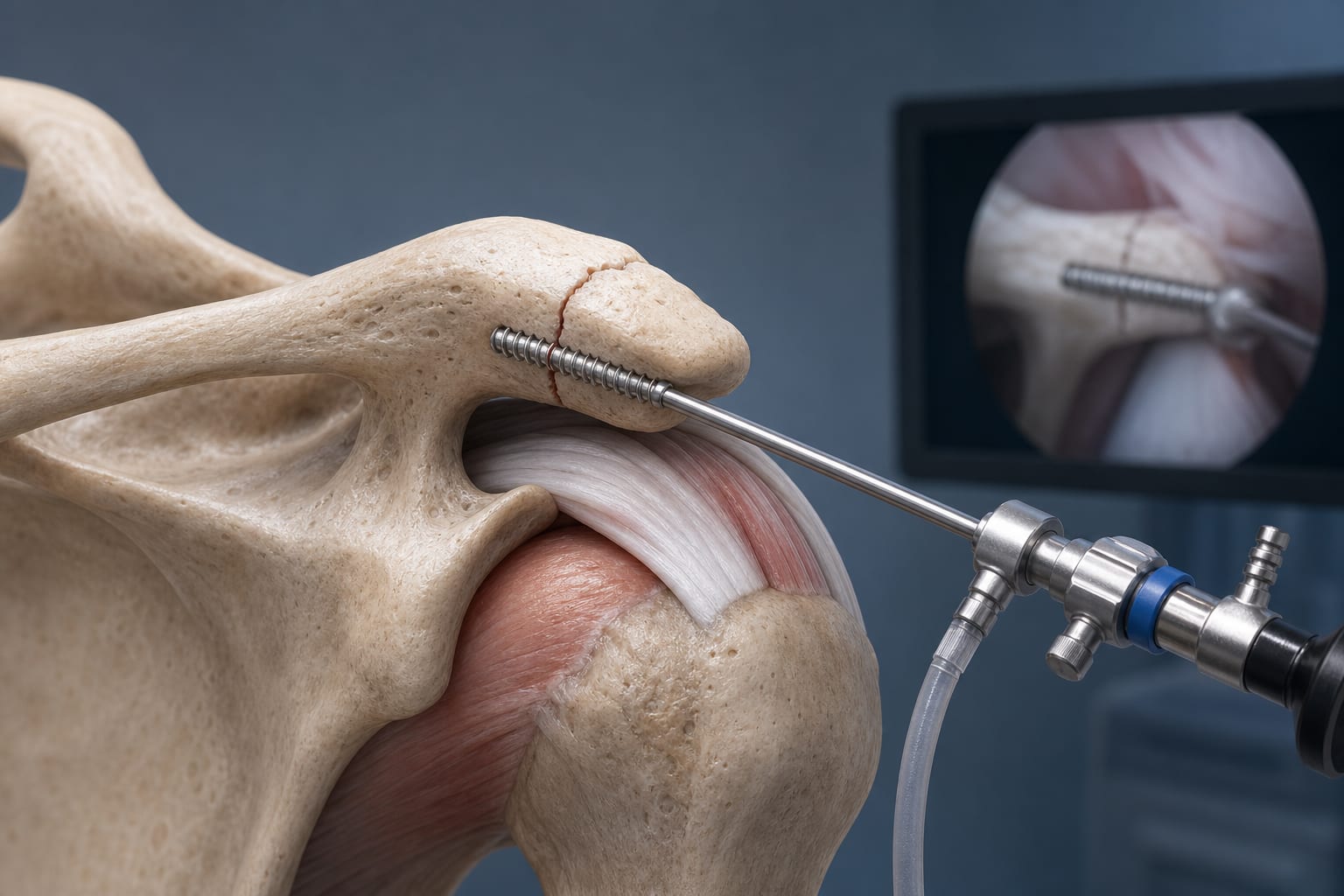
The Role of Temporary Tourniquets and Electrocautery in Local Anesthesia with Epinephrine for Metacarpal Fracture Surgery
-
By
-
Ren-Guo Xie
-
Jian-Wei Hou
-
July 10, 2026
Clinical Report: The Role of Temporary Tourniquets and Electrocautery in Local Anesthesia
Overview
This study evaluates the effectiveness of electrocauterization and a transient tourniquet in enhancing local anesthesia with epinephrine during metacarpal fracture surgery.
Background
The use of tourniquets in hand surgery is critical for achieving a bloodless field, which facilitates the identification of delicate anatomical structures. Local anesthesia with epinephrine has gained popularity due to its safety profile and effectiveness, yet concerns about patient discomfort and the potential for complications remain. Understanding the role of adjunct techniques like electrocauterization and transient tourniquets is important.
Data Highlights
| Parameter | Mean Value |
|---|---|
| Time patients felt uncomfortable due to tourniquet | 16 min |
| Mean tourniquet release time | 29 min |
| Pain during surgery | None reported |
| Bleeding in surgical field | Little to none |
Key Findings
- None of the patients experienced pain during the surgical procedure.
- The mean time at which patients felt uncomfortable due to the tourniquet was approximately 16 minutes.
- The mean tourniquet release time was approximately 29 minutes.
- There was minimal bleeding in the surgical field, allowing for clear visualization of anatomical structures.
- Postoperative inspections showed no symptoms of inflammation.
Clinical Implications
The combination of local anesthesia with epinephrine, electrocauterization, and a transient tourniquet can enhance surgical efficiency and patient comfort during metacarpal fracture surgeries.
Conclusion
The findings support the use of electrocauterization and transient tourniquets in local anesthesia for metacarpal fracture surgery.
Related Resources & Content
- Archives of Orthopaedic and Trauma Surgery, 2026 -- Tourniquet effect on rocuronium use during lower extremity fracture fixation
- Archives of Orthopaedic and Trauma Surgery, 2025 -- Knowledge, training, and practice patterns in pneumatic tourniquet use among orthopedic physicians: a national cross-sectional survey
- Epinephrine Injection in WALANT Technique May Cause Temporary, Reversible Decreases in Fingertip Oxygen Saturation, 2020
- WALANT | The British Society for Surgery of the Hand
- A Systematic Review and Meta-Analysis of Randomized Controlled Trials Comparing WALANT to Traditional Anesthesia in Hand Surgery - PubMed
- Frontiers | Transient Tourniquet and Electro-cauterization Applied for Surgery in Metacarpal Fractures Under Local Anesthesia with Epinephrine
- Safety of High-Dose Ropivacaine and Dexmedetomidine for Local Infiltration Anesthesia in Major Knee Surgical Procedures
- WALANT | The British Society for Surgery of the Hand
- A Systematic Review and Meta-Analysis of Randomized Controlled Trials Comparing WALANT to Traditional Anesthesia in Hand Surgery - PubMed
- Frontiers | Transient Tourniquet and Electro-cauterization Applied for Surgery in Metacarpal Fractures Under Local Anesthesia with Epinephrine
Based on findings from:
Transient tourniquets and electrocauterization in surgeries for metacarpal fractures under local anesthesia with epinephrine
Ren-Guo Xie, Jian-Wei Hou. Frontiers In Anesthesiology, 2026.
https://www.frontiersin.org/journals/anesthesiology/articles/10.3389/fanes.2026.1803050/full
This content is an AI-generated, fully rewritten summary based on a published scholarly article. It does not reproduce the original text and is not a substitute for the original publication. Readers are encouraged to consult the source for full context, data, and methodology.