Impact of multi-channel follow-up as continuous nursing on cancer pain control, adverse reactions, and quality of life in patients with digestive tract tumors: a controlled study of 136 cases - Report - MDSpire

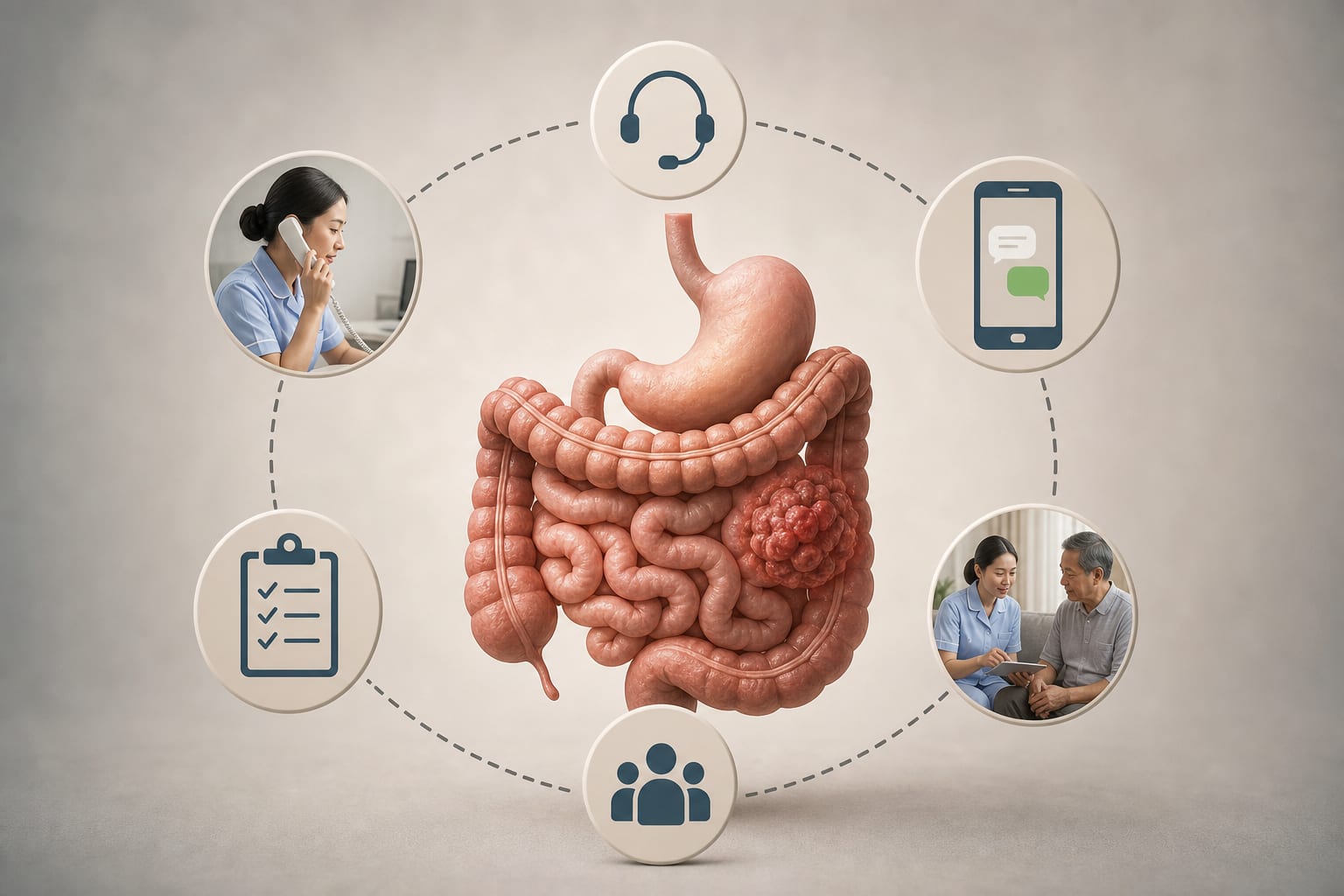
Evaluation of Continuous Nursing Through Multi-Channel Follow-Up on Pain Management, Side Effects, and Quality of Life in Patients with Digestive Tract Tumors: A Controlled Study Involving 136 Participants

  • By

  • Jue Fu

  • Jing Cheng

  • Chenxia Ju

  • Kejun Dai

  • Lei Wang

  • July 20, 2026

Share

Clinical Report: Evaluation of Continuous Nursing Through Multi-Channel Follow-Up

Overview

This study evaluated the effectiveness of multi-channel follow-up in managing pain, side effects, and quality of life in patients with digestive tract tumors. Results indicated improvements in pain control, reduced constipation, and enhanced sleep quality among patients receiving this intervention compared to standard follow-up.

Background

Pain management is a critical aspect of care for patients with digestive tract tumors, as inadequate pain control can severely affect quality of life. Traditional follow-up methods often fail to address the dynamic nature of cancer pain post-discharge, leading to gaps in care. Multi-channel follow-up approaches have been proposed to enhance continuity of care and improve patient outcomes.

Data Highlights

OutcomeExperimental Group (n=68)Control Group (n=68)
Pain ScoresLowerHigher
Pain Control SatisfactionHigherLower
Constipation IncidenceLowerHigher
Good Sleep Quality (PSQI ≤7)IncreasedDecreased

Key Findings

  • The experimental group reported lower pain scores compared to the control group.
  • Participants in the experimental group expressed higher satisfaction with pain control.
  • Constipation incidence was lower in the experimental group.
  • Quality of life improved in the experimental group, with more cases of good sleep quality.
  • The association between pain intensity and sleep disturbance weakened after adjusting for group assignment.

Clinical Implications

Healthcare providers may consider adopting multi-channel follow-up models to monitor and support patients with digestive tract tumors.

Conclusion

Multi-channel follow-up as a continuity-of-care nursing intervention has shown to improve pain management and quality of life in patients with digestive tract tumors.
Related Resources & Content

  1. npj Digital Medicine, 2025 -- Effects of Nurse Navigation and Mobile Applications on Patients with Brain Tumors Undergoing Oral Chemotherapy
  2. Frontiers in Oncology, 2026 -- Effect of a nurse-led multidisciplinary team model on chemotherapy-induced nausea and vomiting in lung cancer patients
  3. Prospective Cohort Study Evaluating Quality of Life and Symptom Burden in Patients with Locally Advanced Rectal Cancer Undergoing IMRT-Based Preoperative Radiotherapy, 2025
  4. Adult Cancer Pain, Version 2.2025, NCCN Clinical Practice Guidelines In Oncology - PubMed
  5. Palliative Care for Patients With Cancer: ASCO Guideline Update | Journal of Clinical Oncology
  6. Localised rectal cancer: ESMO Clinical Practice Guideline for diagnosis, treatment and follow-up - PubMed
  7. Implementation of symptom monitoring with electronic patient-reported outcomes (ePROs): Perspectives and recommendations from community oncology practices (Alliance AFT-39) - PMC
  8. Clinical effectiveness of nurse-led palliative care interventions for patients with advanced cancer: A systematic review and meta-analysis - PubMed
  9. Journal of Gastrointestinal Surgery — Long-Term Health-Related Quality of Life After Transthoracic versus Transhiatal Esophagectomy in Esophageal Cancer Patients
  10. NCCN Adult Cancer Pain guideline (Version 2.2025)
  11. ASCO’s 2024 update on integrating palliative care into standard oncology care
  12. ESMO’s 2025 Clinical Practice Guideline for localized rectal cancer
  13. Implementation of symptom monitoring with electronic patient-reported outcomes (ePROs): Perspectives and recommendations from community oncology practices (Alliance AFT-39) - PMC
  14. Clinical effectiveness of nurse-led palliative care interventions for patients with advanced cancer: A systematic review and meta-analysis - PubMed
  15. The effectiveness of nurse-led telehealth interventions in palliative care for patients with cancer and their family caregivers: A systematic review and meta-analysis - PubMed
  16. Effectiveness of nurse-led mHealth interventions on symptom outcomes in adult patients with cancer: a systematic review and meta-analysis - PubMed
  17. The effect of nurse‐led remote telephone triage on symptom management of patients with cancer: A systematic review and meta‐analysis - Sezgin - 2024 - Worldviews on Evidence-Based Nursing - Wiley Online Library
  18. Digital Self-Management of Symptoms and Quality of Life for Patients With Advanced Cancer: A Randomized Clinical Trial | Oncology | JAMA Network Open | JAMA Network
  19. Remote patient monitoring (RPM) in oncology: A systematic review. | JCO Oncology Practice
  20. Real-world implementation of electronic patient-reported outcome measures (ePROMs) in routine oncology practice: a scoping review - PubMed

Original Source(s)

Related Content