Factors Influencing Thrombocytopenia in Critically Ill Individuals
Overview
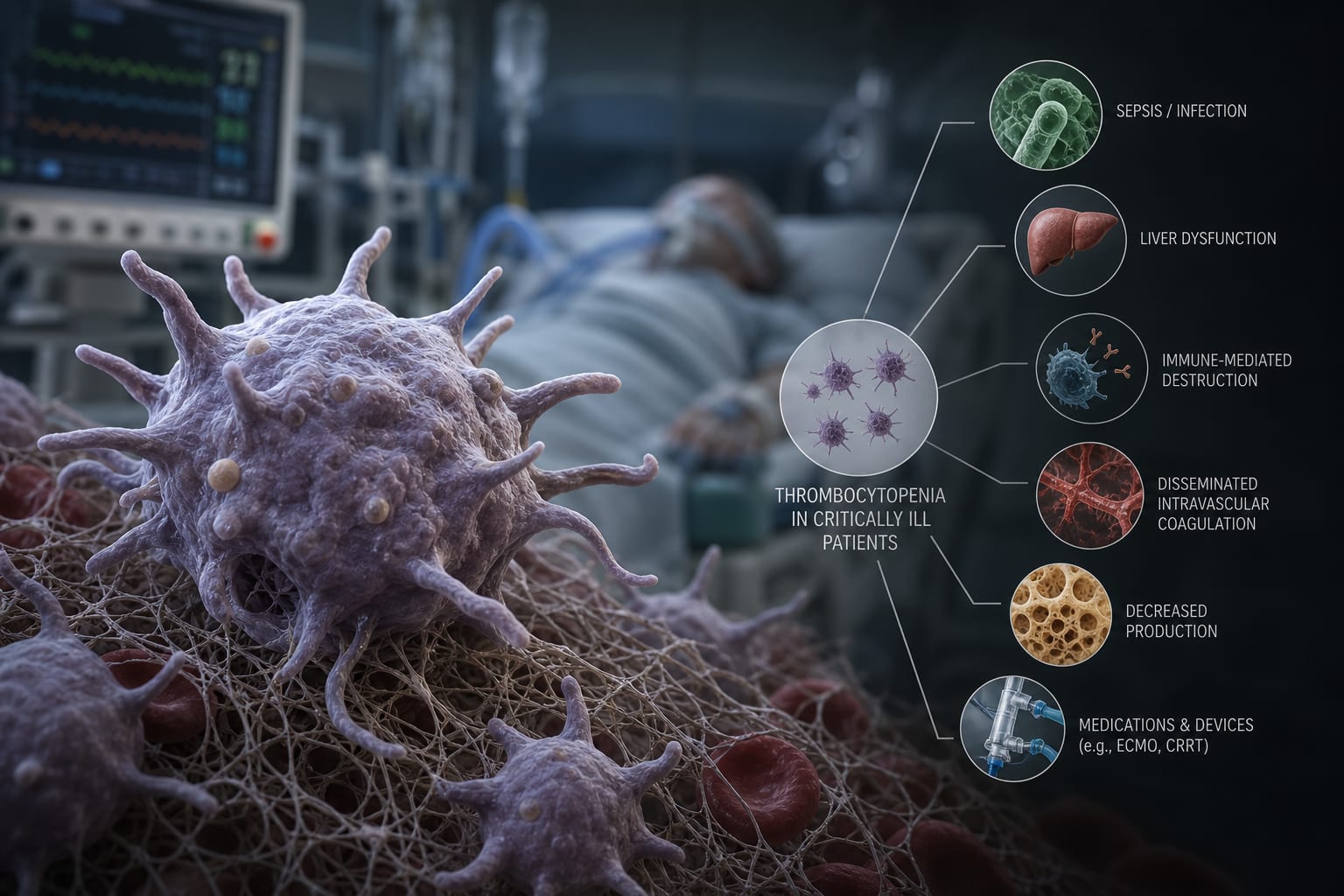
This systematic review and meta-analysis identifies key factors associated with thrombocytopenia in critically ill patients, including bleeding, sepsis, and impaired liver function.
Background
Thrombocytopenia is a prevalent hematological issue in critically ill patients, often linked to severe clinical outcomes such as prolonged ICU stays and increased mortality. Understanding the factors contributing to thrombocytopenia is essential for risk assessment and management in intensive care settings.
Data Highlights
Factor
Odds Ratio (OR)
95% Confidence Interval (CI)
Bleeding
3.49
1.70–7.19
Sepsis
2.32
1.74–3.09
Impaired Liver Function
1.55
1.14–2.11
SAPS < 20
1.09
1.05–1.14
Key Findings
Bleeding is associated with a higher occurrence of thrombocytopenia (OR = 3.49).
Sepsis significantly increases the likelihood of thrombocytopenia (OR = 2.32).
Impaired liver function correlates with thrombocytopenia (OR = 1.55).
A Simplified Acute Physiology Score (SAPS) < 20 shows a modest association with thrombocytopenia (OR = 1.09).
Clinical Implications
Clinicians should be aware of the associations between bleeding, sepsis, and liver function impairment with thrombocytopenia in critically ill patients. Monitoring these factors may facilitate early identification of patients at risk for adverse outcomes.
Conclusion
The study highlights critical factors associated with thrombocytopenia in ICU settings.