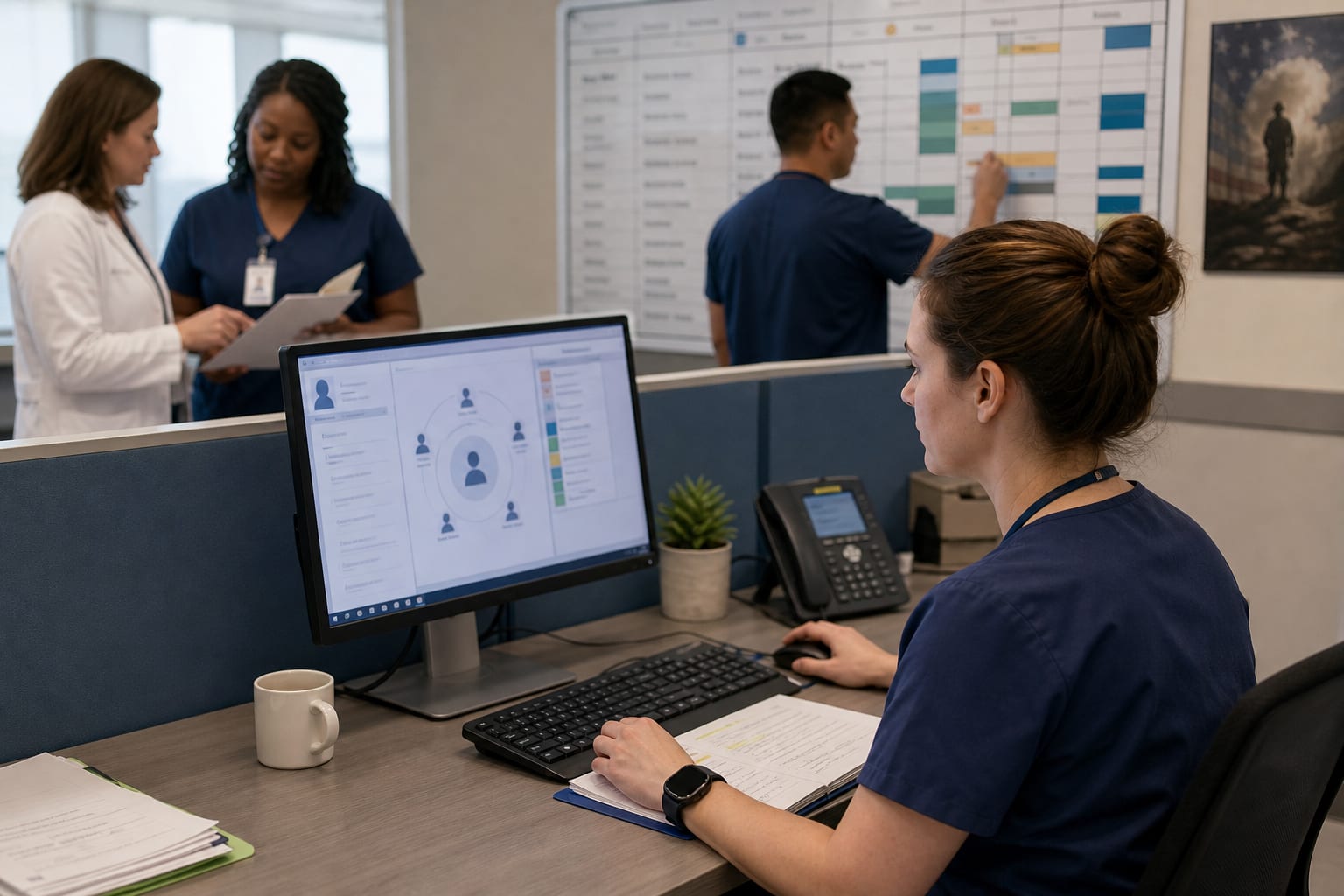
Clinical Report: Variability in Nursing Roles and Responsibilities within VHA
Overview
This study evaluates the roles and responsibilities of RNs and LPN/LVNs within Veterans Health Administration primary care settings. Findings indicate differences in the types of activities performed by RNs compared to LPN/LVNs, with RNs engaging more in care coordination and administrative tasks.
Background
Understanding the roles of nurses within the Veterans Health Administration is crucial. The VHA operates under a patient-centered medical home model, which emphasizes team-based care. However, the lack of clarity in nursing responsibilities may hinder effective practice.
Data Highlights
Nursing Activity
RNs
LPN/LVNs
Care Coordination
1816 (93.6%)
798 (58.5%)
Postdischarge Outreach
1831 (94.4%)
666 (48.9%)
Counseling Patients
1765 (91.0%)
992 (72.8%)
Patient Assessment
1862 (96.0%)
730 (53.6%)
Obtaining Medical Records
1610 (83.0%)
919 (67.4%)
Key Findings
3284 nurses responded to the survey, including 1940 RNs and 1363 LPN/LVNs.
RNs reported higher involvement in care coordination and administrative tasks compared to LPN/LVNs.
LPN/LVNs were more frequently involved in immunizations and health care screenings.
RNs allocated significant time to care coordination and triage, while LPN/LVNs focused on health care screenings.
Both RN and LPN/LVN roles showed considerable overlap in responsibilities.
Clinical Implications
The findings highlight the need for clear delineation of nursing roles within the VHA to optimize patient care and staffing. Understanding the distinct responsibilities of RNs and LPN/LVNs can inform training and operational strategies.
Conclusion
This quality improvement study reveals that RNs and LPN/LVNs share many responsibilities, while their activity patterns differ.