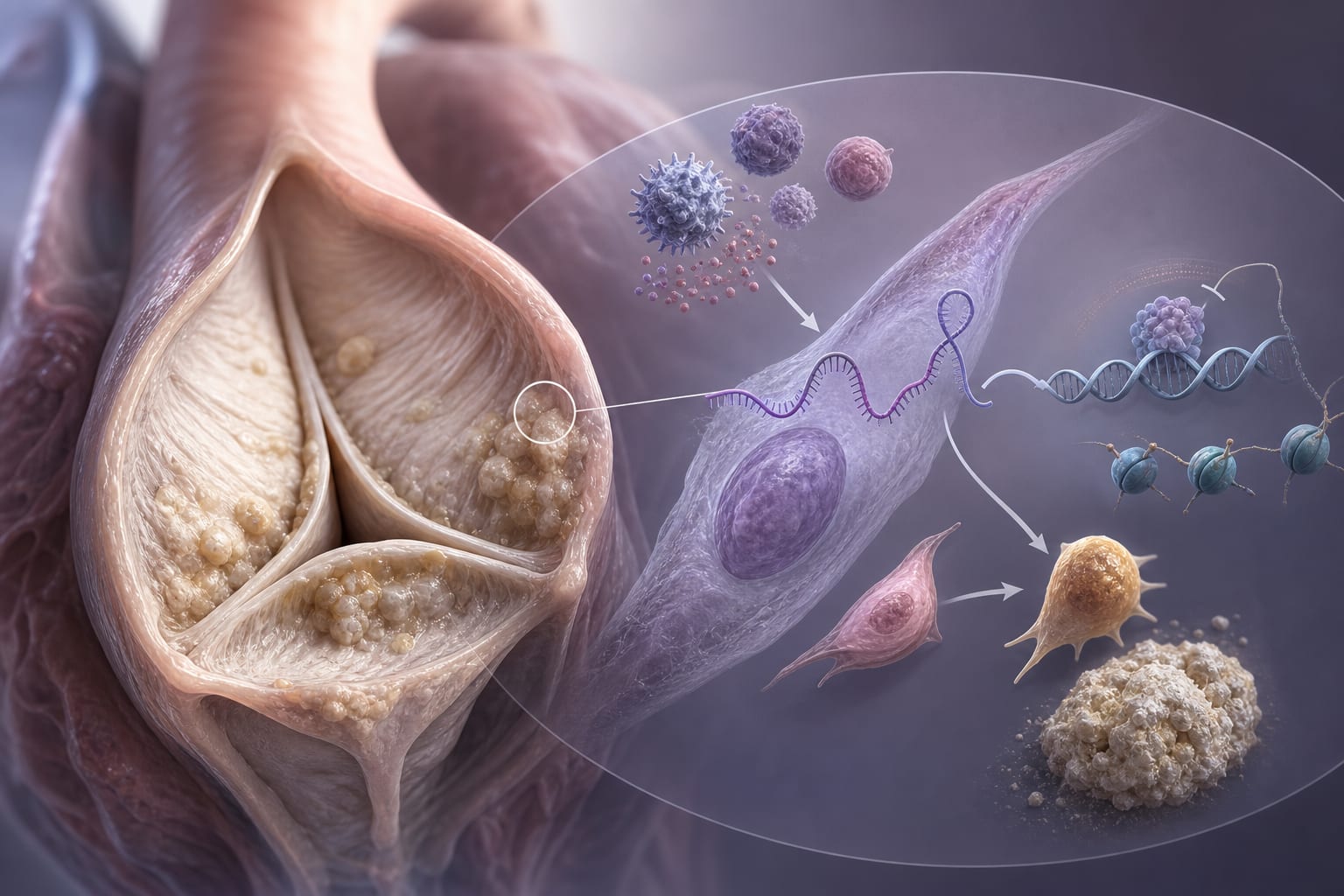
Non-coding RNAs as Key Regulators Linking Inflammatory and Osteogenic Mechanisms in Calcific Aortic Valve Disease
Overview
This review discusses the role of long non-coding RNAs (lncRNAs) in the pathogenesis of calcific aortic valve disease (CAVD). It highlights the complexity of the disease and the involvement of lncRNAs in valvular interstitial cell biology and disease progression.
Background
Calcific aortic valve disease (CAVD) is a prevalent condition that significantly contributes to cardiovascular morbidity and mortality, particularly in the aging population. CAVD is recognized as an actively regulated disease involving complex inflammatory and osteogenic mechanisms. Understanding the molecular underpinnings of CAVD, including the role of non-coding RNAs, is crucial.
Data Highlights
No numerical or trial data available in the source material.
Key Findings
lncRNAs are emerging as critical regulators of valvular interstitial cell (VIC) biology in CAVD.
lncRNAs influence osteogenic differentiation, extracellular matrix remodeling, and inflammatory signaling in aortic stenosis (AS).
Circulating lncRNAs may serve as biomarkers for diagnostic and prognostic applications in AS management.
Research into the specific lncRNA signatures associated with CAVD is ongoing.
Understanding the mechanisms of lncRNA regulation is important for future research.
Clinical Implications
Further research is needed to explore the role of lncRNAs in CAVD and the challenges associated with their delivery and targeting in clinical settings.
Conclusion
The exploration of lncRNAs in the context of CAVD is an area of ongoing research, with the potential to inform future studies.
Creatine's ATP-buffering trick isn't just for biceps. In mice, it juices up dendritic cells' energy supply, sharpening T-cell priming and shrinking tumors on daily injections. Human DCs got the memo too, at least in a dish. Early days, but a fun plot twist for gym-bag chemistry.