Submandibular gland preservation versus removal during neck dissection in oral squamous cell carcinoma: a systematic review and meta-analysis - Report - MDSpire
Advertisement
Submandibular gland preservation versus removal during neck dissection in oral squamous cell carcinoma: a systematic review and meta-analysis
Clinical Report: Comparison of Submandibular Gland Conservation and Excision
Overview
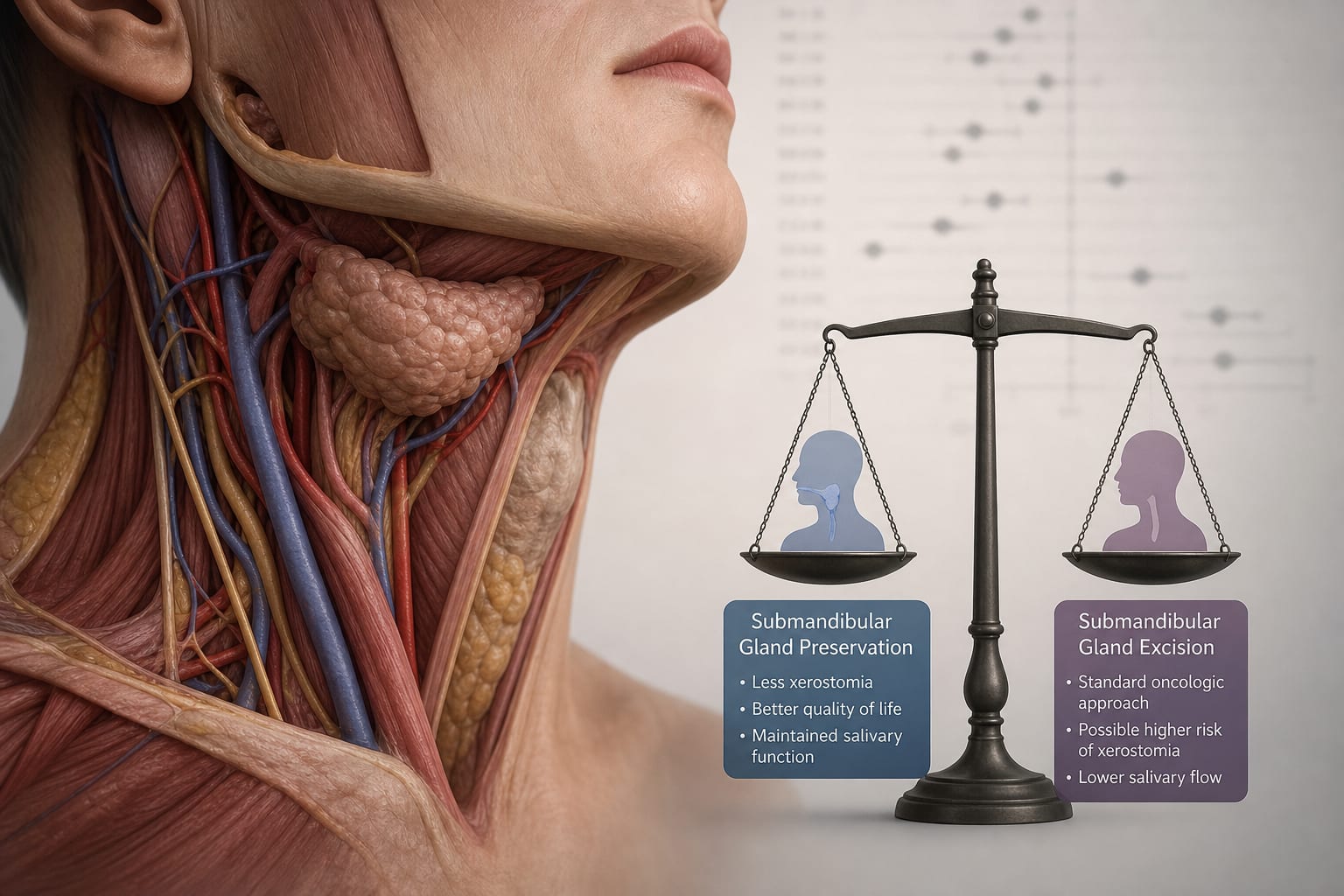
This systematic review and meta-analysis evaluated the oncologic and functional outcomes of submandibular gland (SMG) preservation versus excision during neck dissection for oral squamous cell carcinoma (OSCC). The findings suggest that SMG preservation does not compromise oncologic safety and may reduce postoperative xerostomia, although evidence remains inconclusive.
Background
Oral squamous cell carcinoma (OSCC) is a prevalent head and neck cancer with significant morbidity associated with traditional neck dissection techniques. The routine excision of the submandibular gland during neck dissection has been questioned due to its potential impact on quality of life, particularly concerning xerostomia. Understanding the implications of SMG preservation is crucial for optimizing surgical outcomes and patient quality of life.
Data Highlights
Outcome
RR
p-value
Locoregional recurrence
1.05
0.81
Disease-specific survival
0.86
0.69
Overall survival
0.80
0.57
Key Findings
SMG preservation did not increase locoregional recurrence (RR 1.05, p = 0.81).
No significant difference in disease-specific survival was observed (RR 0.86, p = 0.69).
Overall survival rates were similar between preservation and excision groups (RR 0.80, p = 0.57).
Xerostomia outcomes varied, with some studies suggesting reduced dry mouth post-preservation.
Oncologic safety was maintained in early-stage OSCC (T1–T2 N0).
Evidence regarding xerostomia remains inconclusive due to study heterogeneity.
Clinical Implications
Clinicians may consider SMG preservation during neck dissection for selected OSCC patients to avoid complications such as xerostomia without compromising oncologic outcomes. However, careful patient selection and consideration of tumor characteristics are essential.
Conclusion
The findings support SMG preservation as a viable option in neck dissection for OSCC, with no adverse effects on oncologic outcomes, although further research is needed to clarify its impact on xerostomia.