Microbial Metabolites as Modulators of Nasal Mucosal Immune Tolerance in CRS
Overview
This review highlights the role of microbial metabolites in modulating immune responses in chronic rhinosinusitis (CRS). It emphasizes the importance of these metabolites over microbial identity in maintaining nasal mucosal immune tolerance.
Background
Chronic rhinosinusitis (CRS) affects approximately 11% of adults globally and is characterized by persistent inflammation of the nasal cavity and paranasal sinuses. Despite various treatment options, recurrence rates remain high, indicating a need for deeper understanding of the underlying immunological mechanisms. The transition from a compositional view of the microbiome to one that considers the role of microbial metabolites represents a significant shift in understanding CRS pathophysiology.
Data Highlights
No numerical data available in the source material.
Key Findings
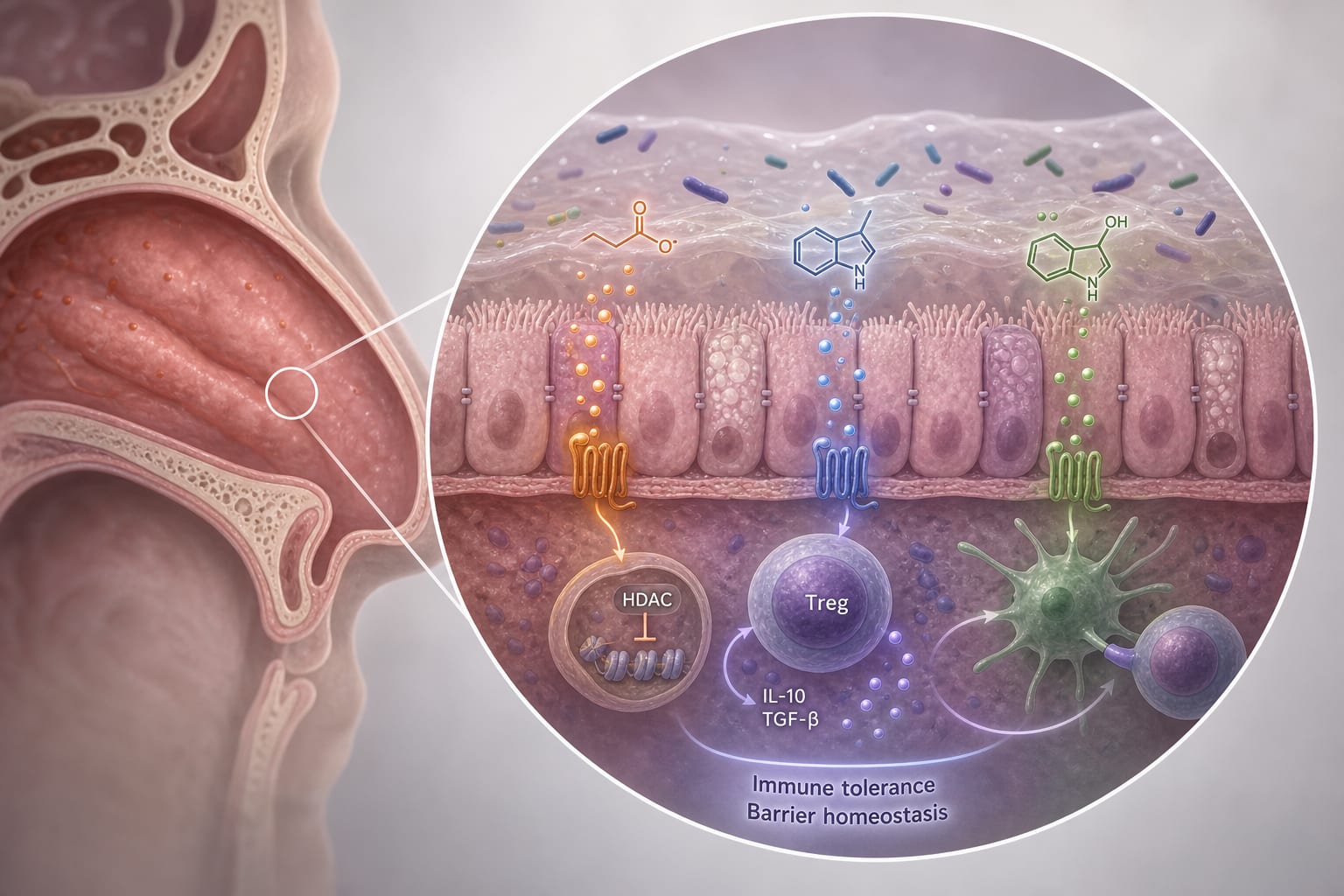
Microbial metabolites, rather than microbial identity, are crucial in mediating immune responses in CRS.
Short-chain fatty acids (SCFAs) activate GPR43 and promote regulatory T cell (Treg) induction.
Tryptophan-derived indole metabolites engage the aryl hydrocarbon receptor (AhR) to support ILC3 function and inhibit Th2/Th17 polarization.
Secondary bile acids modulate the Treg/Th17 balance through FXR and TGR5 signaling.
Virulence factors from Staphylococcus aureus can activate the NLRP3 inflammasome, leading to inflammation and epithelial disruption.
Postbiotic supplementation may serve as a precision therapeutic strategy to restore immune homeostasis in CRS.
Clinical Implications
Understanding the role of microbial metabolites in CRS may inform new therapeutic strategies, particularly postbiotic supplementation tailored to individual patient profiles. This approach could enhance the management of CRS by addressing the underlying immune dysregulation.
Conclusion
The review underscores the significance of microbial metabolites in CRS pathogenesis and suggests a shift towards metabolite-based therapeutic strategies to improve patient outcomes.