Immediate post-injury HMGB1 neutralization prevents synaptic dysfunction in burn and hindlimb unloaded rats - Report - MDSpire

Immediate post-injury HMGB1 neutralization prevents synaptic dysfunction in burn and hindlimb unloaded rats

  • By

  • Sravan Gopalkrishna Shetty Sreenivasa Murthy

  • Gábor Törő

  • Allison Wyrick

  • Amina El Ayadi

  • Steven E. Wolf

  • Nisha J. Garg

  • Balaji Krishnan

  • Juquan Song

  • June 23, 2026

  • 0 min

Share

Early Neutralization of HMGB1 After Injury Mitigates Synaptic Impairment in Rats

Overview

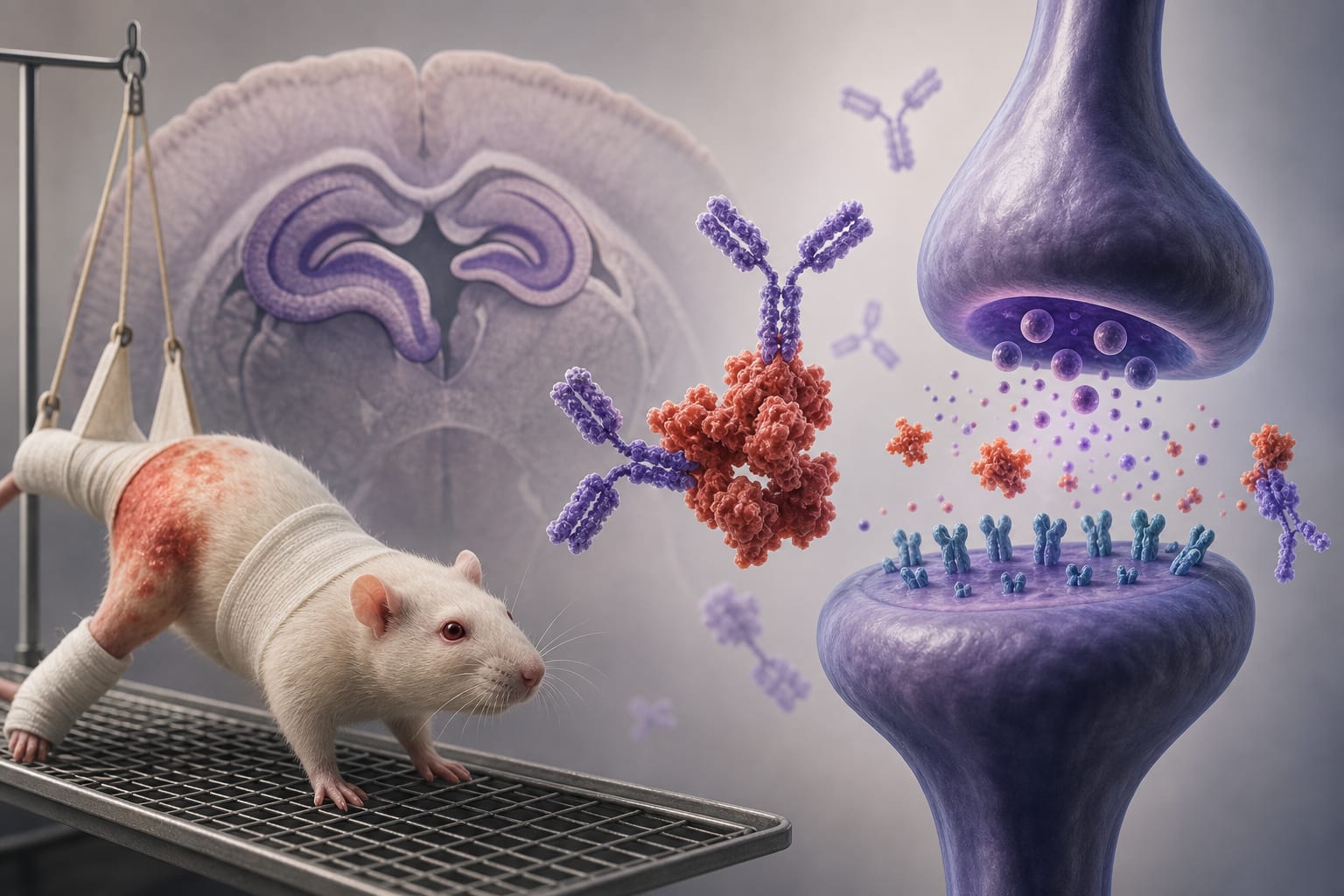
This study investigates the role of HMGB1 in neuroinflammation following severe burns and hindlimb unloading in rats. The administration of an anti-HMGB1 neutralizing antibody was found to mitigate synaptic impairment and inflammation.

Background

Severe burns are a significant global health issue, leading to numerous medical encounters and high mortality rates. Beyond immediate physical injuries, burn victims often experience long-term cognitive and psychological impairments. Understanding the mechanisms behind these effects, particularly the role of neuroinflammation, is crucial for developing effective treatments.

Data Highlights

ParameterFindings
Burn wound sizeSignificantly increased in rats subjected to hindlimb unloading
Inflammatory cytokinesElevated IL-10 and IL-1β levels
Synaptic functionAnti-HMGB1 treatment restored normal potentiation patterns

Key Findings

  • Severe burns and hindlimb unloading induce hyperinflammation and synaptic dysfunction.
  • Anti-HMGB1 treatment mitigates systemic inflammation and preserves hippocampal function.
  • Burn-HLU rats treated with vehicle showed pronounced postsynaptic hyperexcitability.
  • Anti-HMGB1 administration moderated the activated CD4+ T cells and NK cells response.
  • Electrophysiological analysis indicated heightened excitability in untreated burn-HLU rats.

Clinical Implications

Further research is needed to explore the applicability of these results in clinical settings.

Conclusion

Early neutralization of HMGB1 following severe burns may protect against neuroinflammation and synaptic impairment, highlighting its potential as a therapeutic target.

Related Resources & Content

  1. Acta Neuropathologica — TAM Receptors Facilitate Pain Resolution and Fibrinolysis Induced by Fpr2 Following Nerve Injury
  2. Acta Neuropathologica — Inhibition of Ferroptosis Enhances Recovery Following Early and Late Intervention in Mild Spinal Cord Injury
  3. Basic Research in Cardiology — Administering Malonate During Reperfusion Mitigates Heart Failure Risk Following Myocardial Infarction by Reducing Ischemia/Reperfusion Damage
  4. A Focused Update to SCCM PADIS Guidelines for Adult Patients | SCCM
  5. Basic Research in Cardiology — Deficiency of Homozygous Smpd1 Exacerbates Brain Ischemia/Reperfusion Injury Through Polymorphonuclear Neutrophil Mechanisms, While Heterozygous Smpd1 Deficiency Offers Protection Against Mild Focal Cerebral Ischemia
  6. Measurement of central nervous system related biomarkers in plasma of burn patients
  7. A Focused Update to SCCM PADIS Guidelines for Adult Patients | SCCM
  8. Effectiveness of drug interventions to prevent delirium after surgery for older adults: systematic review and network meta-analysis of randomised controlled trials - PMC

Original Source(s)

Related Content