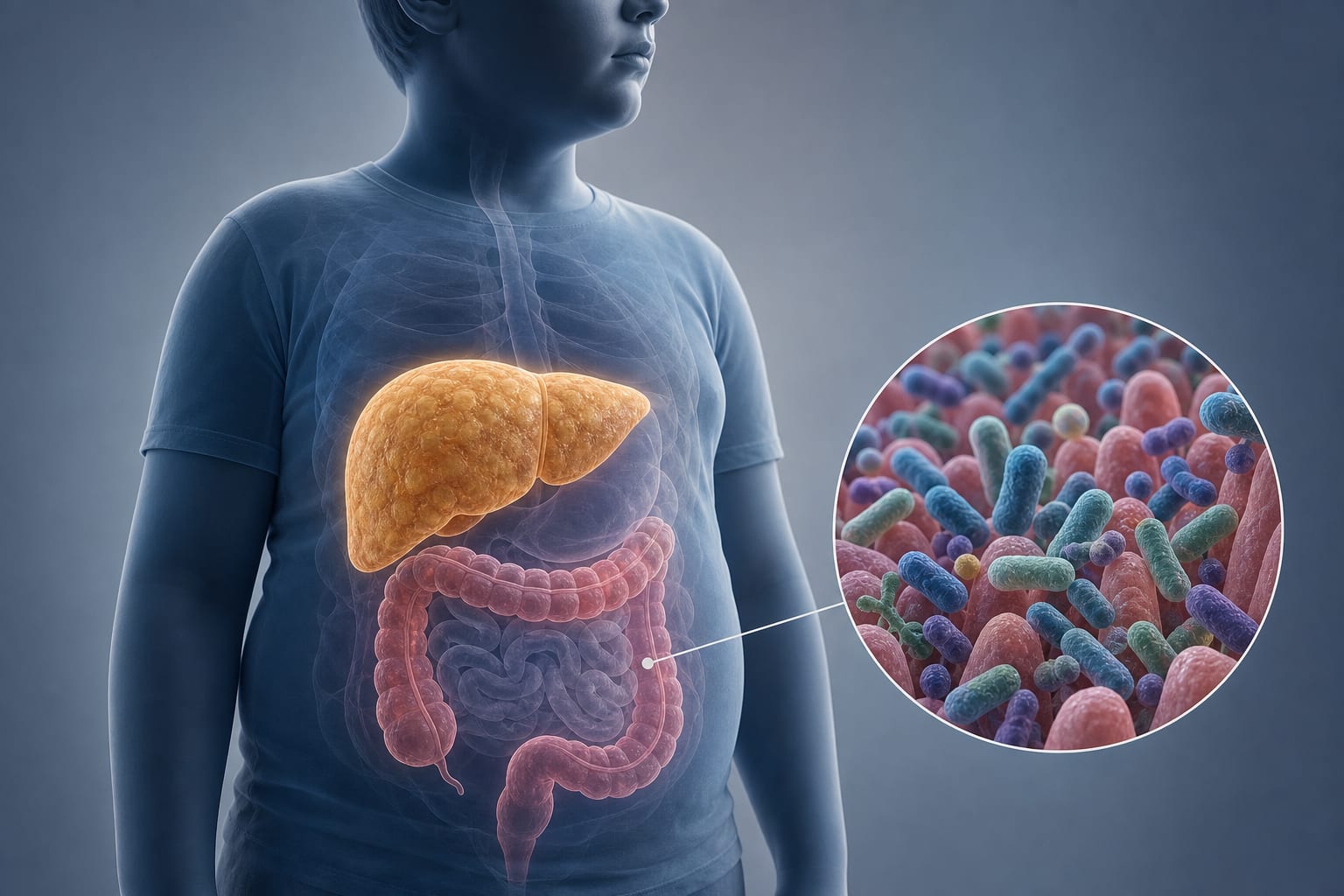
Familial Hypobetalipoproteinemia in Pediatric Fatty Liver Disease
Overview
Familial hypobetalipoproteinemia (FHBL) is an underrecognized genetic cause of fatty liver in children, often overlooked especially in those with obesity. This case series of seven patients highlights the importance of considering FHBL in pediatric fatty liver disease, as it may coexist with metabolic dysfunction-associated steatotic liver disease (MASLD).
Background
Fatty liver disease is a leading cause of chronic liver disease in children, commonly linked to metabolic dysfunction-associated steatotic liver disease (MASLD). However, in lean or younger children, genetic disorders such as familial hypobetalipoproteinemia (FHBL) should be considered. FHBL is an autosomal codominant disorder characterized by low plasma LDL and apolipoprotein B levels, caused by variants in the APOB or MTTP genes. While FHBL may reduce cardiovascular risk, it increases the risk of liver steatosis, fibrosis, and cancer, necessitating early diagnosis and management.
Data Highlights
Parameter
Value
Number of patients
7
Mean age at diagnosis
15.3 years (range 4–38)
Gender
4 males
Mean BMI
27 kg/m2
Patients with BMI >30 kg/m2
2
Median follow-up time
12 months (IQR 1–57)
Elevated liver enzymes
3 patients (50–300 IU/L)
Median AST
30 IU/L (IQR 26–40.75)
Median ALT
32 IU/L (IQR 24.5–74)
Median triglycerides
74 mg/dL (IQR 62–125)
Median LDL
55.3 mg/dL (IQR 30–84.5)
Median ApoB
39.5 mg/dL (IQR 35.2–43)
Key Findings
Seven patients from three families were diagnosed with FHBL presenting with fatty liver, including children and adolescents.
Genetic testing revealed biallelic MTTP variants in two siblings and heterozygous APOB variants in five patients.
Patients had low LDL and ApoB plasma levels, consistent with FHBL diagnostic criteria.
FHBL can coexist with obesity and metabolic dysfunction, potentially masking its diagnosis.
Elevated liver enzymes were present in some patients, indicating liver involvement.
Early recognition of FHBL is important to prevent progression to advanced liver disease.
Clinical Implications
Clinicians should maintain a high index of suspicion for FHBL in pediatric patients presenting with fatty liver, especially in lean children or those with atypical features. Genetic testing for APOB and MTTP variants can aid diagnosis. Recognizing FHBL allows for tailored management to prevent progression of liver disease and addresses the potential coexistence with obesity-related fatty liver.
Conclusion
Familial hypobetalipoproteinemia is a frequently overlooked cause of pediatric fatty liver disease that may coexist with obesity and metabolic dysfunction. Awareness and early diagnosis are essential to optimize patient outcomes and prevent advanced liver complications.
References
Article Source 2024 -- Familial Hypobetalipoproteinemia as a Frequently Overlooked Factor in Pediatric Fatty Liver Disease