Dacomitinib in Combination with chemotherapy is effective in lung adenocarcinoma with rare EGFR L747P mutation and bone metastases: a case report - Report - MDSpire
Advertisement
Dacomitinib in Combination with chemotherapy is effective in lung adenocarcinoma with rare EGFR L747P mutation and bone metastases: a case report
Clinical Report: Efficacy of Dacomitinib Combined with Chemotherapy in Lung Adenocarcinoma
Overview
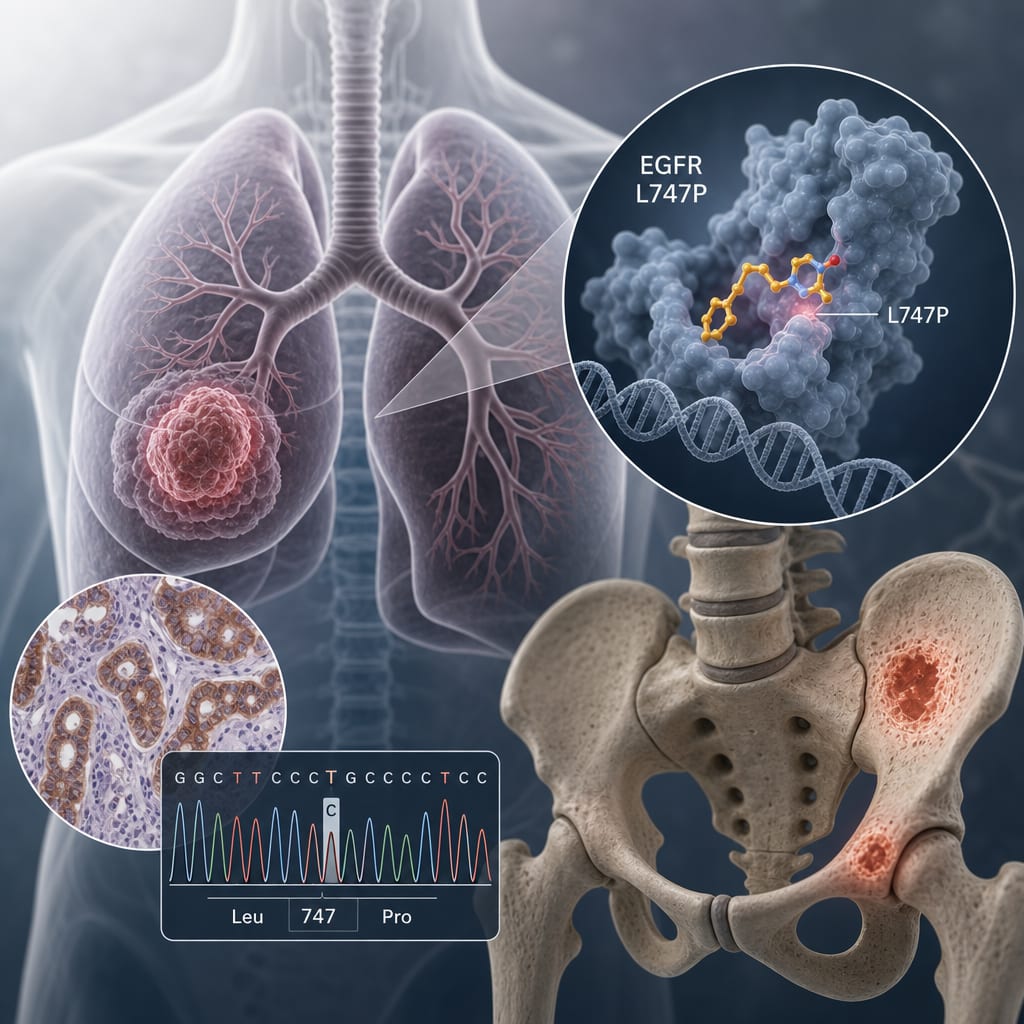
This case study demonstrates that dacomitinib, when combined with chemotherapy, can lead to significant tumor regression in a patient with lung adenocarcinoma harboring the rare EGFR L747P mutation and bone metastases. The patient achieved a progression-free survival of 16 months with manageable adverse events.
Background
Lung cancer is the leading cause of cancer-related mortality, with non-small cell lung cancer (NSCLC) being the most common subtype. Rare EGFR mutations, such as L747P, account for a small percentage of cases and their treatment responses are not well understood. Understanding the efficacy of targeted therapies like dacomitinib in this context is crucial for improving treatment outcomes in patients with rare mutations.
Data Highlights
Parameter
Value
Progression-Free Survival (PFS)
16 months
Treatment Efficacy
Partial Response (PR)
Adverse Events
Skin rash, Paronychia
Key Findings
Dacomitinib combined with chemotherapy showed efficacy in a patient with EGFR L747P mutation.
The patient experienced a decrease in tumor markers and regression of pulmonary lesions and bone metastases.
Progression-free survival was achieved for 16 months following the combined treatment.
Adverse events were manageable, including skin rash and paronychia.
Rare EGFR mutations like L747P may respond differently to various EGFR-TKIs, with second-generation inhibitors showing promise.
Clinical Implications
The findings suggest that dacomitinib may be a viable treatment option for patients with lung adenocarcinoma and rare EGFR mutations, particularly when combined with chemotherapy. Clinicians should consider the potential benefits of this combination therapy in similar patient populations.
Conclusion
Dacomitinib, in combination with chemotherapy, may offer a sustained clinical benefit for patients with lung adenocarcinoma harboring the EGFR L747P mutation, warranting further investigation in larger studies.