Clinical Report: Comparative Analysis of Obinutuzumab and Rituximab in B-Cell Lymphoma
Overview
This study compares the efficacy and safety of obinutuzumab-based versus rituximab-based chemotherapy in patients with high-tumor burden indolent B-cell lymphoma. Obinutuzumab demonstrated significantly higher complete response rates and improved survival outcomes.
Background
Indolent B-cell non-Hodgkin lymphoma, particularly follicular lymphoma and marginal zone lymphoma, poses a significant treatment challenge due to the risk of disease progression in high-tumor-burden patients. The efficacy of obinutuzumab in this high-risk population has not been thoroughly characterized, making this comparative analysis crucial for treatment decision-making.
Data Highlights
Outcome
Obinutuzumab
Rituximab
P-value
Complete Response Rate (CRR)
82.6%
54.3%
0.014
3-Year Progression-Free Survival (PFS)
81.4%
62.1%
0.0026
3-Year Overall Survival (OS)
99.0%
87.3%
0.004
Progression of Disease within 24 months (POD24)
13.0%
24.5%
0.046
Key Findings
Obinutuzumab-based chemotherapy resulted in a higher complete response rate (82.6%) compared to rituximab (54.3%).
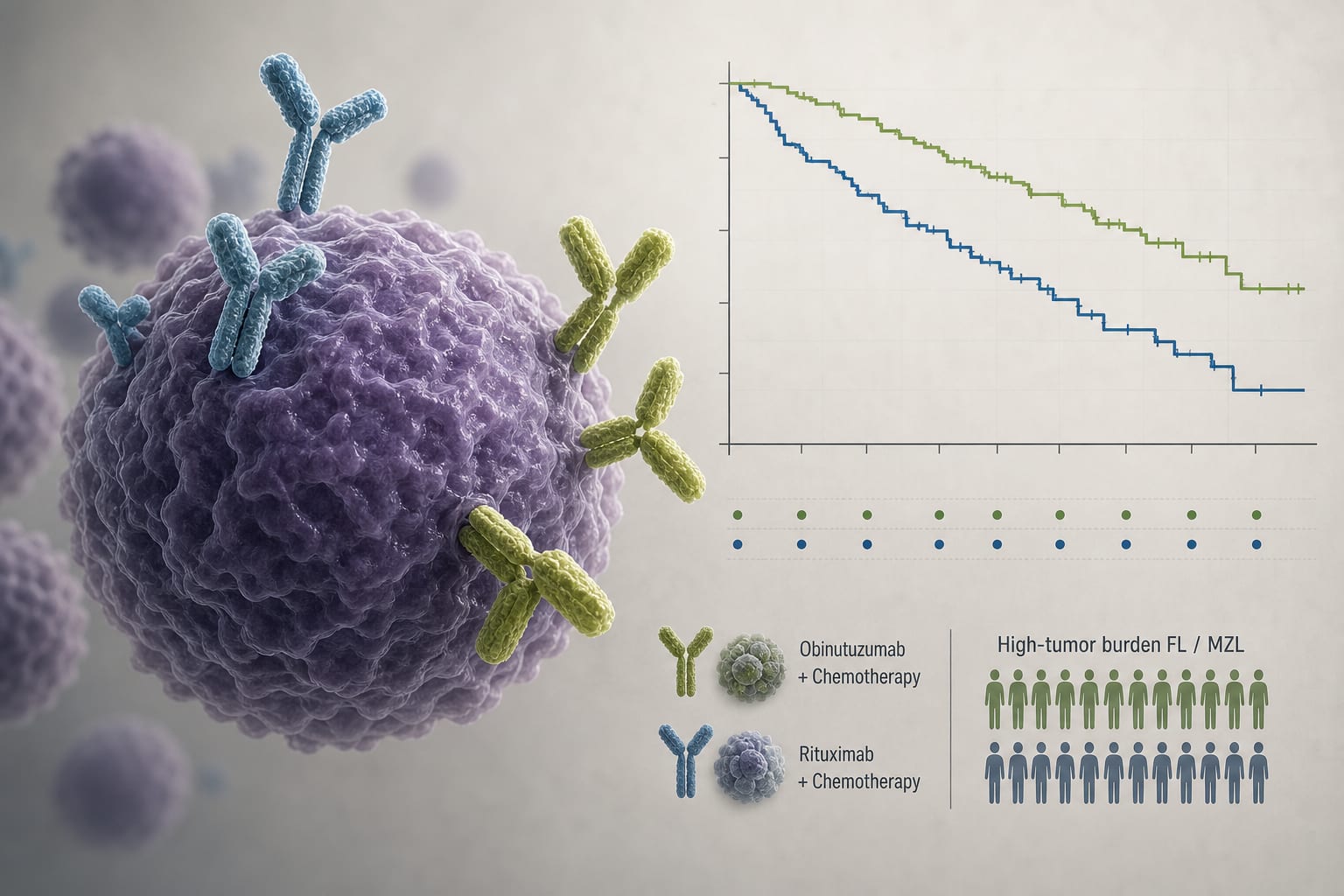
Three-year progression-free survival was significantly better in the obinutuzumab group (81.4%) than in the rituximab group (62.1%).
Overall survival at three years was 99.0% for obinutuzumab versus 87.3% for rituximab.
The incidence of progression of disease within 24 months was lower in the obinutuzumab group (13.0%) compared to the rituximab group (24.5%).
Rituximab-based treatment was identified as an independent risk factor for inferior overall survival.
Safety profiles were similar between both treatment groups, with no significant differences in adverse events.
Clinical Implications
The findings suggest that obinutuzumab should be considered preferentially over rituximab for patients with high-tumor burden indolent B-cell lymphoma due to its superior efficacy. Clinicians should weigh these results when making treatment decisions, particularly in high-risk populations.
Conclusion
Obinutuzumab-based chemotherapy offers significant advantages in terms of response rates and survival outcomes for patients with high-tumor burden indolent B-cell lymphoma compared to rituximab-based therapy. These results support its use in clinical practice.