Clinical Report: Activation of Fibroblast Activation Protein in Cervical Cancer
Overview
Revise to clarify the relationship between FAP expression and [212Pb]Pb-PSV-359 therapy.
Background
Cervical cancer incidence is notably high among women in Appalachian Kentucky, with advanced-stage disease linked to a significant risk of recurrence. Understanding the role of cancer-associated fibroblasts (CAFs) and their expression of FAP is crucial for developing targeted therapies that could improve outcomes for these patients. The potential of FAP-targeted therapies represents a promising avenue for addressing persistent and metastatic disease.
Data Highlights
Finding
Value
FAP expression in evaluable tumors
82% (28 of 34)
Tumors with IRS ≥ 6
59% (20 of 34)
FAP expression in stage IVB tumors
76% (11 of 11)
FAP expression in metastatic tumors
76% (6 of 6)
Key Findings
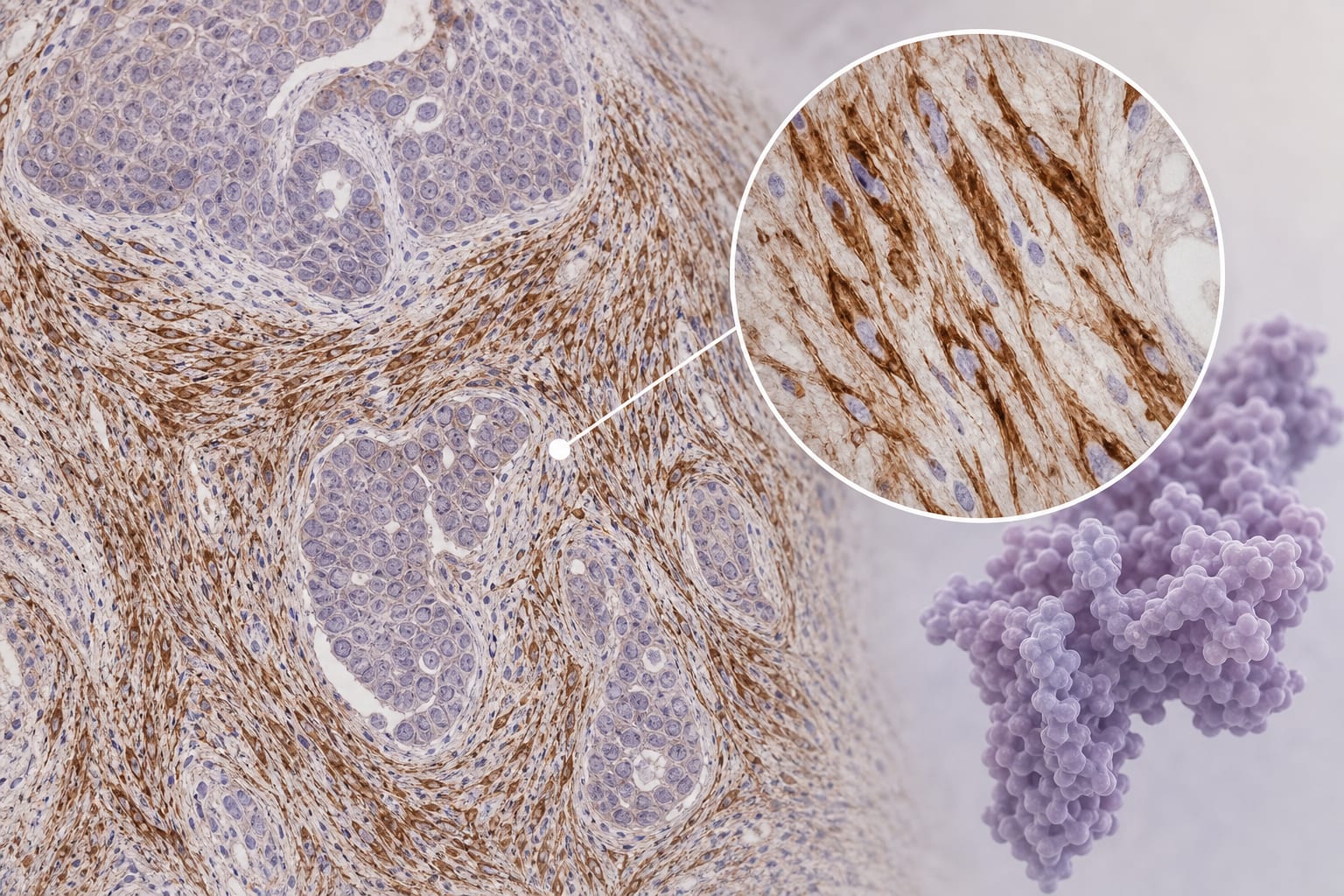
82% of uterine cervix cancer tumors with evaluable stroma expressed FAP.
59% of tumors scored an immunoreactive score (IRS) of six or higher.
Stage IVB tumors showed a 76% expression rate of FAP.
FAP expression may correlate with therapeutic response to [212Pb]Pb-PSV-359.
A phase I clinical trial for metastatic cervical cancer patients is currently underway.
Clinical Implications
The high prevalence of FAP expression in cervical cancer tumors suggests that FAP-targeted therapies could be beneficial for patients with advanced disease. Clinicians should consider FAP immunoreactivity as a potential biomarker for patient selection in clinical trials involving targeted radiopharmaceuticals.
Conclusion
FAP expression in cervical cancer tumors highlights its potential as a therapeutic target, warranting further investigation into FAP-targeted treatments for improving patient outcomes in advanced disease.