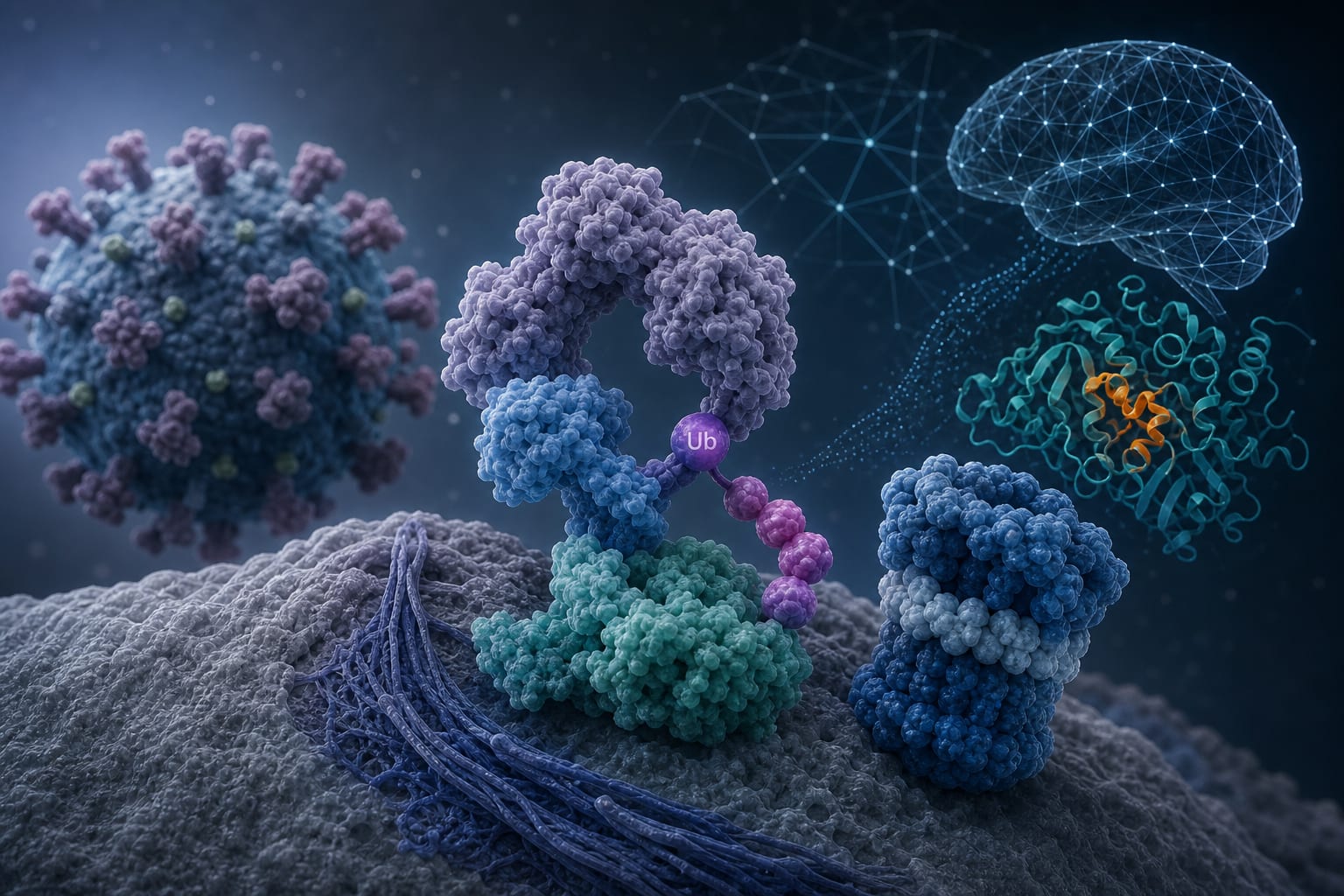
Clinical Report: Exploring Ubiquitin's Role in Regulating Innate Antiviral Immunity
Overview
This report examines the critical role of ubiquitination in innate antiviral immunity and the potential for AI-enhanced therapeutic strategies. It highlights the challenges posed by viral evasion mechanisms and the need for innovative approaches in antiviral drug design.
Background
Ubiquitination is essential for regulating immune responses against viral infections, marking proteins for degradation and facilitating the elimination of infected cells. However, viruses have developed strategies to evade these host defenses, complicating the development of effective antiviral therapies. Understanding the interplay between ubiquitination and viral evasion is crucial for advancing therapeutic strategies.
Data Highlights
No numerical data or trial data presented in the article.
Key Findings
Ubiquitination plays a dual role in antiviral immunity by marking proteins for degradation and recruiting immune factors.
Viruses utilize mechanisms such as molecular mimicry and viral deubiquitinases to evade host immune responses.
AI advancements, particularly in structural modeling, enhance the prediction of viral-host interactions and drug design.
Generative models can optimize antiviral peptides and targeted protein degradation strategies.
The 'Black Box' problem in AI limits the interpretability and practical application of AI-generated models in drug design.
Clinical Implications
Healthcare professionals should be aware of the potential of ubiquitin-targeted therapies in combating viral infections, particularly in the context of emerging viral variants. The integration of AI in drug design may lead to more effective antiviral strategies, although challenges in model transparency must be addressed.
Conclusion
The intersection of ubiquitination and AI presents a promising avenue for developing novel antiviral therapies. Continued research is needed to overcome current limitations and harness these technologies effectively.
“High-dose intravenous vitamin C administered early after injury did not reduce organ dysfunction or [mortality] and should not be a treatment in severe burns.”