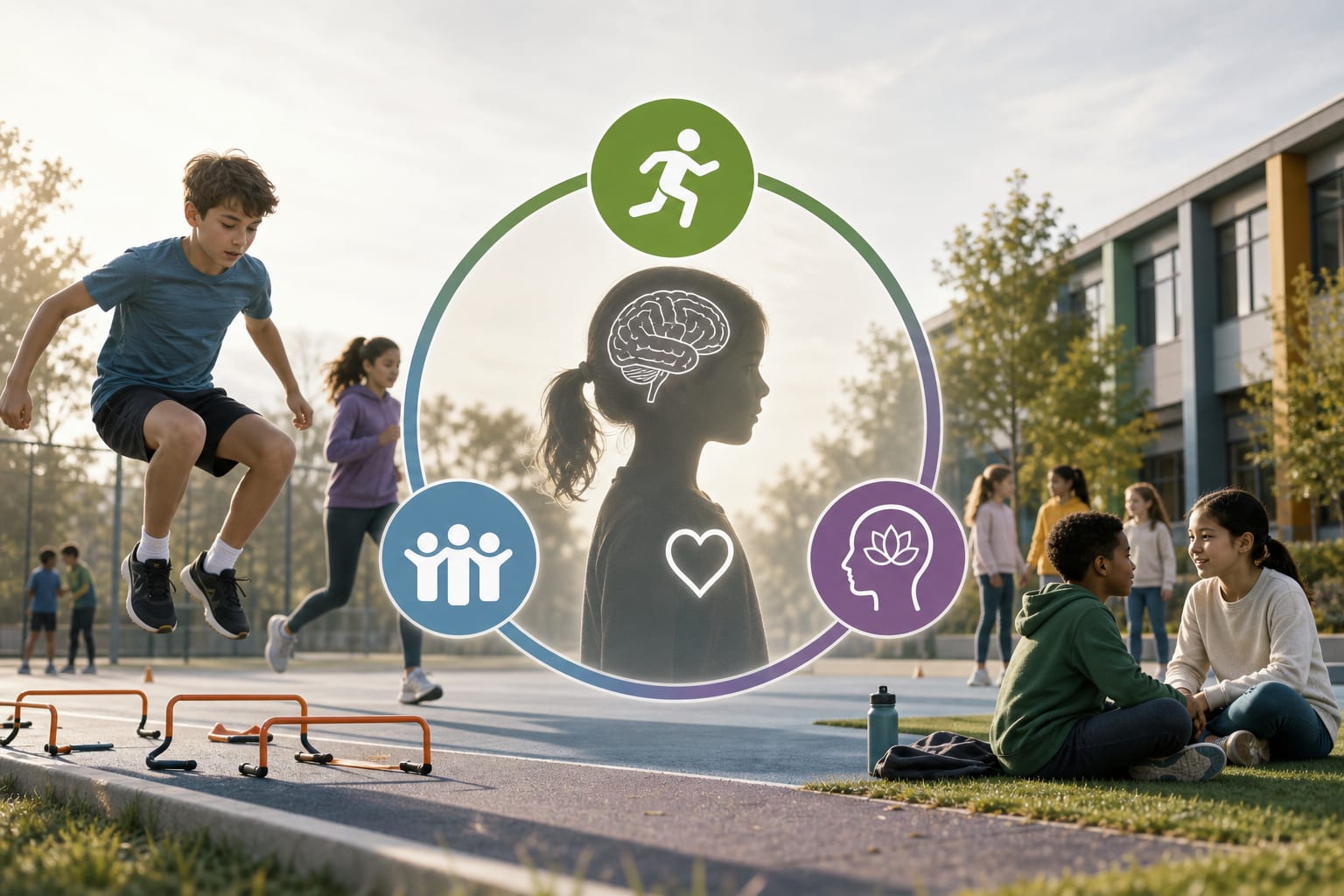
Clinical Report: Advancing a Comprehensive Strategy for Enhancing Youth Wellbeing
Background
The World Health Organization emphasizes the significance of physical, mental, and social wellbeing as essential components of health. With rising levels of physical inactivity contributing to global mortality risks, especially among vulnerable populations, effective health promotion strategies are crucial. Schools represent a vital setting for implementing physical activity interventions to foster lifelong healthy behaviors.
Data Highlights
No numerical data provided in the source material.
Key Findings
Physical inactivity is a leading risk factor for mortality globally.
National guidelines recommend at least 60 minutes of moderate-to-vigorous physical activity for children and adolescents.
Schools can provide scalable opportunities for physical activity that support whole-child development.
Successful implementation of physical activity programs requires stakeholder buy-in and a systems-based approach.
Cross-sector partnerships are essential for the sustainability of school-based physical activity initiatives.
Clinical Implications
Healthcare professionals should advocate for the integration of physical activity into school curricula to address physical and mental health needs. Collaboration with educators and community stakeholders can enhance the effectiveness and sustainability of these initiatives.
Conclusion
Enhancing youth physical and mental wellbeing through exercise requires a multifaceted approach that prioritizes physical activity within everyday settings, particularly schools. Continued efforts are necessary to translate research into effective practice.
A nationwide birth cohort found lower odds of short sleep at 1 year among infants breastfed during the first 6 months of life, regardless of formula supplementation.