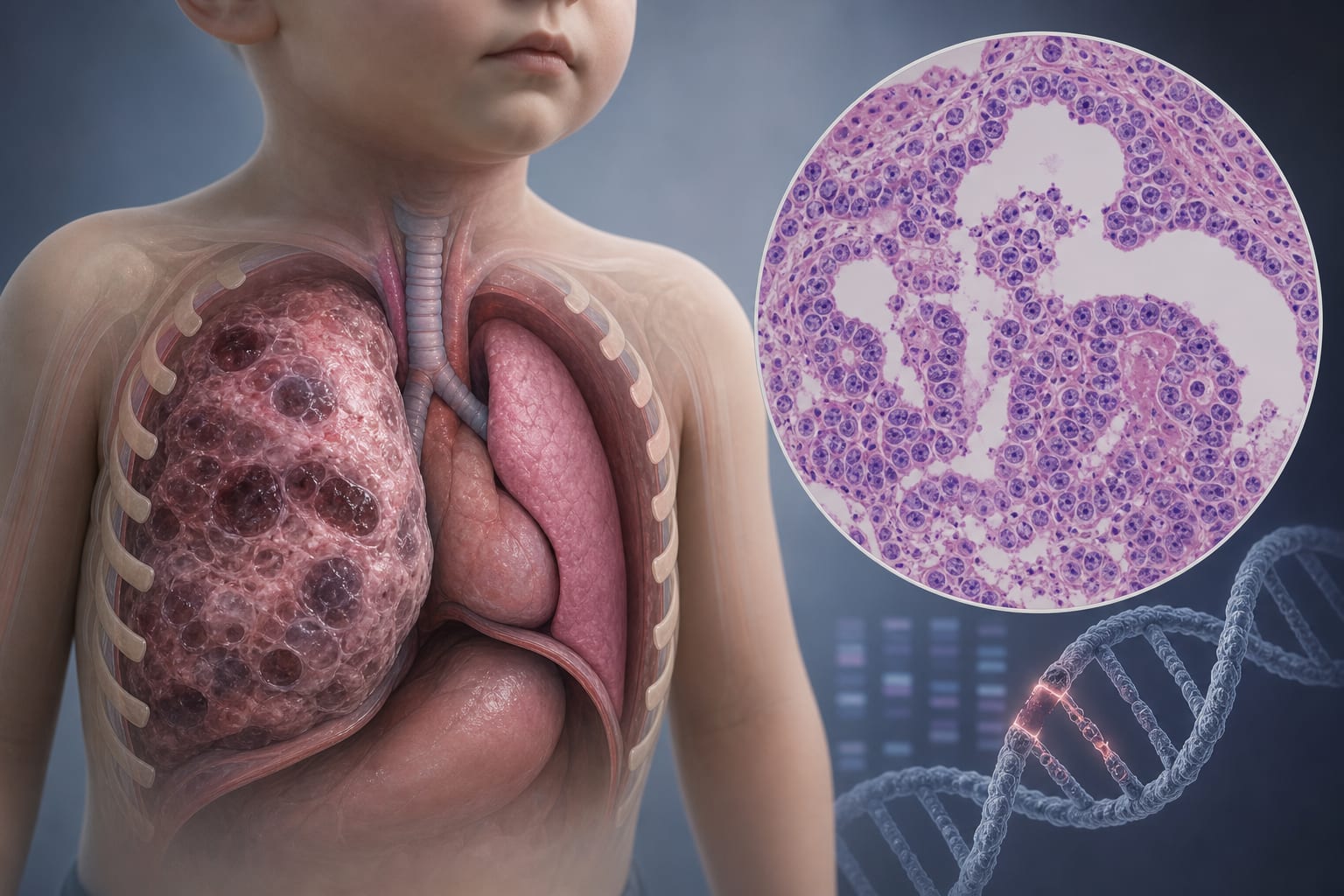
This case study presents a 13-year-old male with recurrent pulmonary NUT carcinoma who achieved 26 months of post-recurrence survival through a sequential multimodal treatment approach. The findings highlight the potential for prolonged survival in this aggressive malignancy with individualized therapy.
Background
Pulmonary NUT carcinoma is an ultra-rare and aggressive malignancy with a poor prognosis, particularly in thoracic primary tumors. Standard treatment options often yield limited survival, making innovative approaches critical for improving outcomes. This case underscores the importance of multimodal strategies in managing recurrent cases, especially in pediatric populations.
Data Highlights
No numerical data or trial data presented in the article.
Key Findings
The patient initially diagnosed with stage IB pulmonary NUT carcinoma underwent complete surgical resection.
Postoperative recurrence occurred 22 months later, with intrathoracic recurrence but no distant metastasis.
Sequential multimodal treatment included locoregional therapy, chemotherapy, immunotherapy, and anti-angiogenic therapy.
The patient achieved 26 months of post-recurrence survival, exceeding historical outcomes for this malignancy.
Molecular analysis confirmed NUT positivity and MTAP loss, which may inform future treatment strategies.
Integration of immunotherapy with chemotherapy provided periods of disease stabilization.
Clinical Implications
This case illustrates the potential for extended survival in recurrent pulmonary NUT carcinoma through a tailored multimodal treatment approach. Clinicians should consider aggressive locoregional control and systemic therapies, including immunotherapy, in managing similar cases.
Conclusion
The findings from this case suggest that individualized multimodal management may improve survival outcomes in recurrent pulmonary NUT carcinoma. Further research is needed to validate these approaches in larger cohorts.