The effect of rehabilitation training based on brain-computer interface on limb function in stroke patients: a systematic review and meta-analyses - Report - MDSpire
Advertisement
The effect of rehabilitation training based on brain-computer interface on limb function in stroke patients: a systematic review and meta-analyses
Clinical Report: Impact of BCI Rehabilitation on Limb Function Recovery in Stroke Patients
Overview
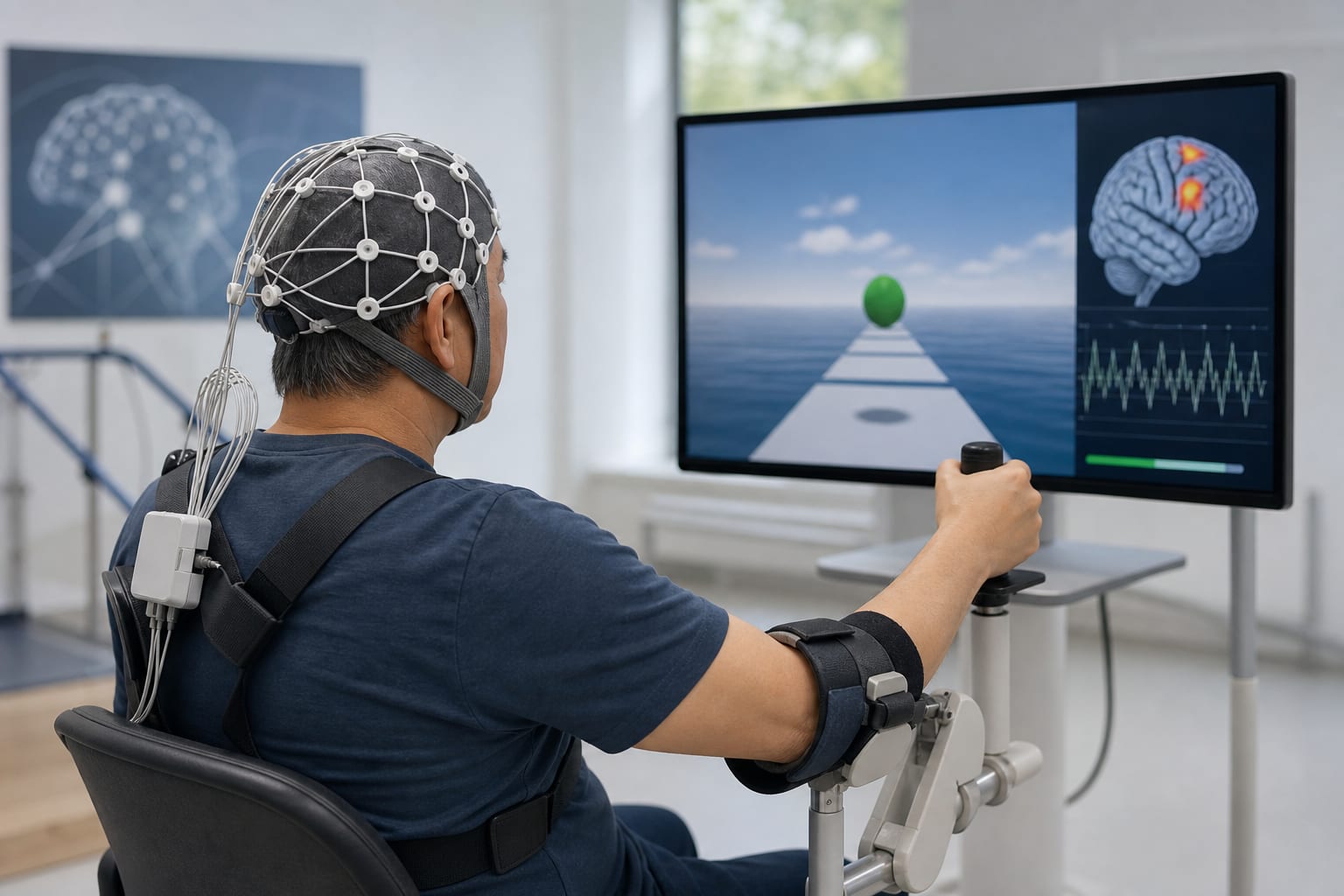
This systematic review and meta-analysis evaluated the efficacy of brain-computer interface (BCI) rehabilitation on limb function recovery in stroke patients. The findings indicate improvements in both upper and lower limb function compared to control groups, as measured by the Fugl-Meyer Assessment.
Background
Stroke is a leading cause of adult disability and poses significant challenges in rehabilitation due to high rates of motor dysfunction. Traditional rehabilitation methods have limitations, prompting the exploration of innovative approaches like BCI technology.
Data Highlights
Assessment
Weighted Mean Difference (WMD)
95% Confidence Interval (CI)
p-value
FMA-UE
3.50
(2.09, 4.90)
<0.001
FMA-LE
2.59
(1.94, 3.23)
<0.001
Key Findings
BCI rehabilitation improved upper limb function as measured by FMA-UE.
BCI rehabilitation led to improvements in lower limb function as measured by FMA-LE.
A total of 27 randomized controlled trials (RCTs) were included in the analysis.
Motor dysfunction post-stroke affects 60-80% of patients.
Clinical Implications
The findings indicate that BCI-based rehabilitation may improve limb function in stroke patients.
Conclusion
BCI-based rehabilitation demonstrates potential in improving limb function recovery in stroke patients.
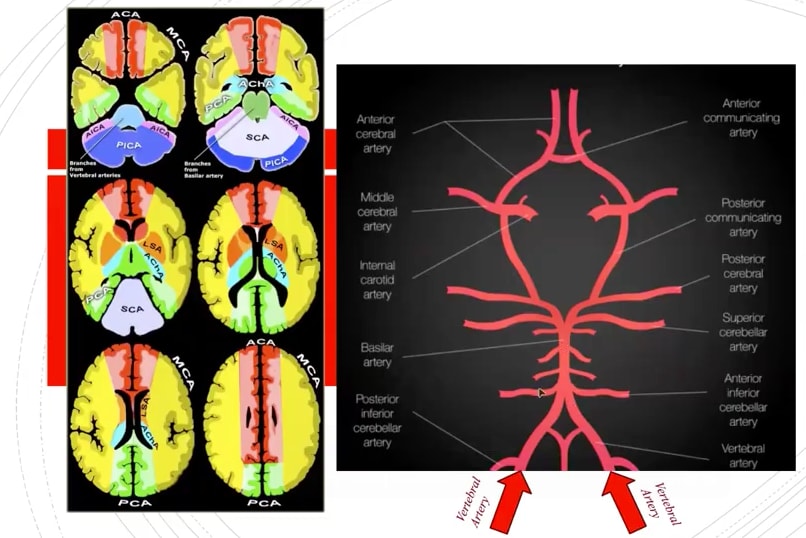
Bowhunter syndrome (BHS) is a rare but important cause of posterior circulation stroke in children, resulting from vertebral artery compression during head rotation.