Metabolic dysregulation and biological age acceleration in Hashimoto’s thyroiditis: a cross-sectional study based on clinical biomarker aging indices and metabolomics - Report - MDSpire
Advertisement
Metabolic dysregulation and biological age acceleration in Hashimoto’s thyroiditis: a cross-sectional study based on clinical biomarker aging indices and metabolomics
Clinical Report: Metabolic Imbalance and Acceleration of Biological Age in Hashimoto’s Thyroiditis
Overview
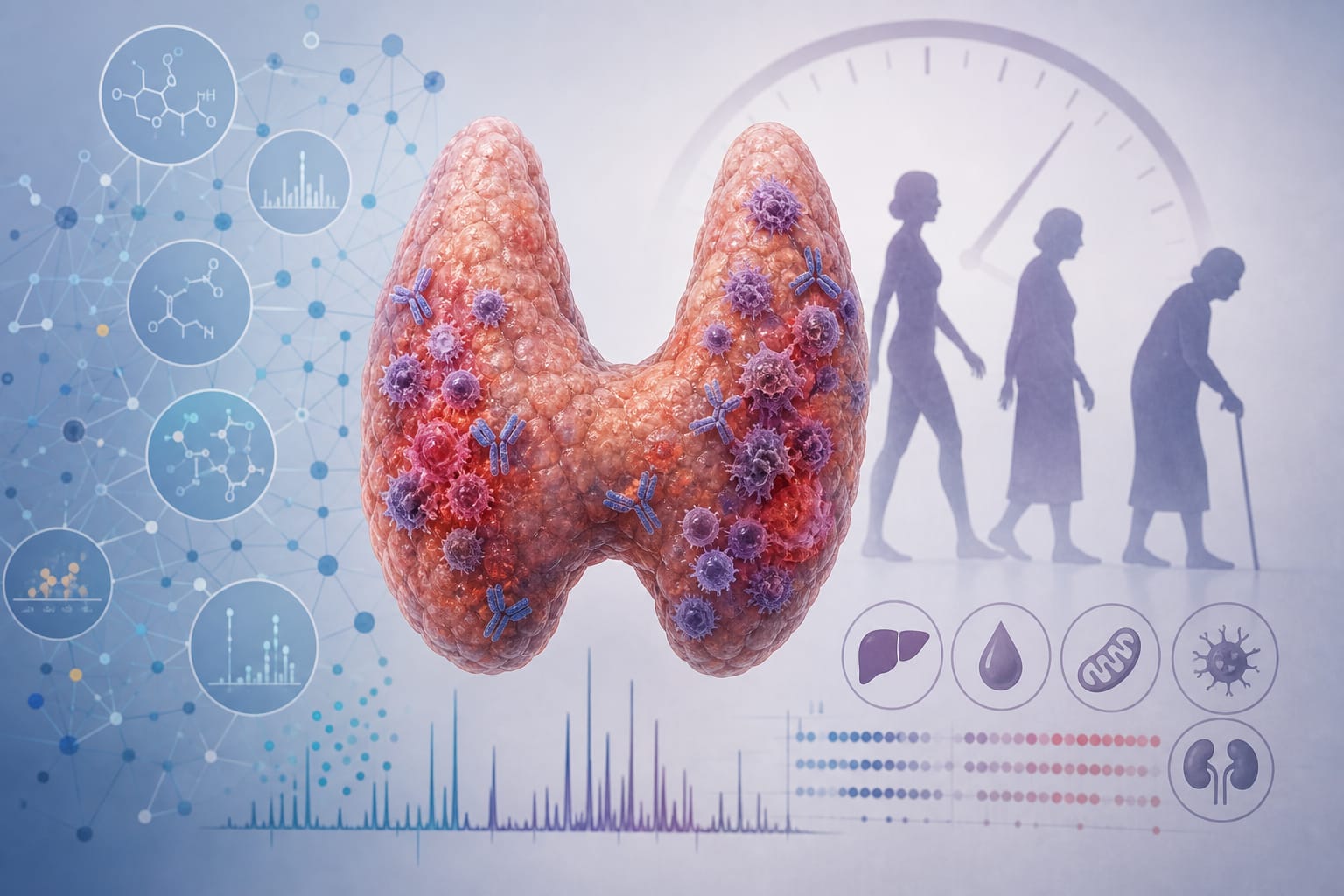
This study investigates the association between Hashimoto’s thyroiditis (HT) and biological age acceleration using clinical biomarker aging indices and metabolomic approaches.
Background
Hashimoto’s thyroiditis is a prevalent autoimmune thyroid disease that can lead to significant thyroid dysfunction and metabolic changes. This study aims to evaluate the relationship between HT and biological age.
Data Highlights
Measure
HT Group
Healthy Controls
KDM Biological Age
Higher (beta = 3.16 years, 95% CI 1.77-4.56)
Lower
PhenoAge
Higher (beta = 1.54 years, 95% CI 1.05-2.03)
Lower
MAA
Higher in EHT and DHT
Lower
AUC for HT Classification Model
0.980
N/A
Key Findings
HT is associated with higher KDM biological age and PhenoAge indices compared to healthy controls.
Age acceleration metrics were significantly higher in HT patients across discovery cohorts.
In the NHANES validation cohort, HT was linked to a beta increase in biological age metrics after adjusting for confounding factors.
Metabolic age acceleration differed significantly among control, euthyroid HT, and thyroid dysfunction HT groups.
Citric acid, LPC 20:0 sn-1, and SM 34:2 were identified as core candidate metabolites related to HT.
Clinical Implications
The findings indicate that biological aging metrics may differ in patients with Hashimoto’s thyroiditis.
Conclusion
This study highlights the association between Hashimoto’s thyroiditis and biological and metabolic age acceleration.