Nanomedicine delivery systems remodel the immunosuppressive microenvironment of colorectal cancer: synergistic strategies and mechanisms of targeted immune checkpoint inhibitors - Report - MDSpire
Advertisement
Nanomedicine delivery systems remodel the immunosuppressive microenvironment of colorectal cancer: synergistic strategies and mechanisms of targeted immune checkpoint inhibitors
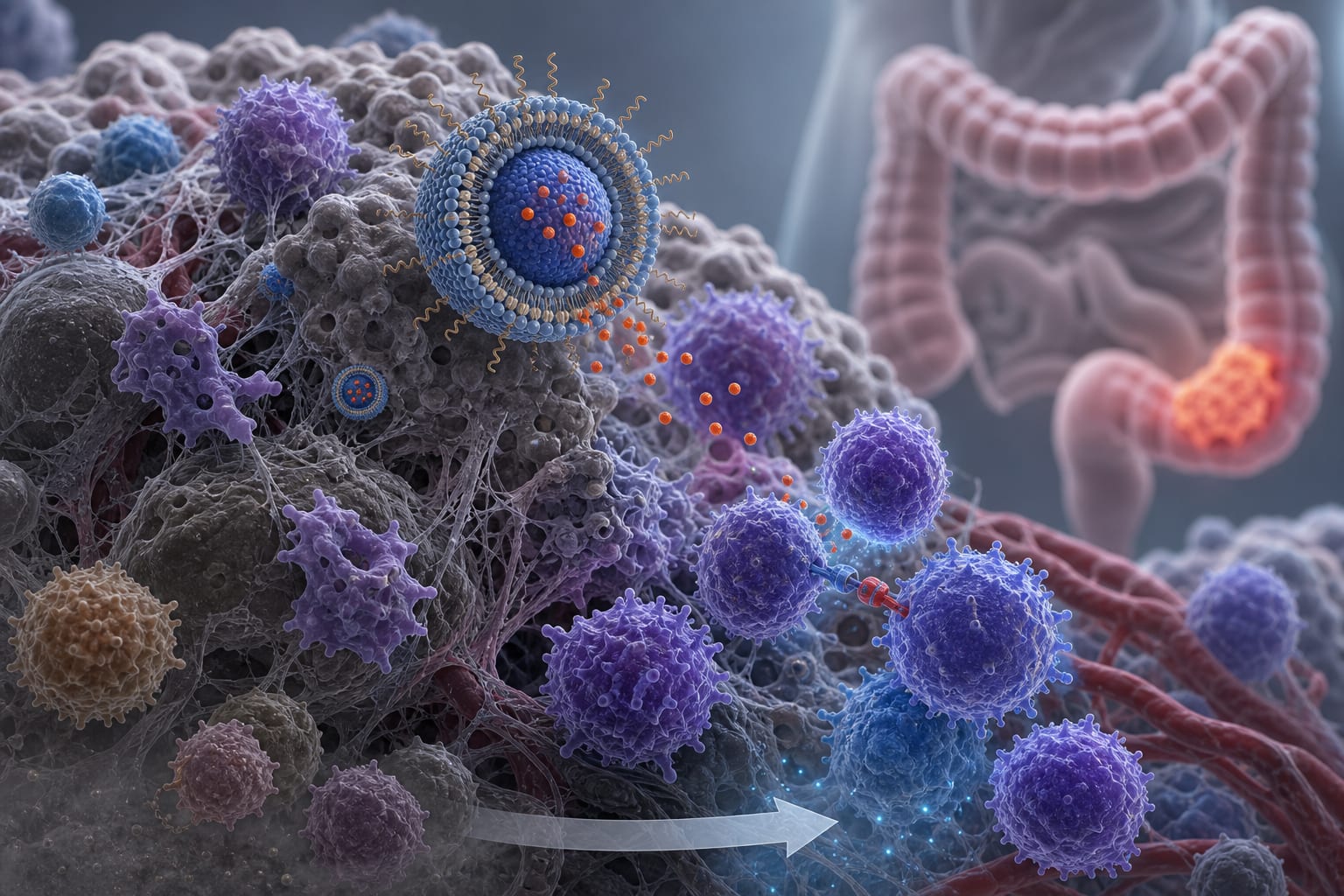
Nanomedicine Approaches Alter the Immunosuppressive Microenvironment in Colorectal Cancer
Overview
This review discusses the limitations of traditional treatments for colorectal cancer (CRC) and the role of nanocarriers in enhancing drug delivery and modulating the tumor microenvironment.
Background
Colorectal cancer (CRC) is a leading cause of cancer-related mortality worldwide, particularly in advanced stages where conventional therapies often fail. The immunosuppressive tumor microenvironment (TME) significantly limits the effectiveness of immune checkpoint inhibitors (ICIs). Recent advancements in nanomedicine present opportunities to enhance the efficacy of immunotherapy in CRC by targeting the TME.
Data Highlights
No numerical data or trial data presented in the article.
Key Findings
Advanced-stage CRC has a five-year survival rate of less than 15%.
The TME in CRC is characterized by the presence of immunosuppressive cells, including Tregs, MDSCs, and TAMs.
Nanomedicine can improve drug delivery efficiency and reduce systemic toxicity.
Selenium nanoparticles can induce tumor cell apoptosis and remodel the immune microenvironment.
Triple-combination nanoscale coordination polymers can induce immunogenic cell death in an acidic TME.
Clinical Implications
The integration of nanomedicine with targeted immunotherapy may enhance treatment efficacy in CRC by addressing the immunosuppressive TME.
Conclusion
Nanomedicine offers avenues for improving CRC treatment by modulating the TME and enhancing the effectiveness of immunotherapy.