Clinical efficacy and safety of pembrolizumab and nivolumab in frontline treatment for classical Hodgkin lymphoma: systematic review and meta-analysis of clinical trials - Report - MDSpire
Advertisement
Clinical efficacy and safety of pembrolizumab and nivolumab in frontline treatment for classical Hodgkin lymphoma: systematic review and meta-analysis of clinical trials
Clinical Report: Efficacy and Safety of Pembrolizumab and Nivolumab in cHL
Overview
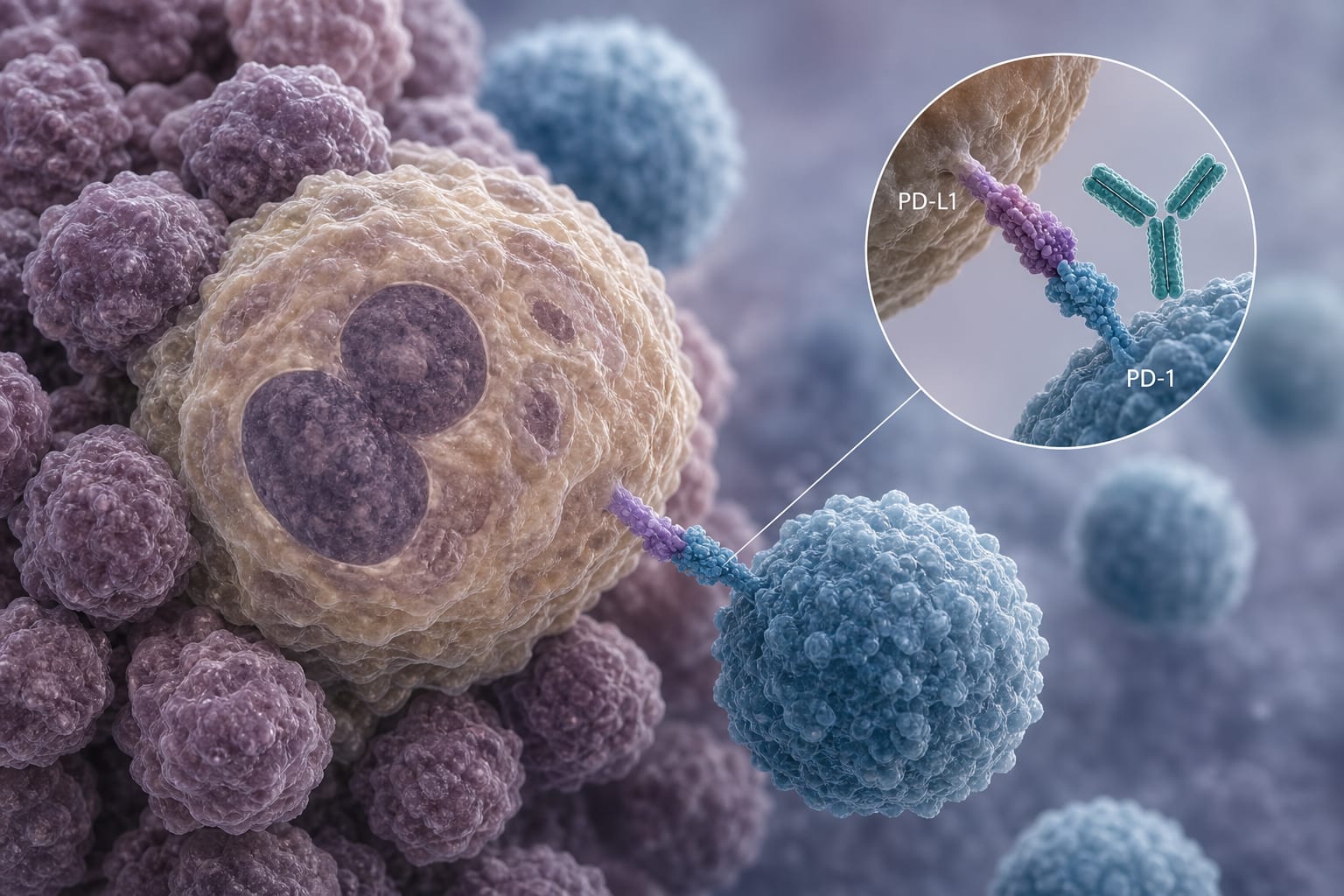
This systematic review and meta-analysis evaluated the efficacy and safety of pembrolizumab and nivolumab as first-line treatments for classical Hodgkin lymphoma (cHL). The analysis included nine trials with 880 patients, revealing high overall response rates and manageable safety profiles.
Background
Classical Hodgkin lymphoma (cHL) is a prevalent B-cell malignancy, accounting for the majority of Hodgkin lymphoma cases. Recent advances in treatment, particularly the use of PD-1 inhibitors, have shown promise in improving clinical outcomes. Understanding the efficacy and safety of these therapies is crucial.
Data Highlights
Outcome
Result
95% CI
Overall Response Rate (ORR)
86%
59-96%
Complete Response Rate (CRR)
57%
62-97%
2-Year Progression-Free Survival (PFS)
90%
70-97%
2-Year Overall Survival (OS)
97%
91-99%
Grade ≥3 Adverse Events
41%
21-64%
Grade ≥3 Immune-Related AEs
17%
6-38%
Key Findings
Pooled ORR for pembrolizumab and nivolumab was 86%.
Complete response rate was 57% across all treatments.
2-year PFS was 90%, and 2-year OS was 97%.
41% of patients experienced grade ≥3 adverse events.
Nivolumab with brentuximab vedotin showed worse outcomes compared to AVD with PD-1 inhibitors.
Clinical Implications
Clinicians should be aware of the potential for significant adverse events and monitor patients accordingly.
Conclusion
The adoption of PD-1 inhibitors in frontline treatment for classical Hodgkin lymphoma requires careful consideration of patient fitness for traditional chemotherapy regimens.