Objective stratification of knee osteoarthritis stages using a semi-supervised learning approach on multimodal MRI-CT cartilage features - Report - MDSpire
Clinical Report: Utilizing a Semi-Supervised Learning Framework for Objective Staging of Knee Osteoarthritis
Overview
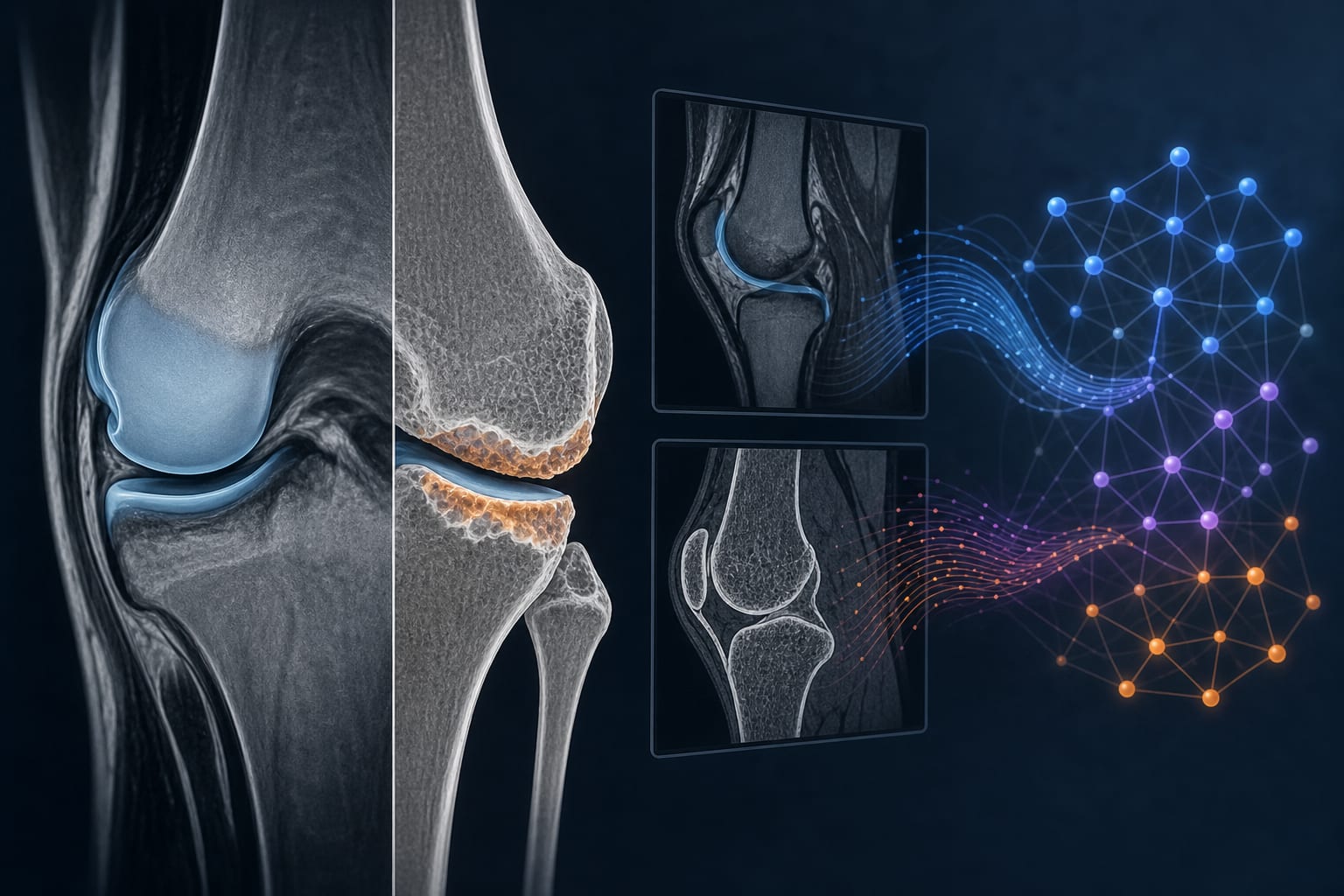
This study presents a semi-supervised learning framework that characterizes stages of knee osteoarthritis (KOA) using multimodal MRI and CT-derived cartilage features.
Background
Knee osteoarthritis (KOA) is a prevalent joint disease that significantly impacts the quality of life in middle-aged and older adults. Accurate and early diagnosis is essential to prevent disease progression. Traditional diagnostic methods often rely on subjective assessments, which can lead to misclassification.
Data Highlights
Metric
Value
Label Stability
0.91 ± 0.14
Fleiss’ Kappa
0.781
Weighted F1-Score (SVM)
0.84
Weighted F1-Score (Logistic Regression)
0.81
Key Findings
The semi-supervised learning framework achieved high label stability and reliability in KOA staging.
Support Vector Machines and Logistic Regression classifiers demonstrated the highest performance with weighted F1-scores of 0.84 and 0.81, respectively.
Statistical analysis revealed significant differences among healthy, early degeneration, and advanced degeneration classes for all extracted features.
The volume-to-surface ratio and density heterogeneity were identified as key features reflecting cartilage degeneration.
Combining expert knowledge with semi-supervised learning allows for reliable KOA stratification even with limited labeled data.
Clinical Implications
Integrating advanced imaging techniques with machine learning may enhance the objectivity of KOA diagnosis.
Conclusion
The study presents a semi-supervised learning framework for the assessment of knee osteoarthritis stages.
Acidic gum beat sugar-free at cranking out nitric oxide from beetroot juice — exactly backward from what test-tube studies predicted. Also this week: a sleep gene that ignores amyloid, and jackfruit sap moonlighting as a bone-building drug delivery system.