From anxiety and depression to non-suicidal self-injury in youths: the mediating effect of neuroticism and the moderating effect of thyroid hormones - Report - MDSpire
Clinical Report: Neuroticism and Thyroid Hormones in NSSI Among Adolescents
Overview
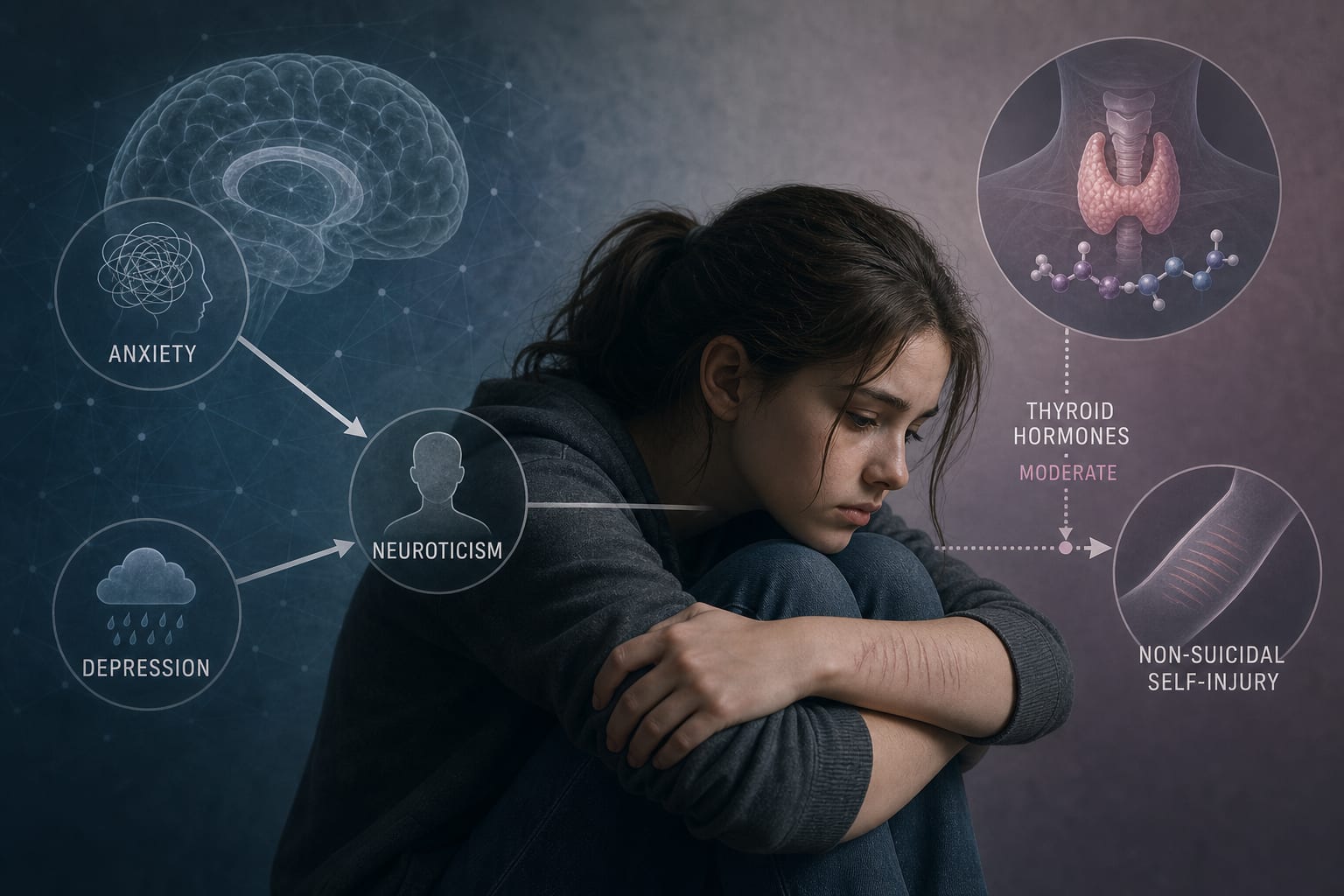
This study investigates the mediating role of neuroticism and the moderating effects of thyroid hormones on the relationship between anxiety, depression, and non-suicidal self-injury (NSSI) in adolescents.
Background
Non-suicidal self-injury (NSSI) is a significant behavioral concern among adolescents, often linked with anxiety and depression. Understanding the psychological and neuroendocrine mechanisms behind NSSI is crucial.
Data Highlights
Variable
Effect
p-value
Neuroticism mediation (HAMA-NSSI)
0.0798
-
TT3 moderation (HAMD-NSSI)
0.3112
0.0147
FT3 moderation (HAMD-NSSI)
0.1118
0.0371
TSH moderation (HAMD-NSSI)
-0.0976
0.0011
Key Findings
Neuroticism fully mediates the relationship between anxiety symptoms and NSSI.
TT3 and FT3 positively moderate the relationship between depressive symptoms and NSSI.
TSH negatively moderates the depression-NSSI relationship, significant in high-neuroticism subgroup.
No significant moderating effects of thyroid hormones on the anxiety-NSSI pathway were found.
Neuroticism is linked to emotional instability and poor impulse control, contributing to NSSI behaviors.
Clinical Implications
Clinicians should consider assessing neuroticism and thyroid hormone levels in adolescents exhibiting NSSI behaviors. Understanding these factors may enhance the identification of at-risk youths and inform tailored intervention strategies.
Conclusion
The study examines the interplay between psychological traits and neuroendocrine factors in adolescent NSSI.
International cohort study found physical function declined most rapidly before mortality, while socioeconomic status was associated with more favorable multidomain trajectories.