Clinical Report: An Examination of Descending Pain Modulation Mechanisms in Humans
Overview
This review investigates descending pain modulation mechanisms in humans, highlighting key brain regions involved and the impact of cognitive factors such as distraction and anxiety, as well as emotional factors. It emphasizes the need for further research to clarify these mechanisms and their therapeutic implications.
Background
Understanding descending pain modulation is crucial for developing effective pain management strategies. The balance between nociceptive and anti-nociceptive pathways influences pain perception in both healthy individuals and those with chronic pain conditions. Recent human studies, including neuroimaging and clinical trials, have expanded knowledge beyond animal models, revealing complex interactions within the brain's pain modulation networks.
Data Highlights
No numerical data or trial results were provided in the source material.
Key Findings
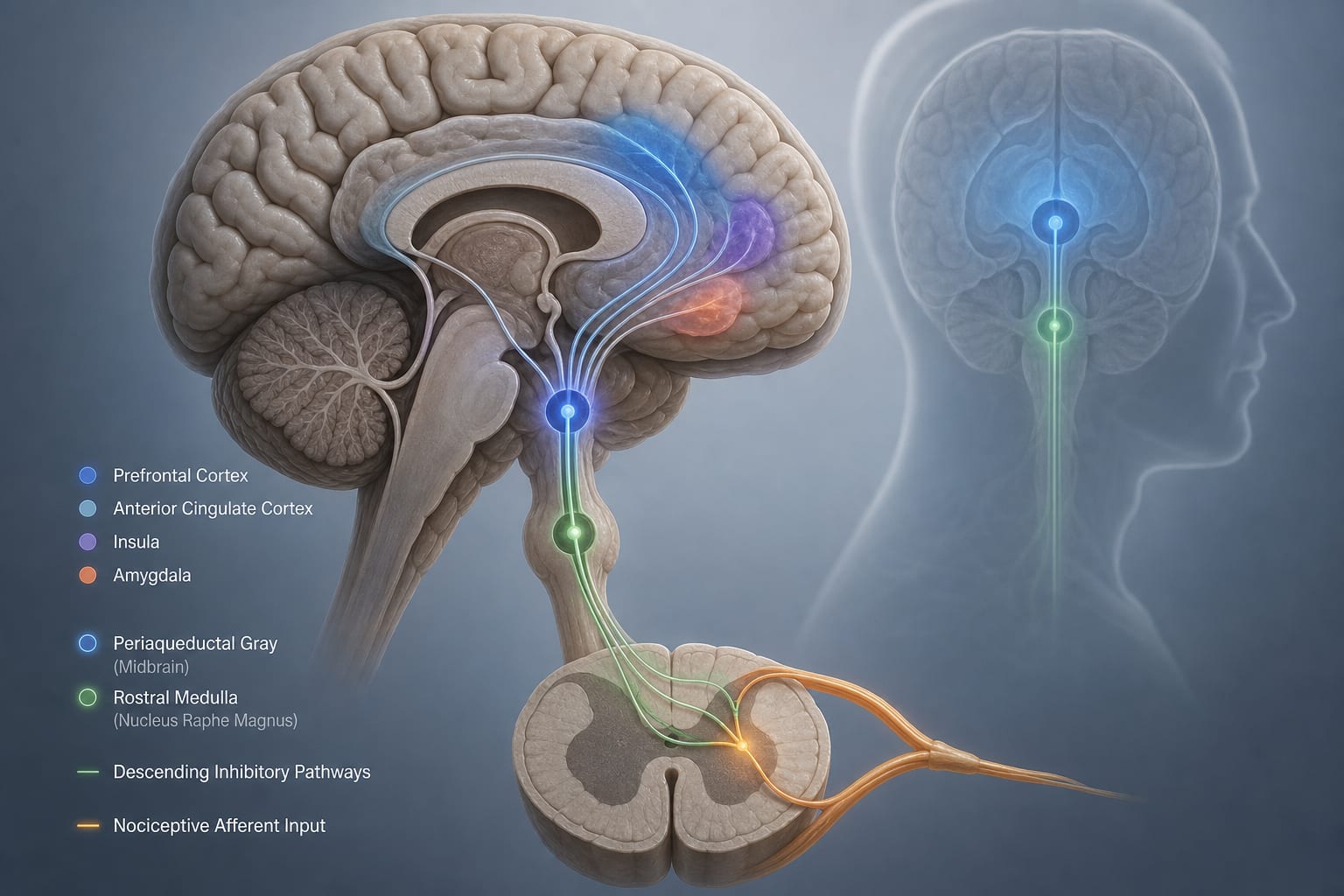
The periaqueductal grey and rostral medulla are central hubs in descending pain modulation.
Cortical regions such as the prefrontal cortex and anterior cingulate cortex show variable contributions to pain modulation.
Cognitive processes, including distraction and anxiety, can significantly alter descending pain pathways.
Transcranial direct current stimulation and spinal cord stimulation have therapeutic effects on descending modulatory circuits.
Further studies are needed to clarify the mechanisms of descending pain modulation in human populations.
Clinical Implications
Clinicians should consider the role of cognitive and emotional factors in pain management strategies. Therapeutic interventions targeting descending pain pathways, such as transcranial direct current stimulation, may enhance pain relief and improve patient outcomes.
Conclusion
This review underscores the complexity of descending pain modulation in humans and highlights the importance of continued research, particularly in understanding the specific mechanisms and therapeutic approaches that can be developed.