Influence of Stem Cell Factor 248 on ILC2 Gene Expression and Its Role in Mucosal Inflammation Associated with Allergic Asthma
Overview
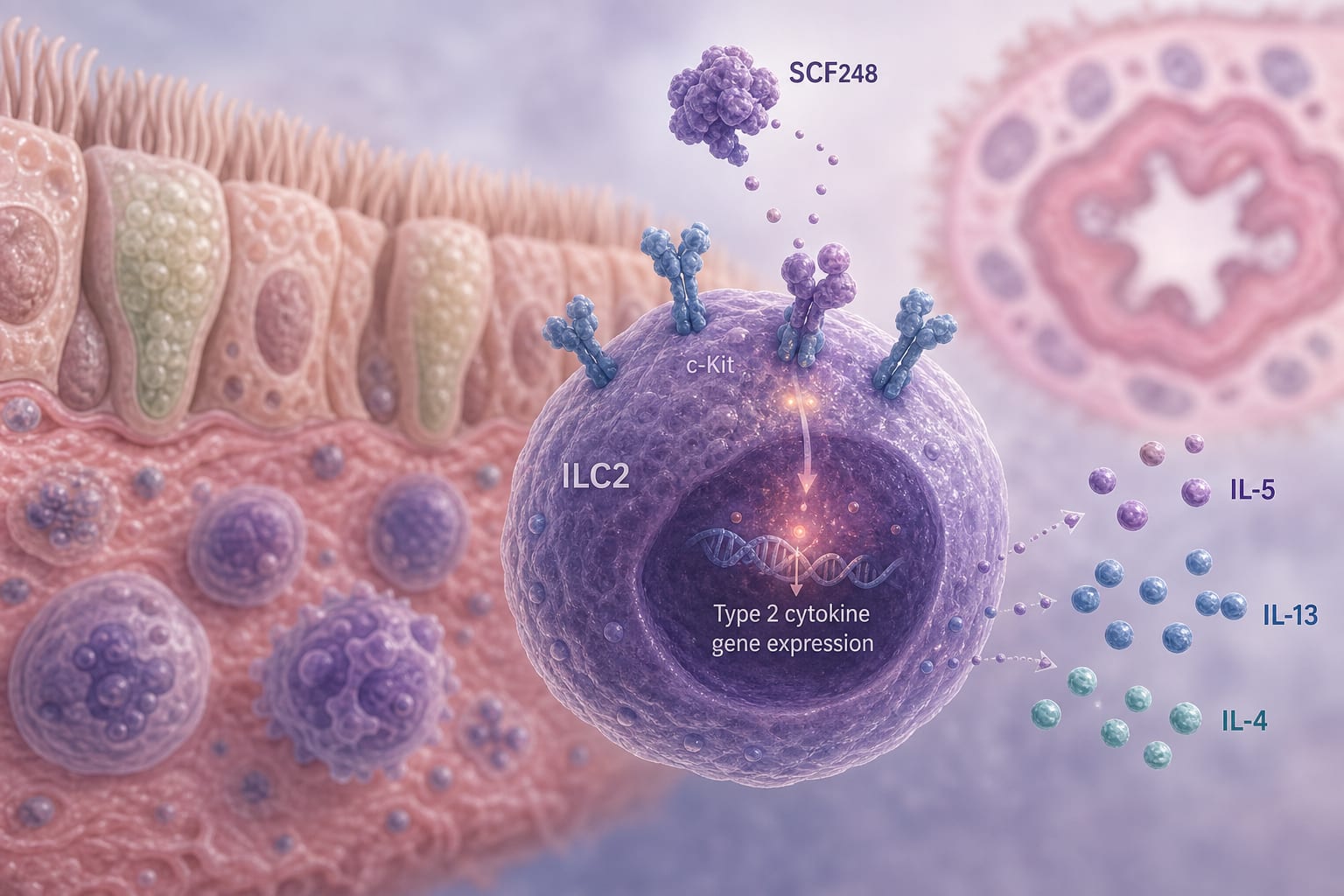
This study investigates the role of stem cell factor (SCF) 248 in regulating innate lymphoid cell type 2 (ILC2) gene expression and its contribution to mucosal inflammation in allergic asthma.
Background
Allergic asthma is characterized by type 2 inflammation, which significantly impacts patient quality of life. Group 2 innate lymphoid cells (ILC2s) are crucial in mediating this inflammation, responding to environmental triggers and producing type 2 cytokines. Understanding the mechanisms regulating ILC2 function, such as SCF248 signaling, is important.
Data Highlights
No numerical data available in the source material.
Key Findings
SCF248 is upregulated in the lungs and bone marrow during allergic inflammation.
SCF deficiency in ILC2s leads to reduced expression of cytokine signaling genes.
Pro-inflammatory cytokines induce SCF248 expression in mesenchymal cells in vitro.
In vivo studies show that SCF248 deficiency reduces type 2 cytokine production and lung inflammation.
Blockade of SCF248 alters bone marrow ILC compartments and reduces allergic inflammation.
Clinical Implications
Understanding SCF248's role could inform therapeutic strategies aimed at reducing type 2 inflammation.
Conclusion
SCF248 plays a significant role in enhancing ILC2 maturation and activation, contributing to mucosal type 2 inflammation in allergic asthma.
by Nobuhiro Asai, Grace K. Lombardo, Ramon Ocadiz-Ruiz, Yao Gu, Andrew J. Rasky, Dana S. Garcia, Angela J. Montoya, Sarita Montaño, Kazuma Yagi, Wendy Fonseca