Clinical Report: Renal Cell Carcinoma Associated with KIF5B-ALK Rearrangement
Overview
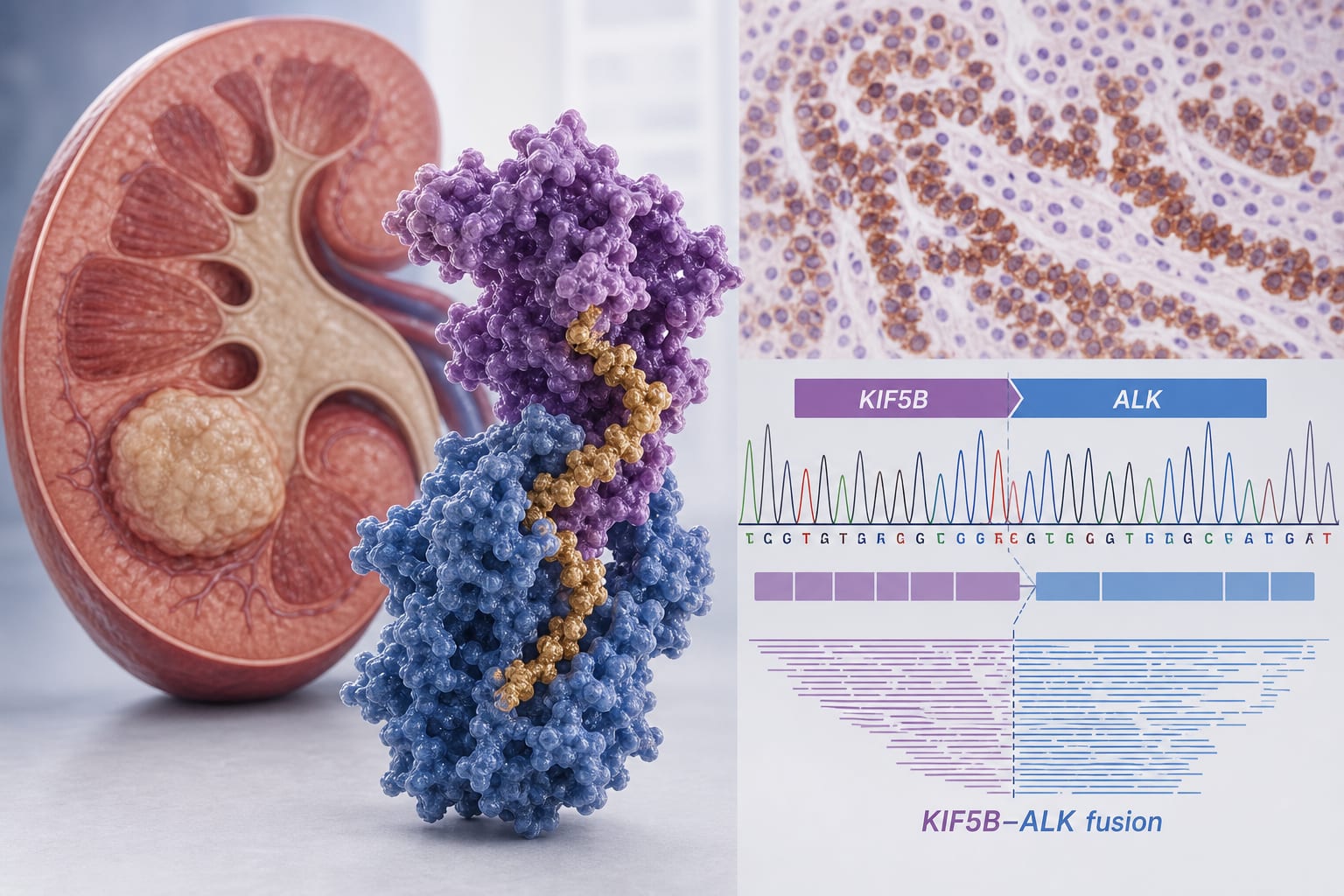
This report details a rare case of renal cell carcinoma (RCC) with a KIF5B-ALK gene fusion in a 39-year-old male, highlighting the critical role of molecular characterization in diagnosing ALK-RCC, which is challenging due to its rarity and potential treatment implications.
Background
ALK-rearranged renal cell carcinoma (ALK-RCC) is a newly recognized subtype of RCC, accounting for approximately 0.3% of cases. The identification of ALK fusions, including KIF5B-ALK, is crucial for accurate diagnosis and potential targeted therapy, which may significantly impact patient outcomes. Understanding the molecular characteristics of ALK-RCC can enhance clinical management and treatment options for affected patients.
Data Highlights
No numerical data or trial data available in the article, indicating a need for further research.
Key Findings
ALK-RCC is characterized by the fusion of the ALK gene with various partner genes, including KIF5B.
The case presented involved a 39-year-old male with a left renal tumor measuring 2.8 × 2.7 × 2.6 cm.
Histopathological examination revealed atypical morphology consistent with renal epithelial differentiation, including specific cellular features.
Next-generation sequencing confirmed the presence of a KIF5B-ALK gene fusion.
ALK-RCC poses challenges in management due to its rarity and limited treatment options.
Targeted therapies directed at the ALK gene may be beneficial for patients with ALK-RCC.
Clinical Implications
Clinicians should consider molecular testing for ALK fusions, such as KIF5B-ALK, in atypical cases of renal cell carcinoma. The identification of these fusions may guide targeted therapy options, improving patient outcomes in this rare subtype of RCC.
Conclusion
This case highlights the significance of molecular characterization in renal cell carcinoma and the potential for targeted therapies in managing ALK-RCC. Further research, including clinical trials, is needed to establish effective treatment protocols.