A randomized controlled trial of telemedicine and e-health interventions for the management of oral complications in oncology patients undergoing antineoplastic therapy - Report - MDSpire

A randomized controlled trial of telemedicine and e-health interventions for the management of oral complications in oncology patients undergoing antineoplastic therapy

  • By

  • Pinelopi Petropoulou

  • Ioli Ioanna Artopoulou

  • Ioannis Kalemikerakis

  • Antonis Galanos

  • Ourania Govina

  • May 4, 2026

  • 0 min

Share

Clinical Report: Telehealth and E-Health Strategies for Oral Complications in Cancer

Overview

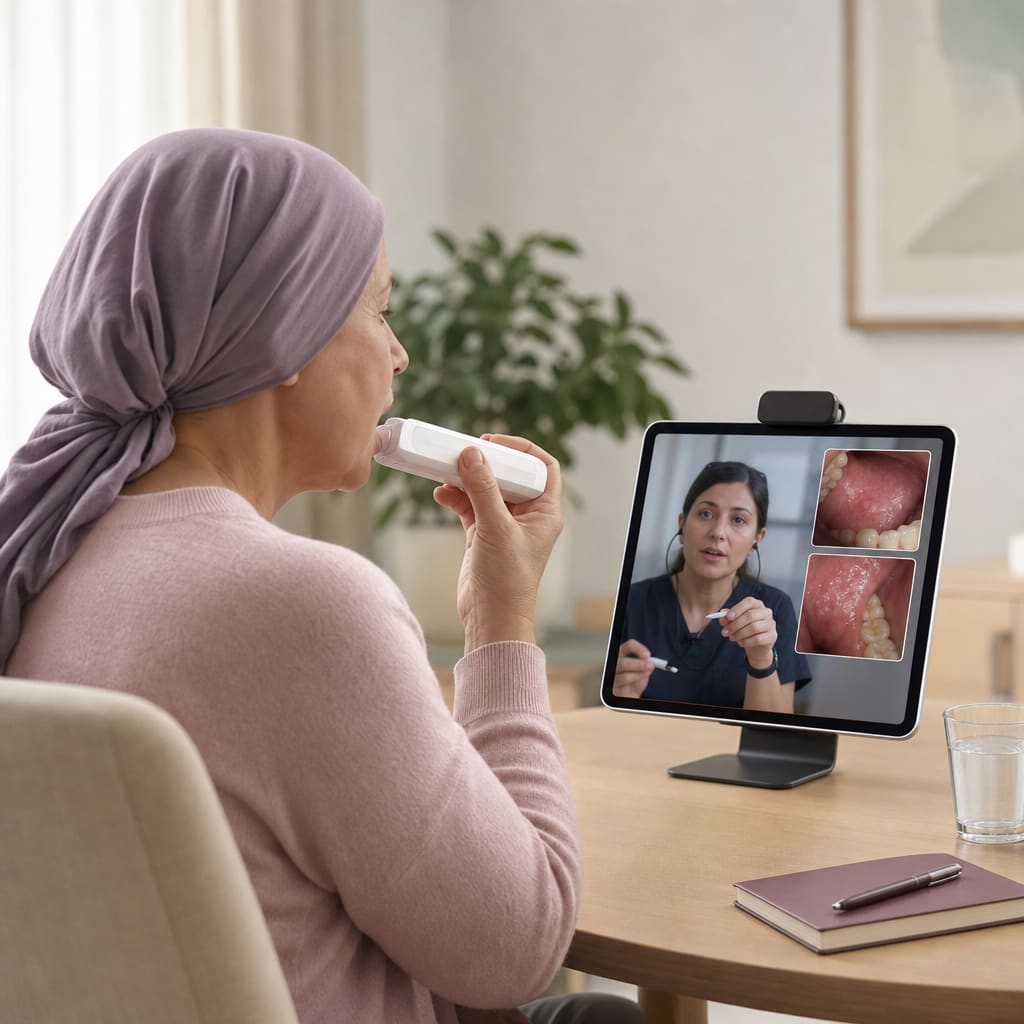
This study evaluates the effectiveness of telehealth interventions in managing oral health complications in cancer patients undergoing antineoplastic treatment. Results indicate significant improvements in oral health outcomes and care behaviors among patients receiving structured telemedicine support compared to standard care.

Background

Oral complications from cancer therapies can severely impact patients' quality of life and treatment continuity. Effective management of these complications is crucial, as they can lead to treatment interruptions and increased morbidity. Telehealth and e-health strategies present innovative solutions for monitoring and improving oral health in this vulnerable population.

Data Highlights

OutcomeIntervention GroupControl Group
Mucosal lesionsLower ratesHigher rates
Gingival bleedingLower ratesHigher rates
GingivitisLower ratesHigher rates
Dental cariesLower ratesHigher rates
PeriodontitisLower ratesHigher rates
Tooth-brushing frequencyHigherLower

Key Findings

  • Telemedicine improved oral health outcomes significantly compared to standard care.
  • Patients in the intervention group had lower rates of mucosal lesions and gingival bleeding.
  • Higher tooth-brushing frequency was observed in the telehealth group.
  • Structured telehealth interventions facilitated early detection and management of oral complications.
  • Integration of dental care into oncology treatment is essential for improving patient outcomes.

Clinical Implications

Healthcare providers should consider incorporating telehealth strategies into oncology care to enhance oral health management. Regular monitoring and patient education through e-health tools can lead to better adherence to oral hygiene practices and improved overall health outcomes.

Conclusion

The integration of telehealth into oncology care demonstrates significant potential for improving oral health in cancer patients. This approach can enhance patient quality of life and treatment adherence during antineoplastic therapies.

References

  1. Frontiers, 2026 -- A Randomized Controlled Trial of Telemedicine and E-Health Interventions for the Management of Oral Complications in Oncology Patients Undergoing Antineoplastic Therapy
  2. Journal of Medical Internet Research (JMIR) — Characteristics of Patients Accessing Outpatient Oncology Services Virtually and Predictors of Subsequent Unplanned Emergency Department Presentations in 78,323 Adults in Australia: Retrospective Cohort Study
  3. The ASCO Post — Italian Study of Electronic Medical Record–Assisted Telephone Follow-up of Breast Cancer Survivors During the COVID-19 Pandemic
  4. Evaluation of the Feasibility and Acceptance of Telemonitoring Patient-Generated Health Data During Perioperative Care in Gastrointestinal Cancer Surgery: A Randomized Controlled Trial
  5. The ASCO Post — Clinical Trials Actively Recruiting Geriatric Oncology Patients
  6. MASCC/ISOO Clinical Practice Statement: management of oral complications of immunotherapy
  7. Photobiomodulation for the prevention of oral side effects secondary to head and neck cancer therapy
  8. Frontiers | A Randomized Controlled Trial of Telemedicine and E-Health Interventions for the Management of Oral Complications in Oncology Patients Undergoing Antineoplastic Therapy

Original Source(s)

Related Content