CD19, immunoglobulin level, and varied anti-cytokine autoantibodies underline dichotomous susceptibility to types of infection in patients with thymomas - Report - MDSpire
Advertisement
CD19, immunoglobulin level, and varied anti-cytokine autoantibodies underline dichotomous susceptibility to types of infection in patients with thymomas
Clinical Report: Immunoglobulin Levels and Infection Vulnerability in Thymoma Patients
Overview
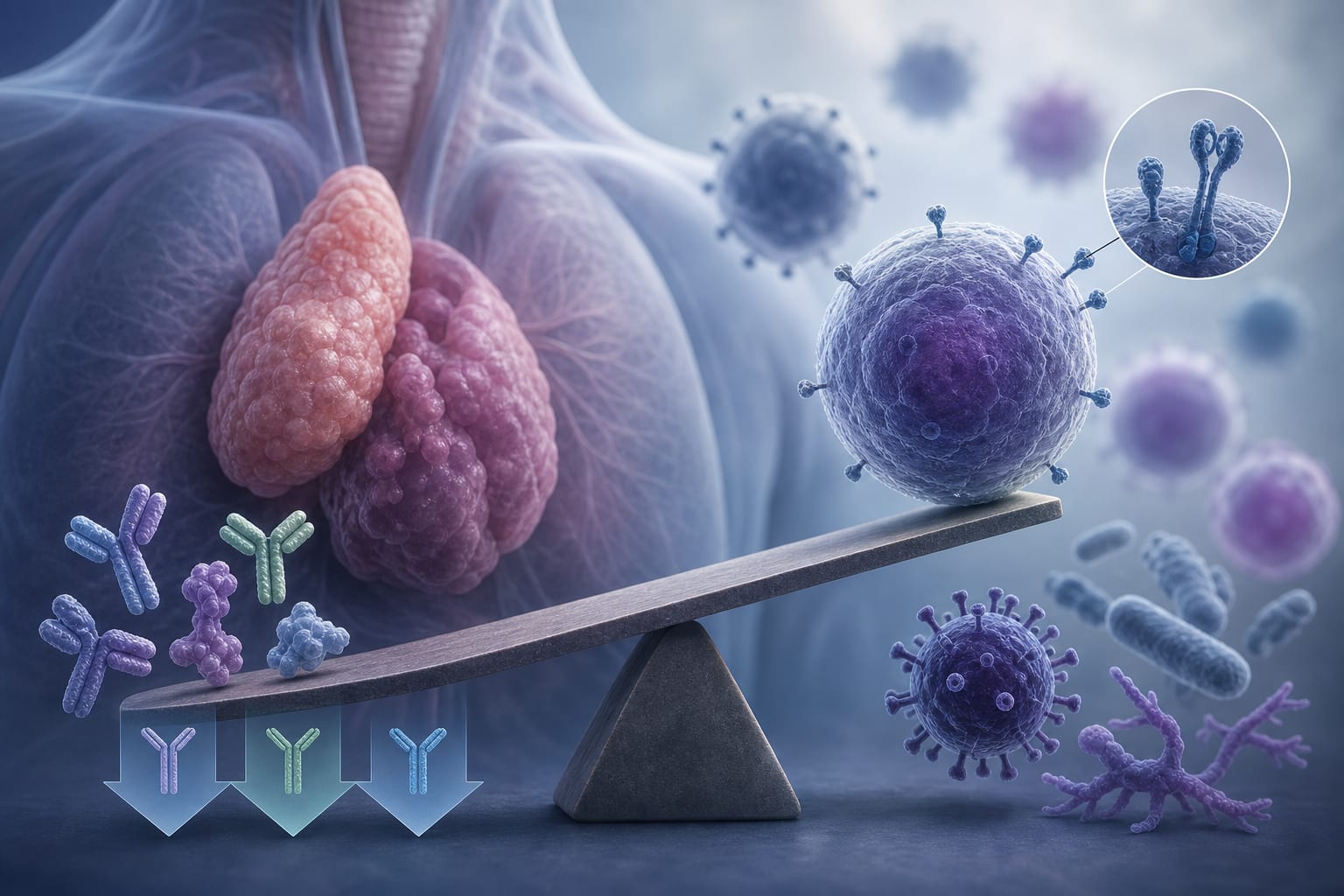
This study characterizes the infection susceptibility in thymoma patients, revealing two distinct groups based on immunological parameters. One group exhibited low immunoglobulin levels and recurrent viral infections, while the other had normal levels but presented with severe bacterial and fungal infections linked to autoantibodies.
Background
Thymoma patients are known to have increased infection risks, often attributed to Good syndrome characterized by hypogammaglobulinemia. However, there is growing recognition of the clinical heterogeneity in these patients, with some exhibiting normal immunoglobulin levels yet suffering from severe infections.
Data Highlights
Group
Characteristics
Infection Types
Group 1
Low immunoglobulins, low CD19+ B cells
Recurrent/severe viral or Pneumocystis jirovecii infections
Group 2
Normal immunoglobulin levels, presence of autoantibodies
Difficult-to-treat NTM or invasive bacterial/fungal infections
Key Findings
Thymoma patients can be divided into two groups based on infection types and immunological parameters.
Group 1 (60% of patients) had recurrent viral infections and low immunoglobulin levels.
Group 2 (40% of patients) experienced severe bacterial and fungal infections with normal immunoglobulin levels.
Autoantibodies against IL-12, IL-23, and IFN-α were found in Group 2, affecting immune signaling pathways.
Clinical Implications
The distinct immunological profiles in thymoma patients indicate that clinicians should consider both immunoglobulin levels and the presence of autoantibodies when assessing infection risks.
Conclusion
The study highlights the complexity of infection susceptibility in thymoma patients.
by Zhaohong Tan, Areum Shin, Rachel Ying Min Tan, Dongling Wang, Chiung-Hui Huang, Sharada Ravikumar, Liang En Wee, Yvonne Fu Zi Chan, Ying Ying Chua, Sen Hee Tay, Anindita Santosa, Gladys Gek Yen Tan, Doo Ri Kim, Hyun-Il Gil, Jae-Hoon Ko, Sun Hye Shin, Byung Woo Jhun, Siew Hoon Sim, Yae-Jean Kim, Louis Yi Ann Chai