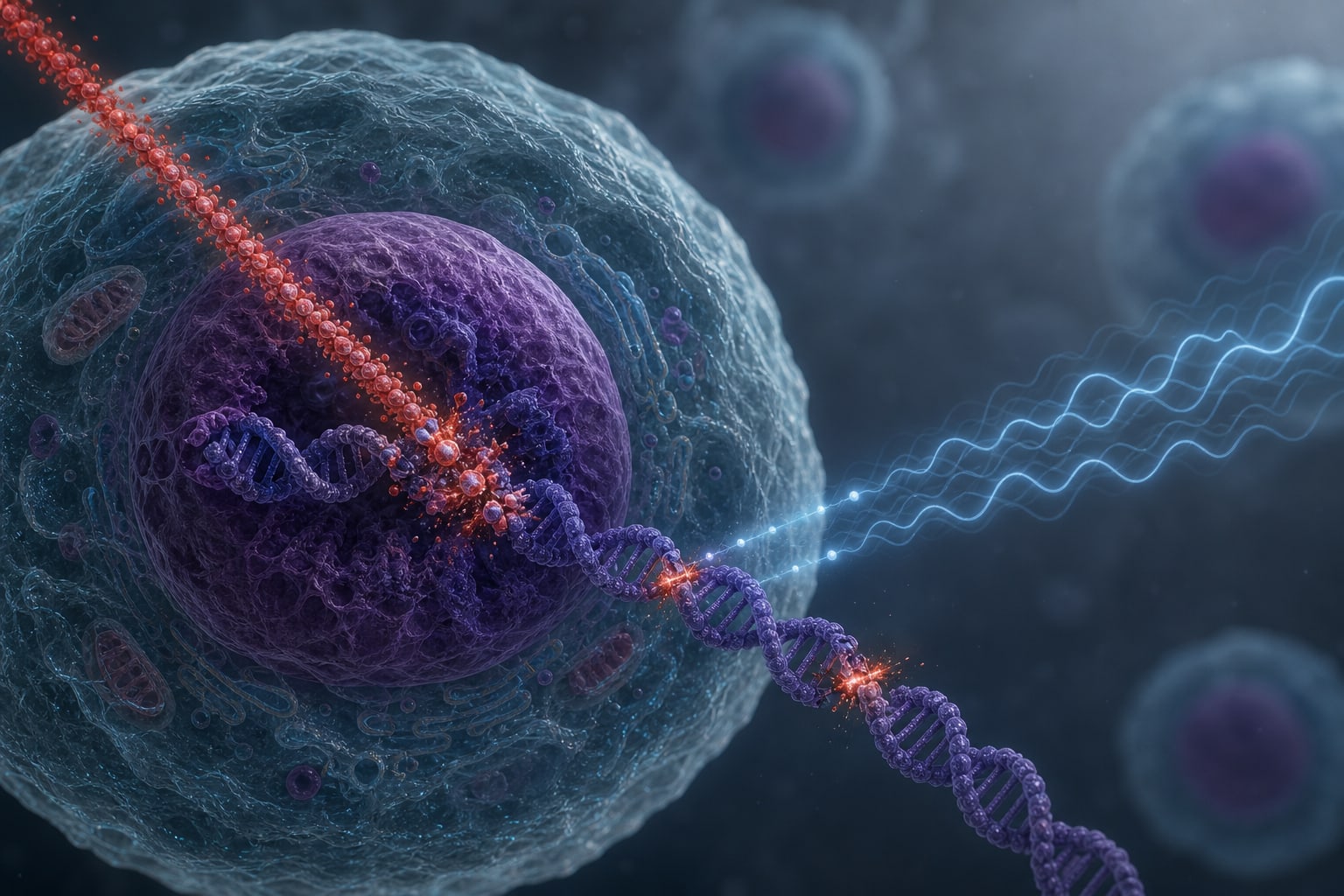
Differential Transcriptomic Responses in A549 Cells Following Irradiation
Overview
This study investigates the distinct transcriptional responses of A549 lung cancer cells to carbon ion and X-ray irradiation. Findings reveal that carbon ion exposure leads to unique downregulation of mitotic regulators and enrichment of stress-associated pathways compared to X-ray exposure.
Background
Lung cancer is a leading cause of cancer mortality, and radiotherapy is crucial in treatment strategies. Understanding the differential effects of high-linear energy transfer (LET) radiation, such as carbon ions, compared to low-LET X-rays is essential for improving therapeutic outcomes and minimizing damage to normal tissues.
Data Highlights
No numerical data provided in the source material.
Key Findings
Both carbon ions and X-rays activated a conserved DNA damage response involving p53 signaling.
Carbon ions selectively suppressed mitotic regulators such as CENPE, KIF2C, PLK1, and BUB1.
High-LET irradiation enriched inflammatory and stress-associated pathways, including TNF and NF-κB.
KRAS-associated gene networks were enriched under high-LET conditions, reflecting stress-responsive signaling convergence.
Clinical Implications
Understanding the differential transcriptional responses to carbon ion irradiation may provide insights into the underlying mechanisms of radiotherapy.
Conclusion
The study highlights the unique transcriptional landscape induced by carbon ion irradiation.