Enhancing MRI Image Quality and Diagnostic Accuracy for Carotid Atherosclerotic Plaques Through Deep Learning Reconstruction Techniques - Report - MDSpire
Advertisement
Enhancing MRI Image Quality and Diagnostic Accuracy for Carotid Atherosclerotic Plaques Through Deep Learning Reconstruction Techniques
Deep Learning MRI Reconstruction Enhances Carotid Plaque Imaging and Diagnosis
Overview
This study demonstrates that deep learning-based MRI reconstruction (MRIDLR) significantly improves image quality and diagnostic accuracy for carotid atherosclerotic plaques compared to conventional and fast MRI techniques. MRIDLR also reduces scanning time by over 60%, enhancing clinical efficiency and patient comfort.
Background
Carotid atherosclerosis is a major risk factor for ischemic stroke, necessitating accurate imaging for early detection and risk assessment. Conventional MRI provides detailed plaque characterization but requires long scan times, while fast MRI reduces time at the expense of image quality. Deep learning reconstruction techniques have emerged as promising tools to enhance MRI image quality without prolonging acquisition time, potentially improving plaque visualization and stroke risk prediction.
MRIDLR & MRIC > MRIFast (p<0.05); MRIDLR vs MRIC NS
CNR T1, T2, PD
High
High
Low
MRIDLR & MRIC > MRIFast (p<0.05); MRIDLR vs MRIC NS
Subjective Image Quality
Highest
Moderate
Lowest
MRIDLR > MRIC > MRIFast (p<0.05)
Key Findings
MRIDLR reduced scan time by approximately 63.2% compared to conventional MRI.
MRIDLR achieved significantly higher SNR in T1 and T2 sequences than both MRIC and MRIFast.
SNR and CNR for PD sequences were significantly better in MRIDLR and MRIC than MRIFast, with no difference between MRIDLR and MRIC.
Subjective image quality scores were highest for MRIDLR, outperforming both MRIC and MRIFast.
MRIDLR demonstrated superior diagnostic accuracy for detecting intraplaque hemorrhage, lipid-rich necrotic core, calcification, fibrous cap rupture, and vulnerable plaques.
Diagnostic findings from MRIDLR showed greater concordance with surgical pathology compared to other MRI methods.
Clinical Implications
Implementing MRIDLR in clinical practice can substantially shorten MRI acquisition times while enhancing image quality and diagnostic confidence for carotid atherosclerotic plaques. This improvement facilitates better identification of high-risk plaque features, potentially leading to more accurate stroke risk stratification and timely intervention. Additionally, reduced scan duration lessens patient burden and may improve throughput in imaging centers.
Conclusion
Deep learning-based MRI reconstruction markedly improves both the quality and diagnostic performance of carotid plaque imaging while significantly reducing scan time. MRIDLR represents a valuable advancement for stroke prevention through enhanced non-invasive vascular assessment.
References
Study Authors/2024 -- Enhancing MRI Image Quality and Diagnostic Accuracy for Carotid Atherosclerotic Plaques Through Deep Learning Reconstruction Techniques
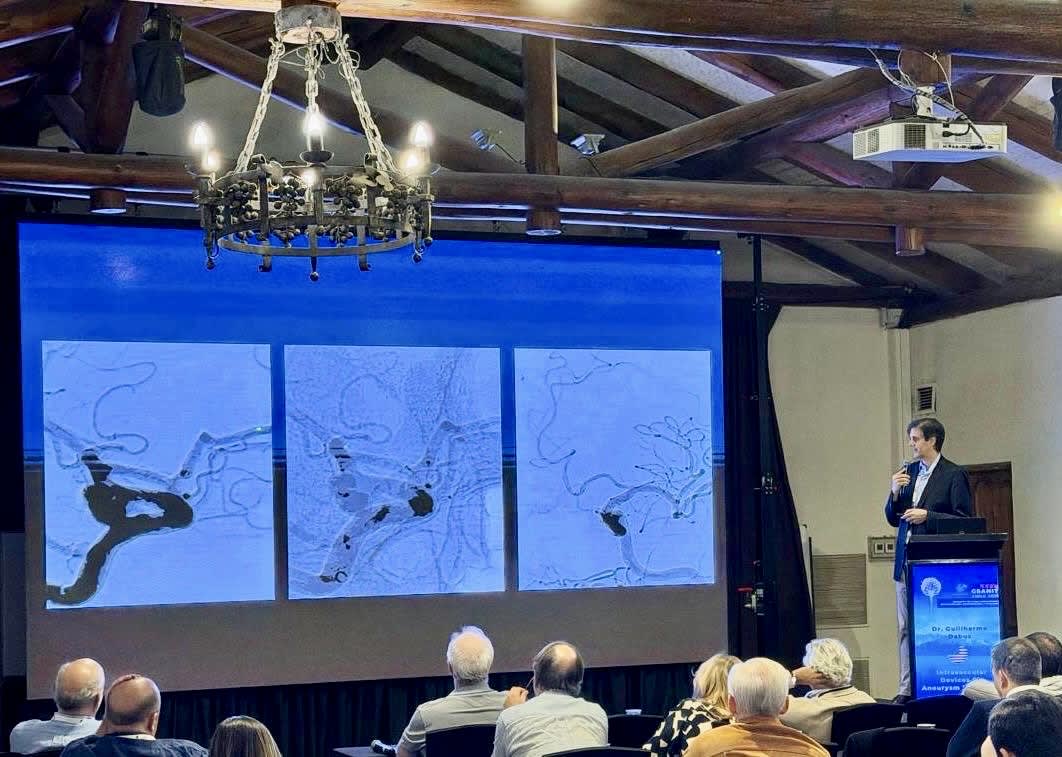
Guilherme Dabus, M.D., co-director of interventional neuroradiology at Baptist Health Miami Neuroscience Institute, served as a guest professor and invited speaker at the GSANIT (Grupo Sudamericano de Neurorradiología Intervencionista y Terapeutica) in Santa Cruz, Chile,