Evolution of the prostate cancer diagnostic paradigm: integrated evidence and clinical pathways from targeted biopsy to biopsy-free strategy - Report - MDSpire
Advertisement
Evolution of the prostate cancer diagnostic paradigm: integrated evidence and clinical pathways from targeted biopsy to biopsy-free strategy
Clinical Report: Advancements in Prostate Cancer Diagnosis
Background
Prostate cancer remains a significant health threat for middle-aged and elderly men, with traditional diagnostic methods often leading to overdiagnosis and missed clinically significant cases. The evolution towards precision screening and risk-stratified biopsy aims to enhance diagnostic accuracy while minimizing patient risk. This report highlights the importance of integrating advanced imaging techniques and molecular biomarkers in the diagnostic pathway, as supported by recent studies.
Data Highlights
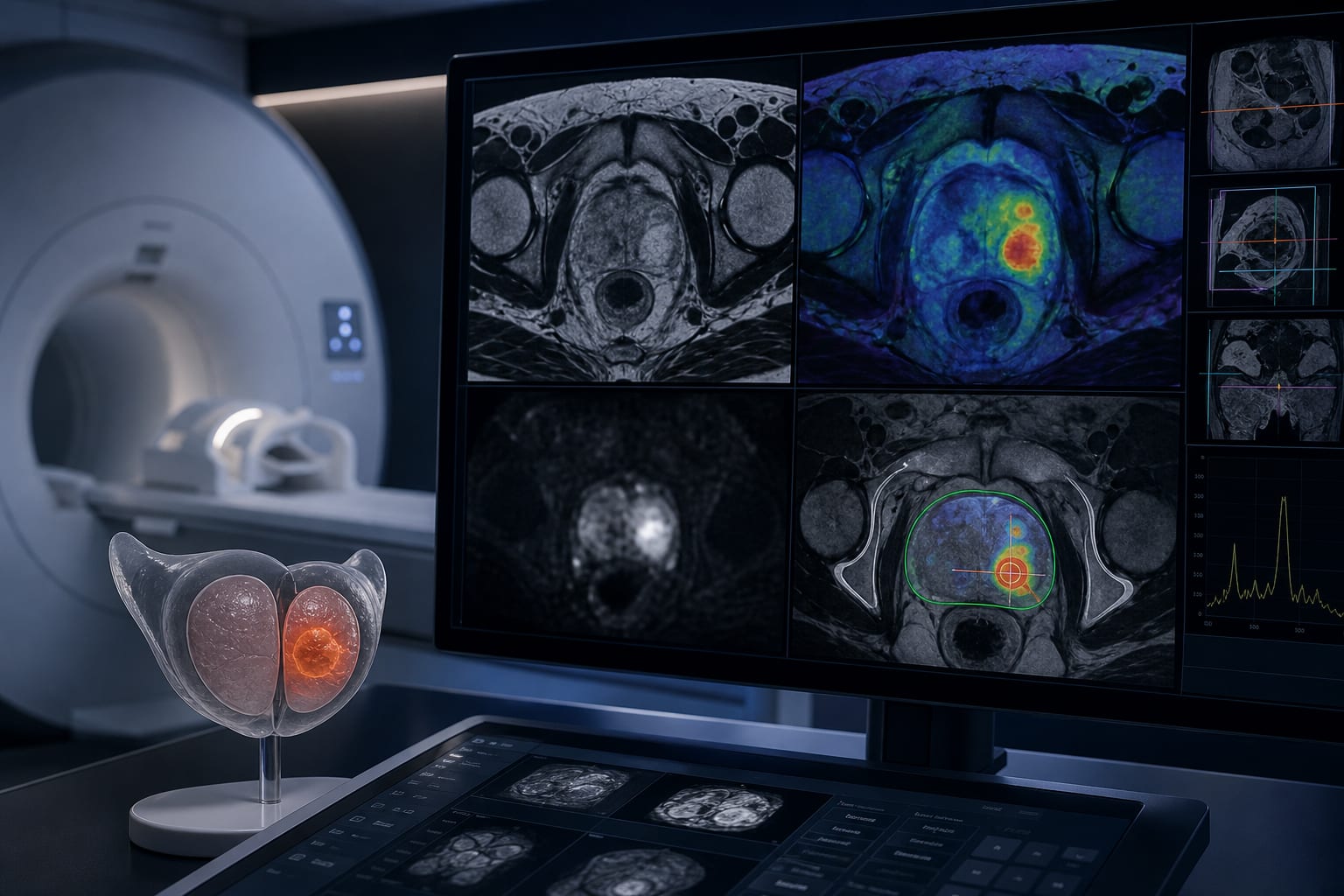
Relevant numerical data from studies indicate that multiparametric MRI (mpMRI) increases the detection rate of clinically significant prostate cancer (csPCa) by 12% compared to standard TRUS-guided biopsy, as shown in the PRECISION trial.
Key Findings
Multiparametric MRI (mpMRI) increases the detection rate of clinically significant prostate cancer (csPCa) by 12% compared to standard TRUS-guided biopsy, according to the PRECISION trial.
The transperineal biopsy approach significantly reduces the risk of infection compared to transrectal biopsy.
Active surveillance is recommended for patients with mpMRI-negative results, particularly those with low prostate-specific antigen density.
Risk stratification has evolved to include multiple imaging modalities and biomarkers for improved diagnostic accuracy.
The new paradigm of 'biopsy-free diagnosis' is emerging, focusing on advanced imaging and molecular biomarkers.
Clinical Implications
Healthcare professionals should consider the integration of mpMRI in the diagnostic workflow for prostate cancer to enhance detection rates and reduce unnecessary biopsies, as indicated by recent studies. The shift towards transperineal biopsy techniques may improve patient safety.
Conclusion
The advancements in prostate cancer diagnosis represent a shift towards safer, more precise, and individualized approaches, as supported by recent evidence. Continued integration of advanced imaging and risk stratification tools is essential for optimizing patient care.