Analysis of influencing factors and construction of nomogram prediction model for pulmonary infection in patients with acute exacerbation of chronic obstructive pulmonary disease complicated with type II respiratory failure - Report - MDSpire
Advertisement
Analysis of influencing factors and construction of nomogram prediction model for pulmonary infection in patients with acute exacerbation of chronic obstructive pulmonary disease complicated with type II respiratory failure
Clinical Report: Development of a Nomogram for Predicting Pulmonary Infection Risk
Overview
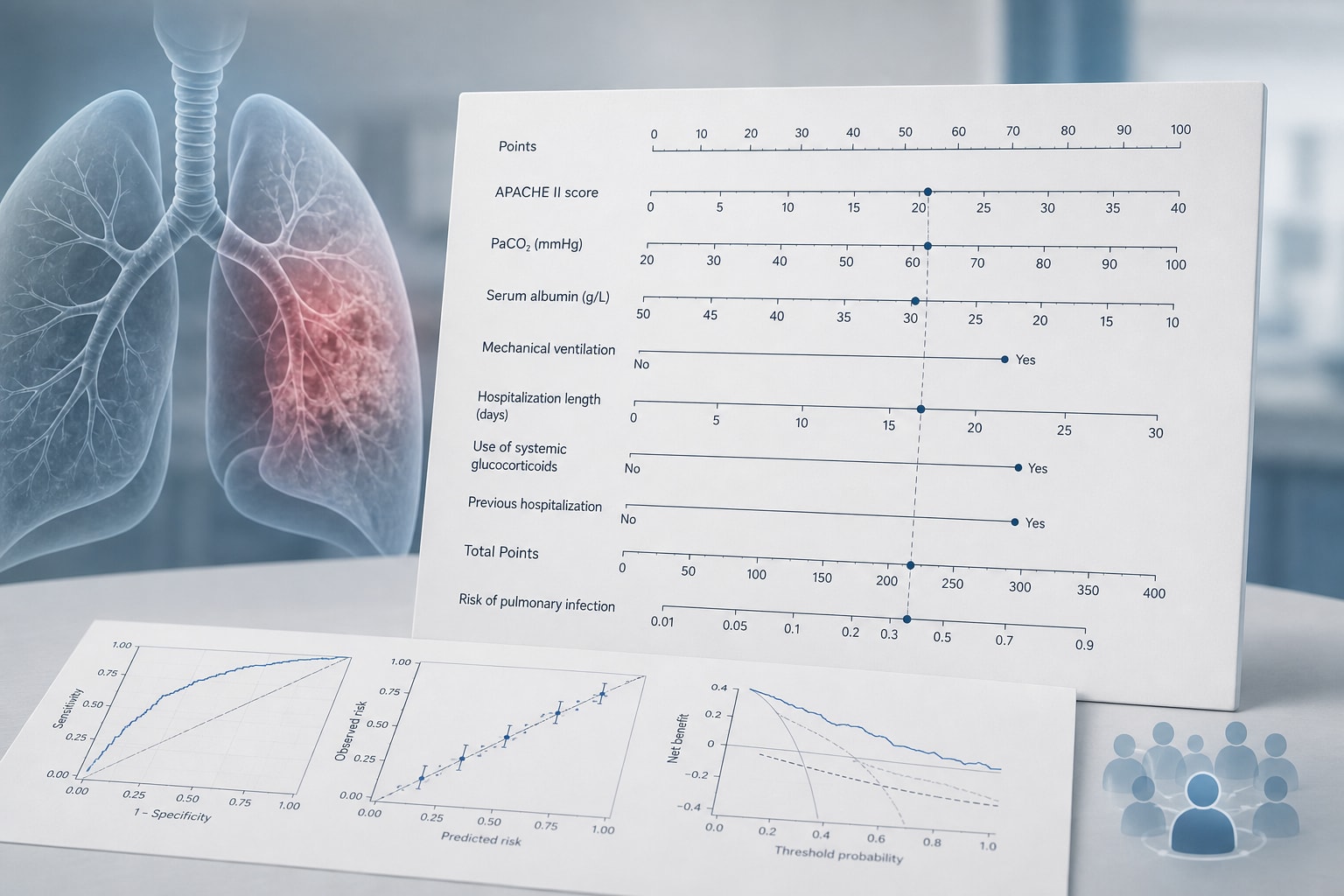
This study developed a nomogram to predict the risk of pulmonary infection in patients with acute exacerbation of chronic obstructive pulmonary disease (AECOPD) complicated by type II respiratory failure. The model demonstrated AUC values of 0.917 and 0.884 in training and validation cohorts, respectively.
Background
Chronic obstructive pulmonary disease (COPD) is a leading cause of mortality worldwide, particularly during acute exacerbations. Patients with AECOPD complicated by type II respiratory failure are at increased risk for secondary pulmonary infections, which significantly impact morbidity and mortality. Identifying reliable prediction methods for these infections is crucial for timely clinical intervention.
Data Highlights
Variable
Significance
Age
P > 0.05
Length of hospital stay
P < 0.05
APACHE II score
P < 0.05
Duration of combined antibiotic use
P < 0.05
Key Findings
Age, diabetes, hospital stay > 15 days, APACHE II score > 15 points, and antibiotics combination time > 14 days are independent risk factors for pulmonary infection.
Albumin is identified as an independent protective factor against pulmonary infection.
The nomogram model showed AUCs of 0.917 and 0.884 in training and validation cohorts, respectively.
The Hosmer-Lemeshow test indicated good model fit with P-values of 0.943 and 0.740.
The clinical decision curve demonstrated net benefit within predictive risk thresholds of 0.05 to 0.90.
Clinical Implications
The nomogram developed in this study may assist clinicians in identifying patients at high risk for pulmonary infections during AECOPD exacerbations.
Conclusion
The constructed nomogram shows predictive performance in predicting pulmonary infection risk in AECOPD patients with type II respiratory failure.