Clinical Report: Circular RNAs Linking Ferroptosis and Immune Response in Cancer
Overview
This review highlights the role of circular RNAs (circRNAs) as key regulators in the interplay between ferroptosis and anti-tumor immunity in cancer. It emphasizes their potential as diagnostic biomarkers and therapeutic targets, providing insights into precision cancer therapy.
Background
Ferroptosis and immune evasion are critical processes in cancer progression, influencing tumorigenesis and treatment resistance. CircRNAs, due to their unique structural properties and regulatory functions, have emerged as significant players in modulating these processes. Understanding their role can lead to novel therapeutic strategies and improve patient outcomes.
Data Highlights
No numerical data or trial data presented in the article.
Key Findings
CircRNAs are stable, covalently closed RNA molecules that regulate cancer biology through various mechanisms.
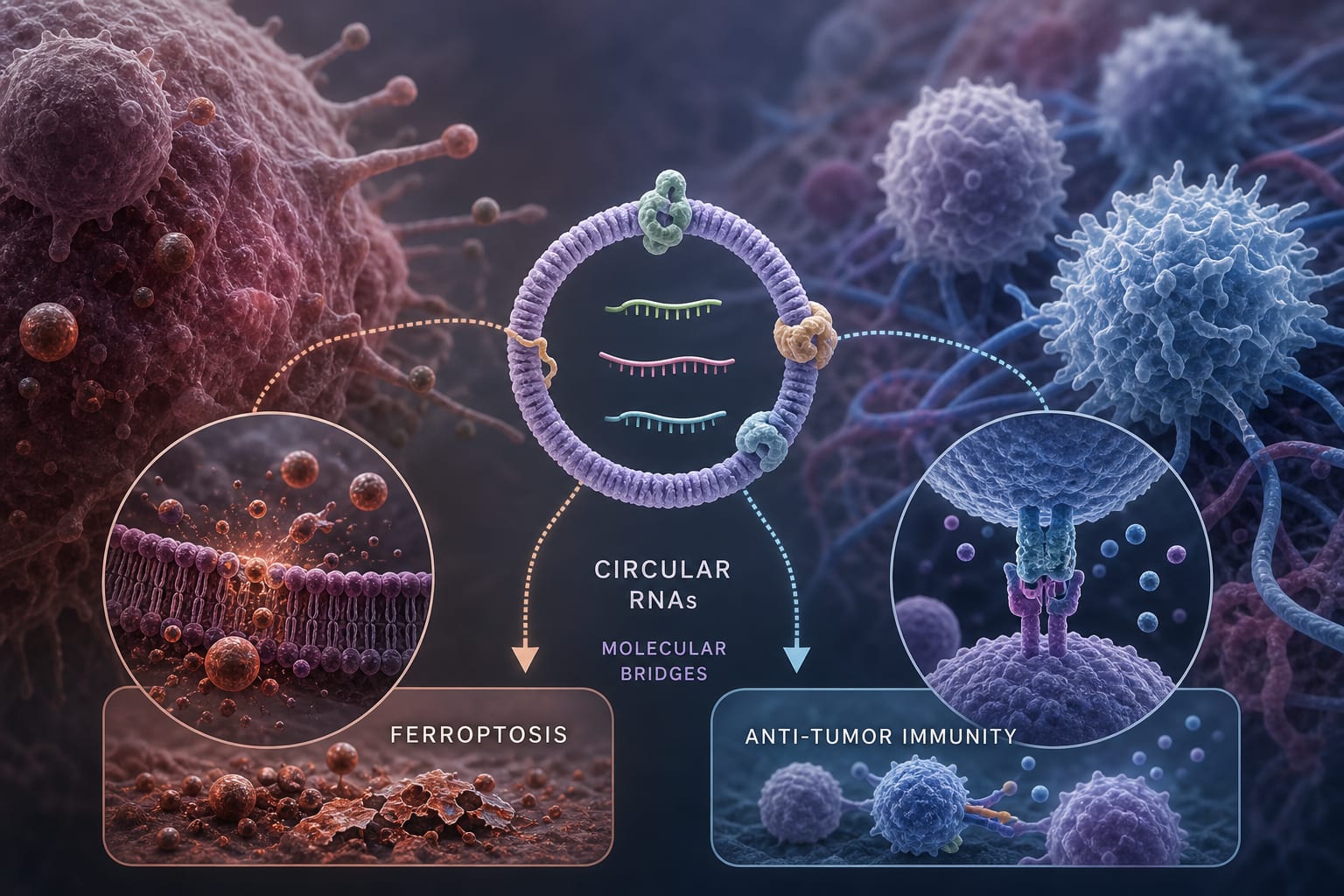
They act as molecular bridges linking ferroptosis and anti-tumor immunity, influencing cancer progression.
CircRNAs can modulate tumor cell proliferation, apoptosis, and immune responses via miRNA sponging and protein interactions.
Ferroptosis is characterized by iron-dependent lipid peroxidation, which can activate anti-tumor immunity.
Targeting circRNAs may provide new avenues for precision cancer diagnostics and therapies.
Clinical Implications
The findings suggest that circRNAs could serve as promising biomarkers for cancer diagnosis and treatment response. Their dual regulatory role in ferroptosis and immunity highlights the potential for developing combination therapies that target both pathways.
Conclusion
CircRNAs represent a novel class of regulators in cancer biology, linking ferroptosis and immune responses. Their therapeutic targeting may enhance the efficacy of cancer treatments and improve patient outcomes.