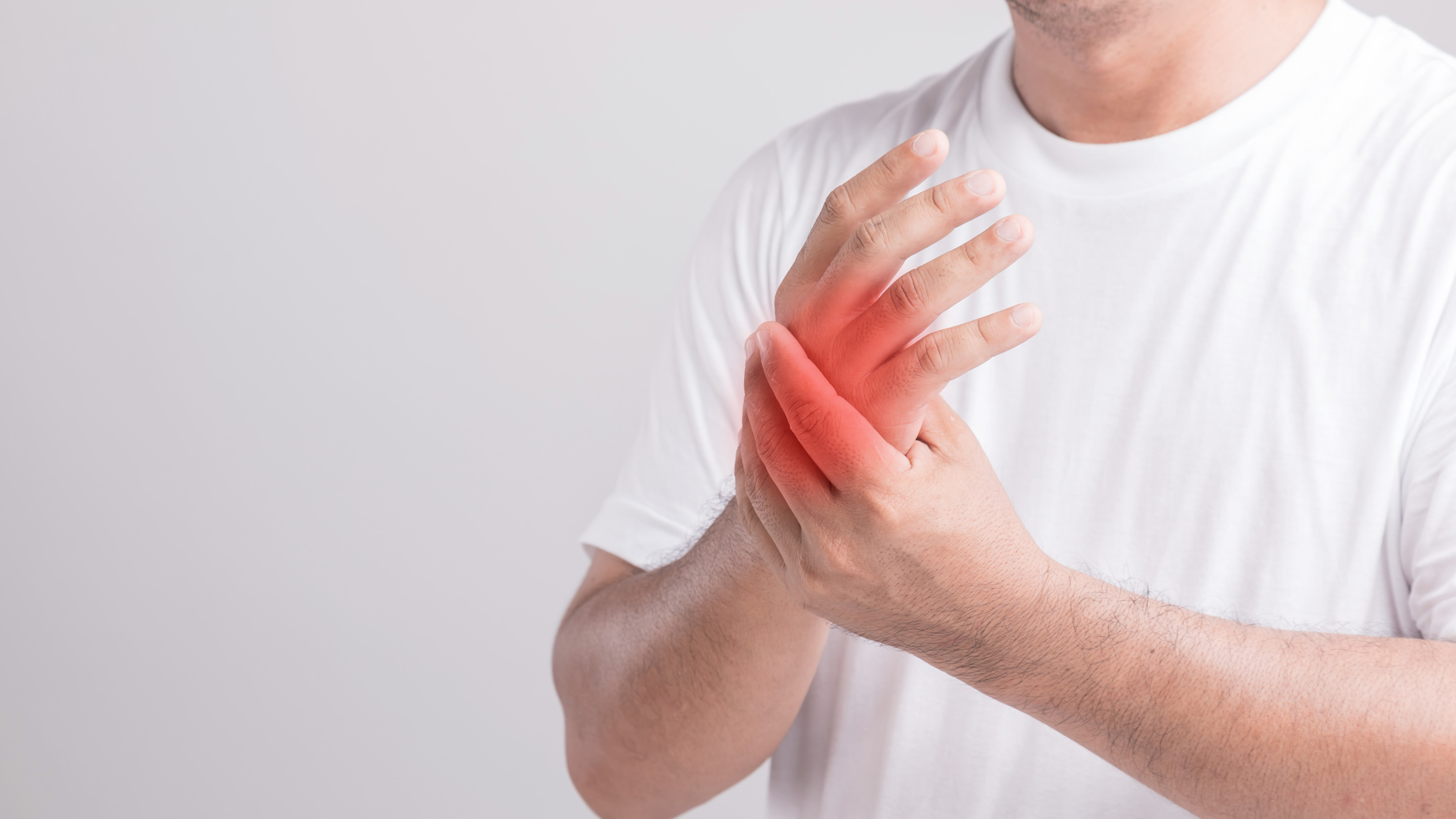
PR Flares Predict Sites of Future Persistent Inflammatory Arthritis
Overview
A longitudinal study found that in patients with palindromic rheumatism (PR), persistent inflammatory arthritis most commonly develops in joints previously affected during flares, with prior involvement doubling the odds of progression in the same joint. Hands and shoulders were frequent initial flare sites, and recurrent flares may alter pain perception despite increased joint inflammation.
Background
Palindromic rheumatism is characterized by recurrent, transient joint inflammation that can precede persistent inflammatory arthritis such as rheumatoid arthritis (RA). Understanding the pattern of joint involvement during PR flares and subsequent progression to persistent arthritis may inform monitoring and treatment strategies. Prior studies have suggested that local joint factors might influence disease evolution, but detailed joint-level longitudinal data have been limited.
Data Highlights
| Parameter | Value |
|---|---|
| Patients with complete joint-level data | 48 |
| Patients developing persistent arthritis in previously affected joints | 34 (71%) |
| Median follow-up duration | 13 months |
| Initial flare involvement - hands | 48% |
| Initial flare involvement - shoulders | 33% |
| Joints with synovitis at progression | 237 |
| Joints involved at initial flare among those with synovitis | 19% |
| Joints involved during subsequent flares among those with synovitis | 60% |
| Swollen joint count at RA onset (PR prodrome group) | 4.1 |
| Swollen joint count at RA onset (anti-CCP positive at-risk group) | 3.2 |
| Health Assessment Questionnaire score (PR prodrome group) | 0.79 |
| Health Assessment Questionnaire score (anti-CCP positive at-risk group) | 1.12 |
Key Findings
- Persistent inflammatory arthritis developed most often in joints previously affected during PR flares, with prior involvement doubling the odds of progression in the same joint.
- Hands (48%) and shoulders (33%) were the most frequently involved joints at initial PR flares, with small hand joints predominating across all flares.
- At progression, 237 joints showed synovitis; 19% had been involved at the initial flare and 60% during subsequent flares.
- Patients progressing to RA after a PR prodrome had higher swollen joint counts but lower disability, pain, and fatigue scores compared to anti-CCP positive at-risk patients without PR.
- Recurrent flares may induce adaptive changes in pain perception, explaining lower patient-reported burden despite greater objective inflammation.
- Some joints, such as the feet, were rarely involved during flares but became affected at progression, indicating heterogeneity in joint involvement patterns.
Clinical Implications
Clinicians should closely monitor joints previously affected during PR flares, as these sites have increased risk for developing persistent inflammatory arthritis. The findings support consideration of therapies targeting local joint environments to potentially prevent progression. Awareness of altered pain perception in PR patients may aid in interpreting patient-reported outcomes relative to objective inflammation.
Conclusion
This study highlights a strong joint-level association between PR flares and subsequent persistent arthritis, suggesting local tissue factors play a critical role in disease progression. These insights may guide targeted monitoring and therapeutic strategies in patients with palindromic rheumatism.
Related Resources & Content
- Sahin D et al./Leeds Institute of Rheumatic and Musculoskeletal Medicine/2023 -- PR Flares Linked to Future Arthritis Sites
Based on findings from:
PR Flares Linked to Future Arthritis Sites
Andrea Surnit. Conexiant, 2026.
https://conexiant.com/rheumatology/articles/pr-flares-linked-to-future-arthritis-sites/
This content is an AI-generated, fully rewritten summary based on a published scholarly article. It does not reproduce the original text and is not a substitute for the original publication. Readers are encouraged to consult the source for full context, data, and methodology.