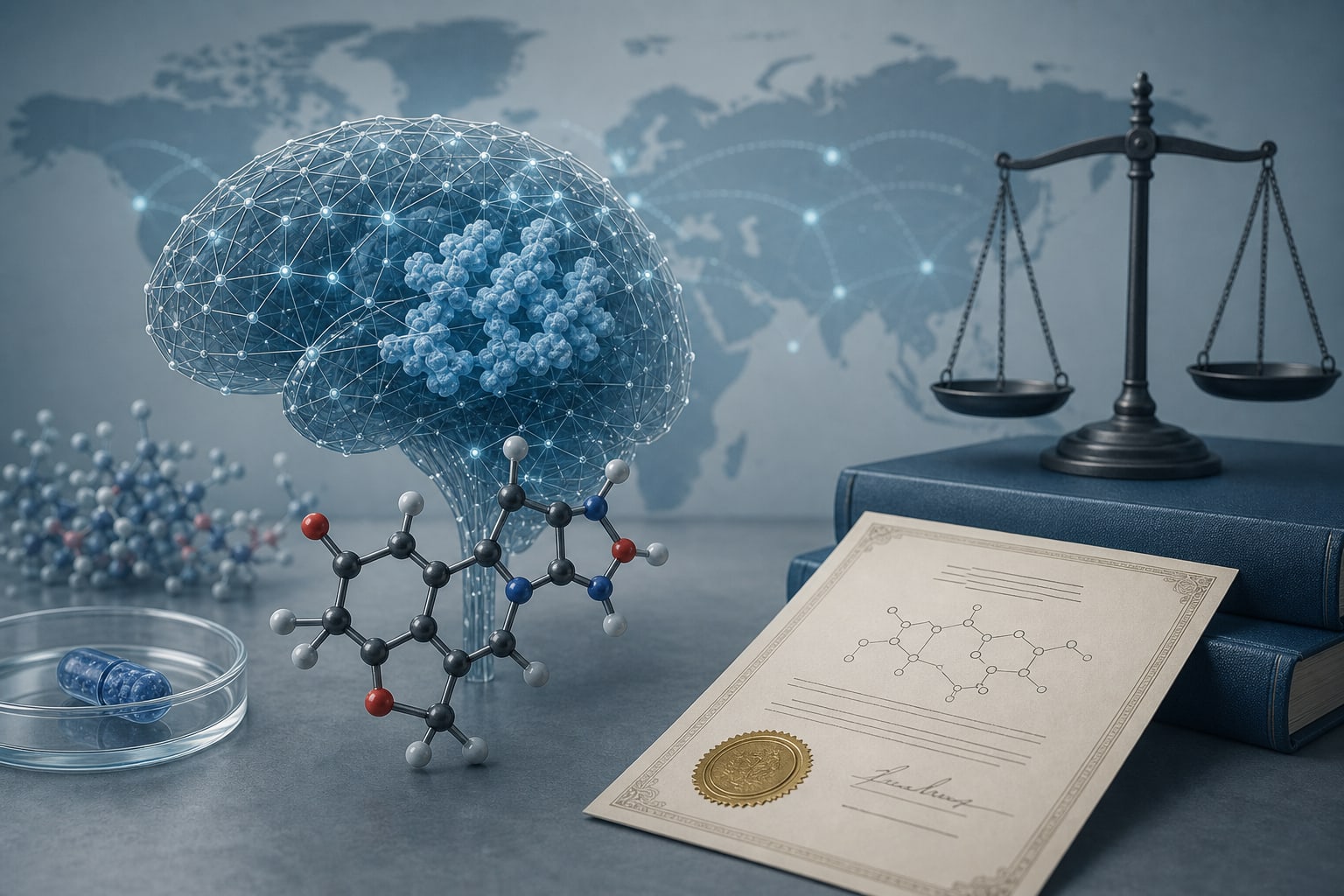
Global Insights into Intellectual Property Issues Related to AI in Pharmaceuticals
Overview
This review explores the impact of artificial intelligence (AI) on pharmaceutical patent protection, focusing on inventorship challenges in the context of recent US legal developments, including the US Supreme Court's decision in Thaler v. Perlmutter. It also compares approaches in Germany and China, providing practical lessons for stakeholders navigating the intersection of AI and intellectual property.
Background
The integration of AI in the pharmaceutical sector is revolutionizing drug discovery and personalized medicine, necessitating a reevaluation of existing intellectual property frameworks. As AI technologies advance, the question of who qualifies as an inventor in AI-assisted discoveries becomes increasingly complex, particularly under traditional IP laws. Understanding these challenges is crucial for pharmaceutical companies and policymakers to protect innovations effectively.
Data Highlights
No numerical data or trial data presented in the article.
Key Findings
The US Supreme Court's decision in Thaler v. Perlmutter clarified AI inventorship under US law.
Comparative analyses reveal differing approaches to AI inventorship in Germany and China.
Copyright issues related to AI training data impact the viability of AI-driven drug discovery.
Clinical Implications
Pharmaceutical companies must understand the evolving legal landscape regarding AI inventorship to secure patent protection for AI-assisted innovations.
Conclusion
The intersection of AI and intellectual property presents challenges for the pharmaceutical industry, necessitating navigation of legal frameworks to foster innovation.
A JAMA Internal Medicine Viewpoint urges clinicians and health systems to verify risk-model inputs before acting on automated breast cancer screening recommendations.