A systematic review and meta-analysis of the effects of exercise training on dysfunction in acute, subacute, and chronic stroke patients - Report - MDSpire
Advertisement
A systematic review and meta-analysis of the effects of exercise training on dysfunction in acute, subacute, and chronic stroke patients
Clinical Report: Impact of Exercise Training in Stroke Patients
Overview
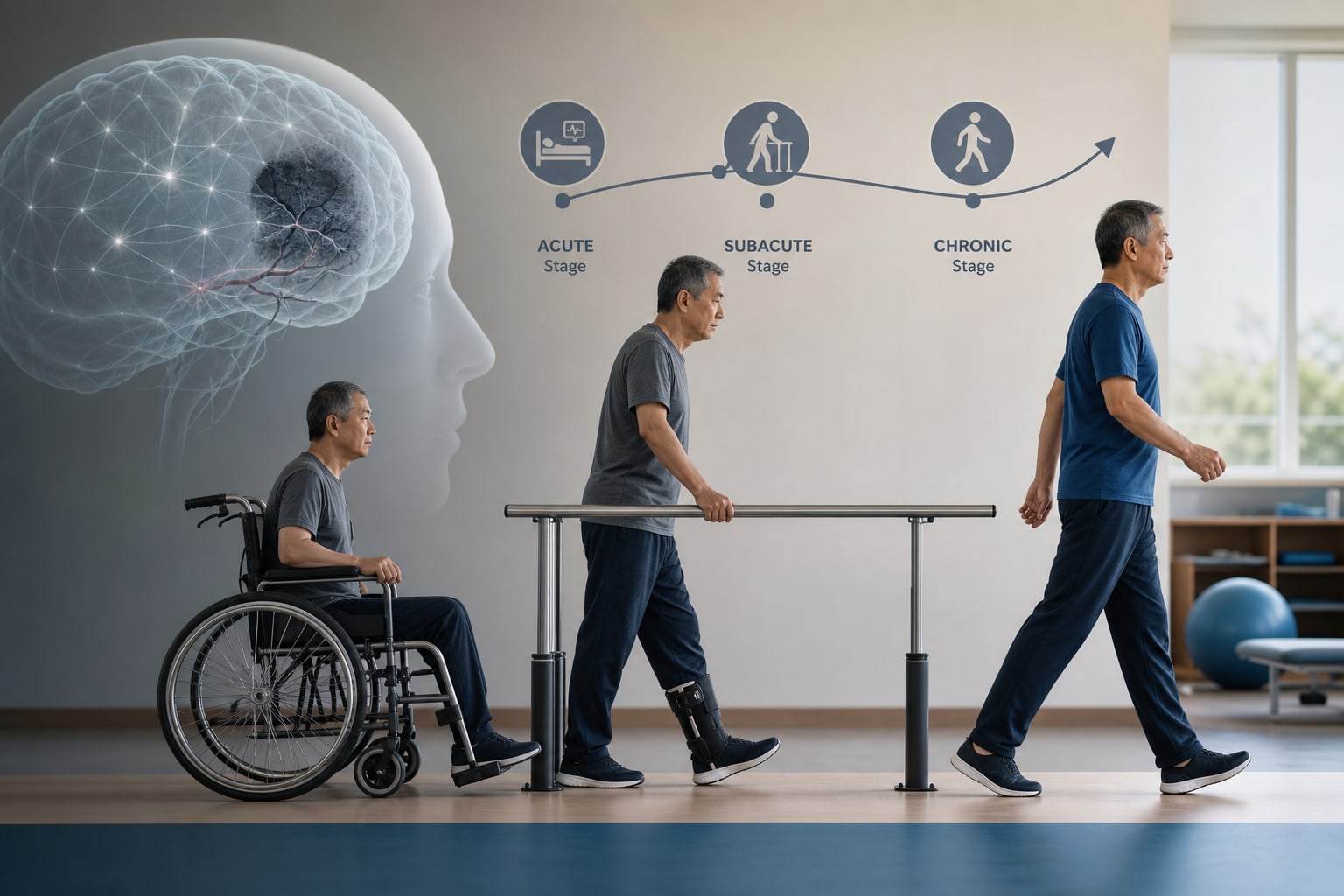
This systematic review and meta-analysis evaluates the efficacy of exercise training initiated during the acute, subacute, and chronic phases post-stroke. Findings indicate that early exercise training significantly improves functional outcomes, particularly in the acute phase compared to later stages.
Background
Stroke is a leading cause of mortality and morbidity, resulting in significant impairments that affect patients' quality of life. Effective rehabilitation strategies, including exercise training, are crucial for enhancing recovery and mitigating long-term disabilities. Understanding the timing and impact of exercise interventions across different recovery phases is essential for optimizing rehabilitation protocols.
Data Highlights
Group
Outcome Measure
WMD
95% CI
ASETG vs SSETG
FMA
7.95
(6.73, 9.16)
ASETG vs CSETG
FMA
5.31
(3.89, 6.72)
SSETG vs CSETG
ARAT
2.70
(1.81, 3.59)
ASETG vs SSETG
BBS
3.64
(1.14, 6.15)
ASETG vs SSETG
MBI
10.66
(9.55, 11.77)
Key Findings
Exercise training in the acute phase (ASETG) leads to significantly better Fugl-Meyer Assessment (FMA) scores compared to the subacute phase (SSETG).
ASETG also shows superior improvements in balance (Berg Balance Scale) and activities of daily living (Modified Barthel Index) compared to SSETG.
Subacute stage exercise training (SSETG) results in better Action Research Arm Test (ARAT) scores than chronic stage exercise training (CSETG).
Overall, early initiation of exercise training is associated with enhanced recovery of sensorimotor function and mobility.
Variability in study designs and outcomes necessitates cautious interpretation of results.
Clinical Implications
Healthcare professionals should prioritize initiating exercise training as soon as patients are medically stable post-stroke, particularly during the acute phase. Tailoring rehabilitation strategies to the timing of intervention may optimize recovery outcomes and enhance functional independence.
Conclusion
This review underscores the importance of early exercise training in improving functional outcomes in stroke patients. Further rigorous randomized controlled trials are needed to establish definitive guidelines on the timing and intensity of exercise interventions.