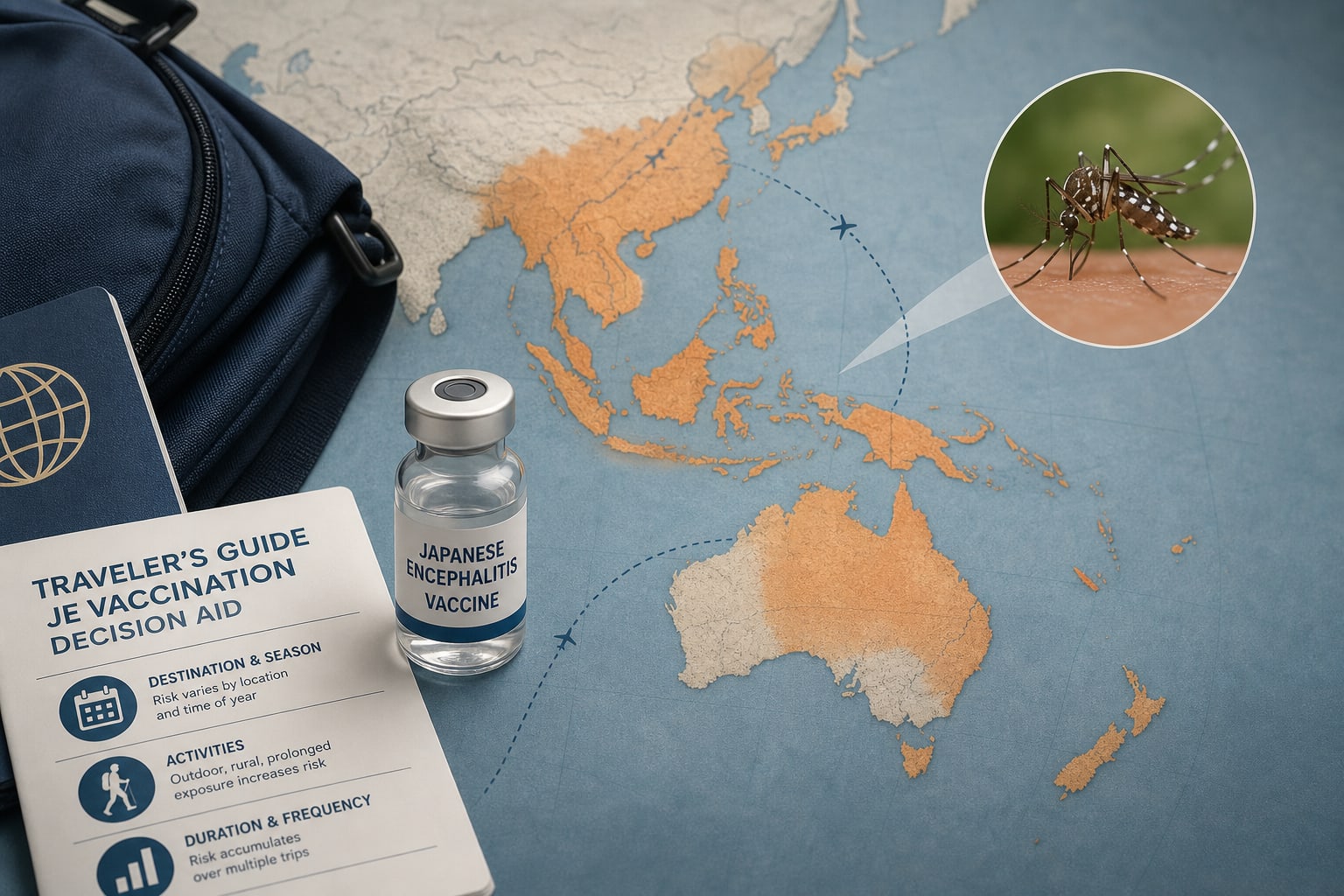
Traveler's Guide to Japanese Encephalitis Vaccination: Results from a Randomized Clinical Study
Overview
This study evaluates the effectiveness of a web-based decision aid (JEVaDA) for Japanese encephalitis vaccination among Australian travelers. The trial compared JEVaDA with a standard government information resource, assessing its impact on informed decision-making and vaccine uptake.
Background
Japanese encephalitis (JE) is a significant mosquito-borne viral disease with a high fatality rate among symptomatic cases. Vaccination campaigns have reduced incidence in endemic regions, yet the disease remains a risk for travelers. Understanding vaccination options and decision-making tools is crucial for enhancing vaccine uptake among travelers to endemic areas.
Data Highlights
No specific numerical data or trial results were provided in the source material.
Key Findings
The JEVaDA was developed through a multistep codesign process involving travelers and clinicians.
Decision aids can improve knowledge and reduce decisional conflict regarding health care options.
Vaccination uptake among travelers remains low despite the availability of effective vaccines.
National guidelines recommend vaccination for travelers staying in endemic areas for one month or longer.
Fatal cases of JE have occurred in short-term travelers, highlighting the importance of informed decision-making.
Clinical Implications
Clinicians should consider utilizing decision aids like JEVaDA to facilitate informed discussions about Japanese encephalitis vaccination with travelers. Awareness of vaccination guidelines and the risks associated with JE is essential for effective patient education.
Conclusion
The study underscores the potential of web-based decision aids to enhance informed decision-making regarding Japanese encephalitis vaccination among travelers. Further evaluation of such tools may be beneficial in promoting vaccine uptake.