Correction: Effects of oligosaccharides from Morinda officinalis on gut microbiota and metabolome of APP/PS1 transgenic mice - Report - MDSpire

Correction: Effects of oligosaccharides from Morinda officinalis on gut microbiota and metabolome of APP/PS1 transgenic mice

  • By

  • Yang Xin

  • Chen Diling

  • Yang Jian

  • Liu Ting

  • Hu Guoyan

  • Liang Hualun

  • Tang Xiaocui

  • Lai Guoxiao

  • Shuai Ou

  • Zheng Chaoqun

  • Zhao Jun

  • Xie Yizhen

  • June 3, 2026

  • 0 min

Share

Clinical Report: Correction on Effects of Morinda officinalis Oligosaccharides

Overview

This report addresses a correction in the published findings regarding the effects of Morinda officinalis oligosaccharides on the gut microbiome and metabolomic profile in APP/PS1 transgenic mice. The correction pertains to an error in the representation of Figure 1 in the original article.

Background

The study of gut microbiota and its impact on health is an evolving field, particularly in relation to neurodegenerative diseases such as Alzheimer's disease. Understanding the interactions between dietary components, like oligosaccharides, and gut microbiota is crucial for developing potential therapeutic strategies. Accurate representation of research findings is essential for the advancement of clinical knowledge and practice.

Data Highlights

No numerical or trial data is presented in the correction notice.

Key Findings

  • The correction addresses an error in Figure 1 of the original study.
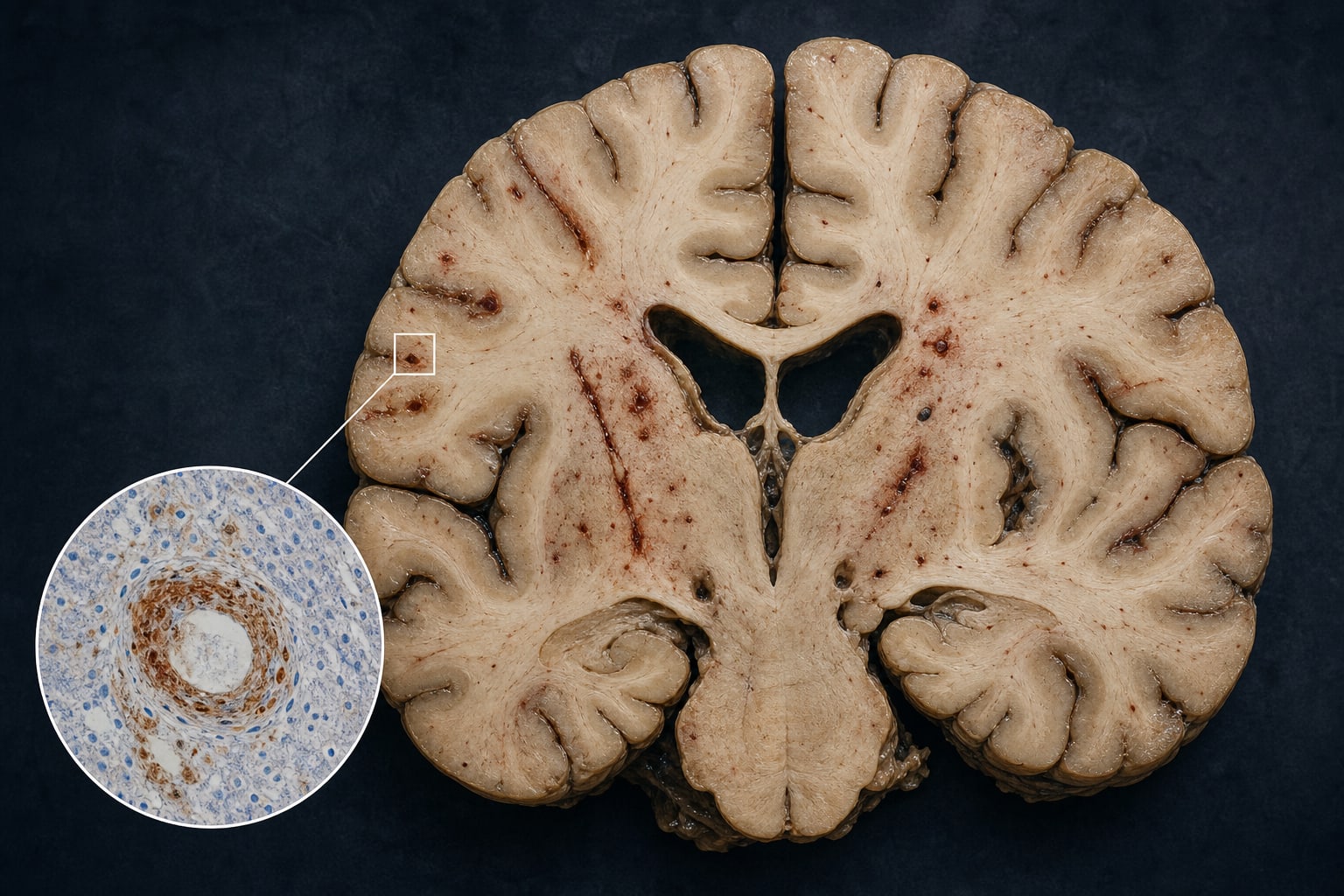
  • The Nissl staining of the Model brain slice was mistakenly repeated.
  • The corrected figure has been published in the updated article.
  • Accurate data representation is critical for research integrity.
  • Research on Morinda officinalis oligosaccharides continues to be relevant in the context of gut microbiome studies.

Clinical Implications

Clinicians and researchers should ensure the accuracy of published data to maintain the integrity of scientific literature. This correction highlights the importance of careful review processes in research publications.

Conclusion

The correction of the figure in the study reinforces the necessity for precision in scientific reporting. Ongoing research into the effects of dietary components on gut health remains significant.

Related Resources & Content

  1. Xin, Y., et al., Front. Neurol., 2018 -- Impact of Morinda officinalis Oligosaccharides on the Gut Microbiome and Metabolomic Profile in APP/PS1 Transgenic Mice
  2. Journal of Gastroenterology — Resistant starch inhibits glycolysis via HK2 and mitigates colon tumor development induced by high-fructose corn syrup
  3. Journal of Gastroenterology — Impact of miglitol on the inhibition of nonalcoholic steatohepatitis progression and enhancement of gut microbiota in a rodent study
  4. Acta Neuropathologica — Activation of ACE2 Mitigates Cognitive Decline and Alleviates Amyloid Accumulation in Tg2576 Mice with Alzheimer’s Disease
  5. Endocrine Reviews — Postbiotic Impact on Host Metabolism and Immunity Provides Therapeutic Potential in Metabolic Disease
  6. Alzheimer's Association Workgroup Publishes Biology-Based Criteria for Diagnosis and Staging of Alzheimer's Disease
  7. Effect of probiotics on cognitive function and cardiovascular risk factors in mild cognitive impairment and Alzheimer’s disease: an umbrella meta-analysis - PMC
  8. Effects of Oligosaccharides From Morinda officinalis on Gut Microbiota and Metabolome of APP/PS1 Transgenic Mice - PMC

Original Source(s)

Related Content