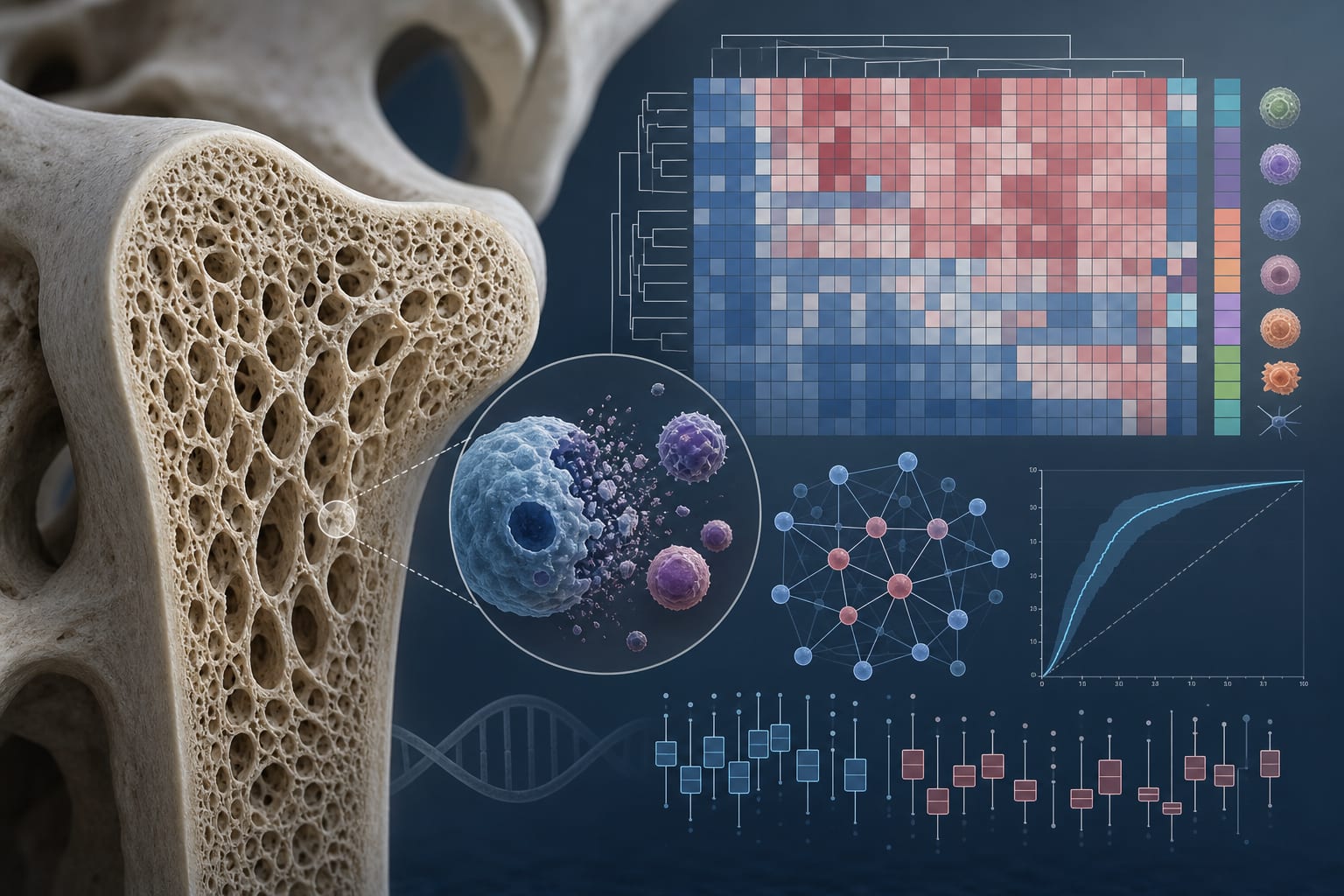
Development and Experimental Validation of an Osteoporosis Diagnosis Model Based on Disulfidoptosis-related Genes and Immune Infiltration Analysis - Report - MDSpire
Advertisement
Development and Experimental Validation of an Osteoporosis Diagnosis Model Based on Disulfidoptosis-related Genes and Immune Infiltration Analysis
Clinical Report: Diagnostic Model for Osteoporosis Using Disulfidoptosis Genes
Overview
This study identifies disulfidoptosis-related genes for osteoporosis diagnosis and explores their association with immune infiltration. A diagnostic model constructed from three hub genes demonstrated high accuracy in distinguishing osteoporosis subtypes.
Background
Osteoporosis is a significant public health concern due to its association with increased fracture risk and morbidity. Understanding the molecular mechanisms underlying osteoporosis can enhance diagnostic and therapeutic strategies. This study investigates disulfidoptosis, a novel programmed cell death pathway, and its potential role in osteoporosis.
Constructed a diagnostic model based on three hub genes: SOAT2, FOLR3, and TUBA8.
The model showed moderate to high diagnostic accuracy in internal and external validation.
Distinct immune infiltration patterns correlated with key genes were observed.
Two subtypes of osteoporosis were defined through consensus clustering.
Experimental validation revealed significant dysregulation of hub genes during osteoclast differentiation.
Clinical Implications
The findings suggest that disulfidoptosis-related genes could serve as biomarkers for osteoporosis diagnosis and may inform personalized treatment strategies. Understanding immune infiltration patterns may also provide insights into the pathophysiology of osteoporosis.
Conclusion
This study establishes a novel diagnostic model for osteoporosis based on disulfidoptosis-related genes and highlights the importance of immune factors in the disease's pathology. Further research may enhance precision medicine approaches in osteoporosis management.