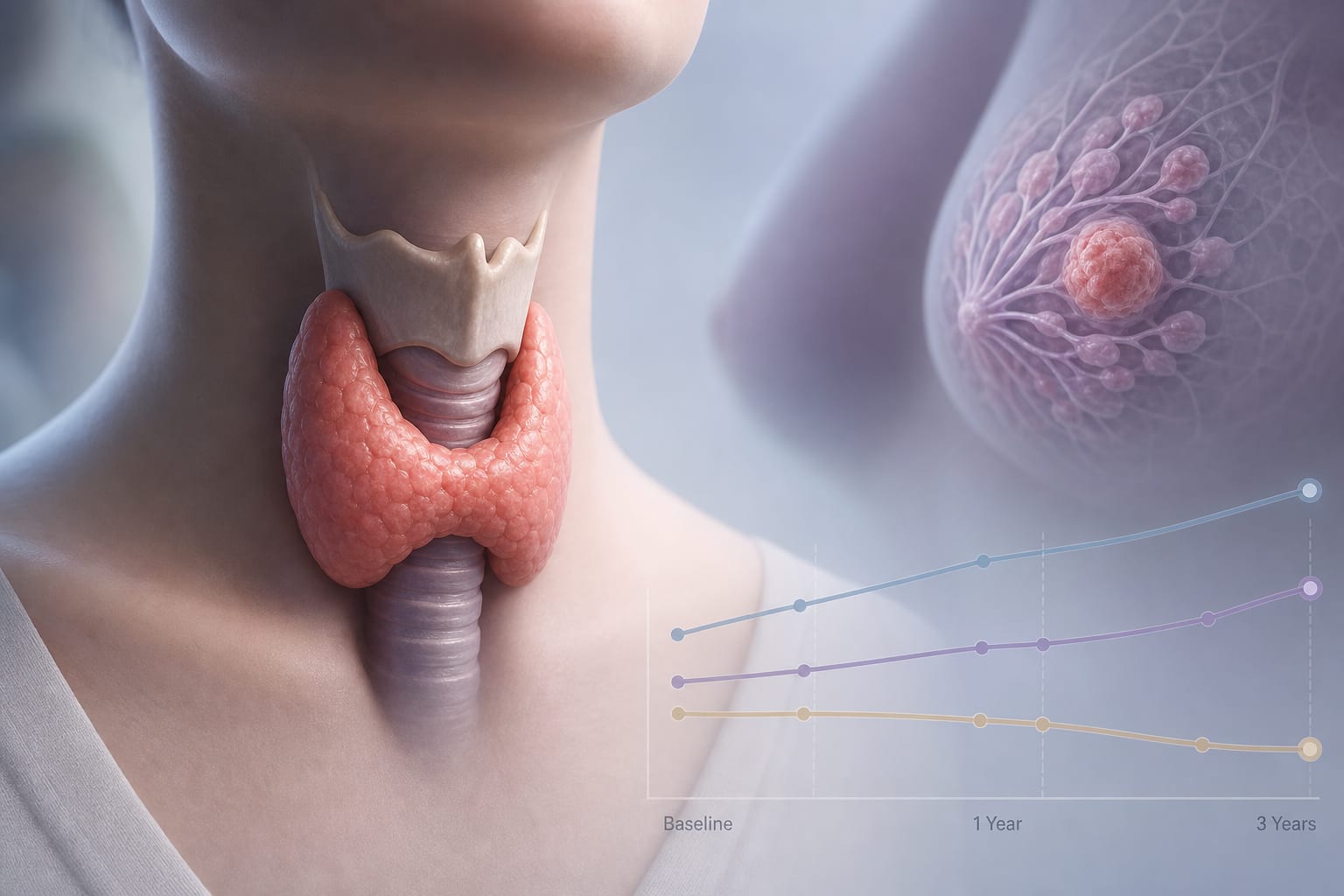
Thyroid Function and Endocrine Treatment in Early Luminal Breast Cancer
Overview
Revise to specify the significance of thyroid parameter changes compared to controls.
Background
Endocrine therapy is a standard treatment for hormone receptor-positive breast cancer, yet its long-term effects on thyroid function are not well understood. Given the physiological interplay between the thyroid and mammary glands, it is crucial to investigate potential thyroid dysfunction in patients undergoing such therapies. This study aims to clarify these effects and contribute to the understanding of endocrine therapy's broader implications.
Data Highlights
Parameter
Baseline
3 Years
TSH (μIU/mL)
1.92
3.06
FT3 (pmol/L)
4.90
4.14
FT4 (pmol/L)
18.35
15.26
Key Findings
Significant increase in TSH levels in the breast cancer group after 3 years of therapy.
Decreased FT3 and FT4 levels were noted in the breast cancer group compared to baseline.
No significant changes in thyroid function parameters were observed in the benign breast disease control group.
Subgroup analysis indicated a greater decline in FT4 levels with tamoxifen compared to aromatase inhibitors.
Statistical significance was found for group-by-time interactions for TSH, FT3, and FT4.
Small sample size limits the ability to draw independent conclusions regarding treatment type effects.
Clinical Implications
Healthcare professionals should monitor thyroid function in patients undergoing adjuvant endocrine therapy for breast cancer, as significant alterations may occur. Awareness of these changes is essential for timely intervention and management of potential thyroid dysfunction.
Conclusion
The findings suggest that adjuvant endocrine therapy in early luminal breast cancer is associated with notable changes in thyroid function. Further research is needed to explore the clinical relevance of these alterations.